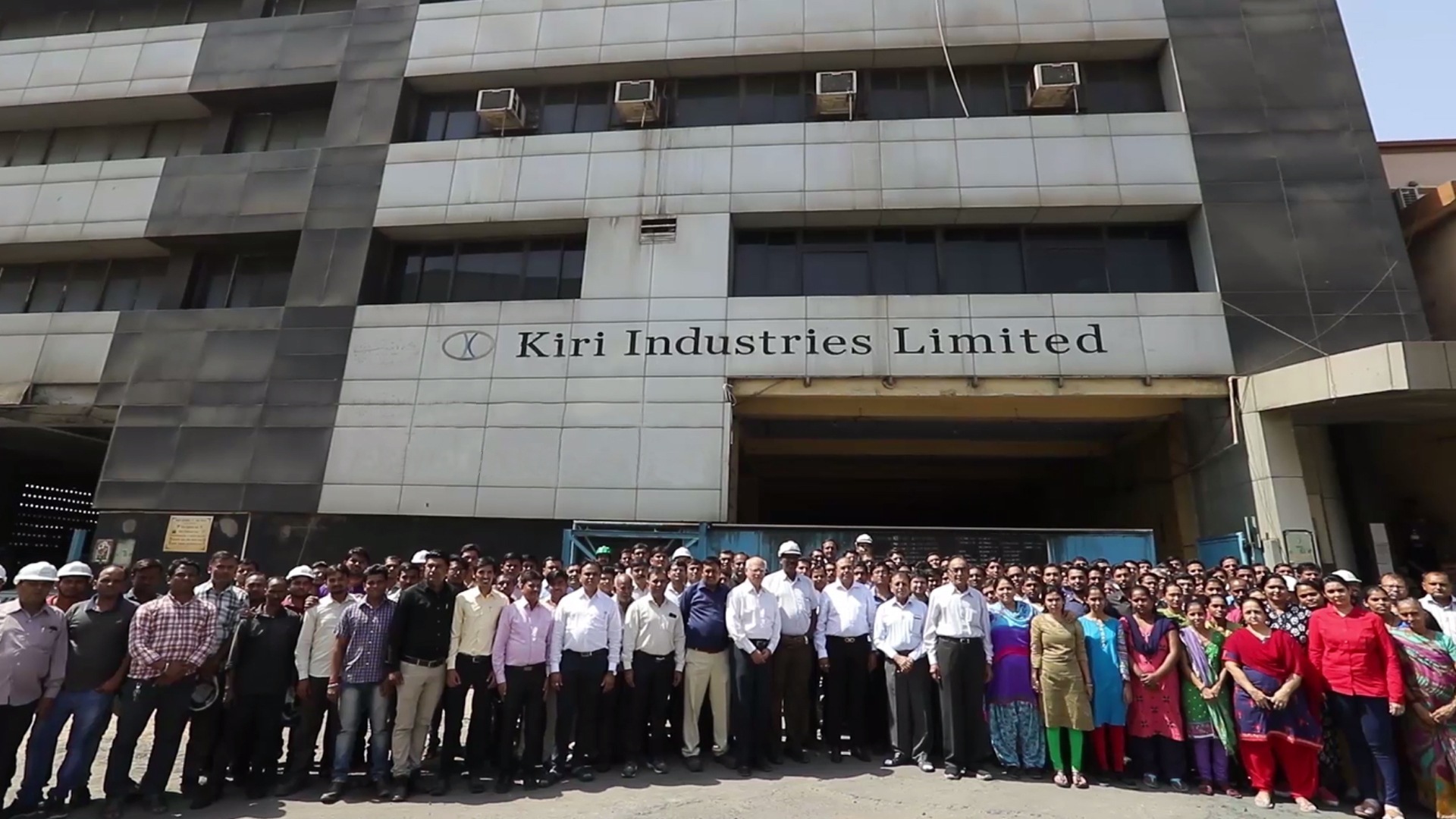
Kiri Industries Ltd Q2 FY26 – Dyes, Drama, and DyStar Dollars: When Chemistry Meets Courtroom Comedy
1. At a Glance
Imagine a chemical company where the dye business is just as colorful as the legal battles. Welcome to Kiri Industries Ltd (KIL) — a Gujarat-based dye manufacturer that sells to 50+ countries while fighting billion-dollar lawsuits in Singapore. At a market cap of ₹3,247 crore and a share price of ₹542 (as of 7 Nov 2025), the company’s P/E ratio of 26.6 looks like it’s trying to cosplay as a growth stock despite its negative operating margin of –9.93%.
In Q2 FY26, revenue stood at ₹213 crore (up 23.4% YoY), but profits fell off a cliff — PAT crashed 75.5% YoY to ₹19.6 crore. The “Other Income Fairy” has been saving the company lately, sprinkling ₹134 crore worth of non-operational glitter over a dull operating story. Debt ballooned to ₹1,223 crore — up twelvefold from ₹96 crore in FY22 — as the company geared up for its copper and fertilizer mega-projects.
And while the core dye business struggles to shine, the real jackpot lies in Kiri’s 37.57% stake in DyStar, a global dye giant being sold for a jaw-dropping USD 676 million. But of course — in true Bollywood fashion — the deal got delayed again, with a long-stop extended to December 1, 2025.
2. Introduction – The Chemistry of Chaos
Once upon a time in Gujarat’s chemical belt, Kiri Industries started with a dream — to paint the world in reactive dyes. Fast forward to FY26, it’s painting balance sheets, court filings, and investor patience in fifty shades of red ink.
Between 2014 and 2022, Kiri was that underdog story — manufacturing dyes, intermediates, and basic chemicals while expanding into export markets. Then came the DyStar saga — part courtroom thriller, part corporate soap opera. Think of it as “Suits meets Breaking Bad.”
Sales dropped by nearly 58% between FY22 and FY24, thanks to global demand taking a vacation. Yet, in a world where reactive dyes are hardly sexy, Kiri decided to up the ante — announcing a ₹16,000 crore diversification into copper and fertilizers via Indo Asia Copper Ltd. That’s right — from H-acid to H-plant nutrients.
The company says Phase 1 (₹2,450 crore investment) will kick off operations by FY26-FY27, targeting ₹30,000 crore annual revenue and ₹3,000 crore profit someday. Meanwhile, investors are holding on tighter than the 62.8% promoter pledge ratio.
Can a dye-maker become a copper tycoon before its court cash flows in? Strap in — this story has more layers than a textile factory’s waste drum.
3. Business Model – WTF Do They Even Do?
Kiri’s business is a three-act play of acids, colours, and chemical chaos:
Dye Intermediates (52% of H1 FY25 revenue) – Think of this as the “starter pack” for reactive dyes. Kiri produces H-acid, Vinyl Sulphone, Naphthalene, and Aniline. Basically, the raw materials that turn boring fabrics into Instagrammable shirts.
Dyes (43%) – The main show. Kiri’s Reactive, Acid, Direct, and Disperse dyes are used in textiles, leather, and paper. In short: if it stains your hands, Kiri probably makes it.
Basic Chemicals (5%) – Sulphuric Acid, Oleum, Chloro Sulphonic Acid, and Thionyl Chloride. The kind of stuff that could make Walter White proud — or at least slightly nervous.
The company owns five manufacturing units across Ahmedabad and Vadodara with an impressive installed capacity:
Reactive Dyes: 36,000 MTPA
Disperse Dyes: 8,000 MTPA
Vinyl Sulphone: 18,000 MTPA
H-Acid: 7,200 MTPA
Basic Chemicals: 1,82,500 MTPA
And yet, the irony? Despite massive scale, Kiri’s operating margins are currently negative. It’s like running a Michelin-star kitchen and still losing money on Maggi.
4. Financials Overview
Metric
Latest Qtr (Sep 2025)
YoY Qtr (Sep 2024)
Prev Qtr (Jun 2025)
YoY %
QoQ %
Revenue
₹213 Cr
₹173 Cr
₹202 Cr
23.4%
5.4%
EBITDA
₹–14 Cr
₹–5 Cr
₹–16 Cr
—
—
PAT
₹19.6 Cr
₹80 Cr
₹10 Cr
–75.5%
+96%
EPS (₹)
3.27
15.49
1.82
–78.9%
+79.7%
Commentary: Operating profit is missing in action, saved only by “Other Income Avengers.” PAT of ₹19.6 crore is decent if you squint and ignore that last year’s number was 4x higher. The EBITDA margin of –6% suggests the company is still struggling with input costs or pricing power. Annualized EPS of ₹13.08 means a P/E of ~41.4x — not a bargain unless you’re betting on the DyStar payout.
5. Valuation Discussion – Fair Value Range
Let’s run the math like a nerdy CA who secretly writes stand-up jokes:
P/E Method:
Annualized EPS = ₹13.08
Industry P/E = 22x (Chemicals average)
Fair Value Range = ₹13.08 × (18–25) = ₹235 – ₹327
EV/EBITDA Method:
EV = ₹4,290 Cr
EBITDA (TTM) = ₹–79 Cr → Not meaningful; use FY22 normalized EBITDA ≈ ₹121 Cr
EV/EBITDA = 35x (ouch)
If sector average 12–15x applied → EV = ₹1,452 – ₹1,815 Cr → Fair Price ≈ ₹300 – ₹380
DCF (Simplified Guess, for Education): If DyStar stake sale (USD 676M ≈ ₹5,600 Cr) hits books net of debt (₹1,200 Cr), equity value ≈ ₹4,400 Cr → per share ≈ ₹730.
➡ Fair Value Educational Range: ₹300 – ₹730
(Disclaimer: This fair value range is for educational purposes only and not investment advice. Unless you’re planning to sue someone in Singapore, do your own due diligence.)
6. What’s Cooking – News, Triggers, and Drama
Oh boy, Kiri’s newsroom has been busier than a Breaking News desk.
DyStar Sale Saga: The blockbuster continues! Kiri is selling its 37.57% DyStar stake for USD 676.26 million. Initially announced in May 2025, the sale deadline was just extended (again)