01 — At a Glance
China’s Gift to India: Plastic Compounds That Actually Make Money
- 52-Week High / Low₹4,987 / ₹2,451
- TTM Revenue₹1,887 Cr
- TTM PAT₹168 Cr
- Full-Year EPS (TTM)₹131
- Q3 FY26 EPS₹33.33
- Book Value₹955
- Price to Book4.32x
- Dividend Yield0.00%
- Debt / Equity0.01x
- Return (1Y)46.4%
Auditor’s Hot Take: Kingfa is the scrappy Chinese plastic maker’s Indian subsidiary that nobody talks about until their quarterly results land at 30% profit growth. TTM revenue ₹1,887 crore, TTM PAT ₹168 crore (8.9% margin), and they’ve just raised ₹500 crore in preferential shares to build a new plant. Stock up 46% in a year while Supreme Industries struggles to grow profit. The David vs Goliath story nobody expected in plastic compounds.
02 — Introduction
The Plastic Warrior Nobody Saw Coming
Let’s introduce Kingfa Science & Technology (India) Ltd — a company so boring to say out loud that even the BSE listing committee probably yawned. Chinese parent company. Plastic compounds. Modified polypropylene. Thermoplastic elastomers. Auto components. Personal Protective Equipment. If this reads like your neighbour’s inventory list from 2020, congratulations — you’re experiencing precisely what Kingfa wants.
But here’s the plot twist: while Supreme Industries, Astral, and Finolex are all listed on every analyst’s screen, Kingfa is quietly posting 44% PAT CAGR over five years with a 30.6% ROCE and nearly zero debt. The company manufactures reinforced plastic compounds for automobiles, consumer appliances, and PPE. Q3 FY26 delivered ₹489 crore in revenue, ₹45 crore PAT, and a QoQ profit jump of 30.4% — the kind of growth rates that make portfolio managers weep into their Excel sheets.
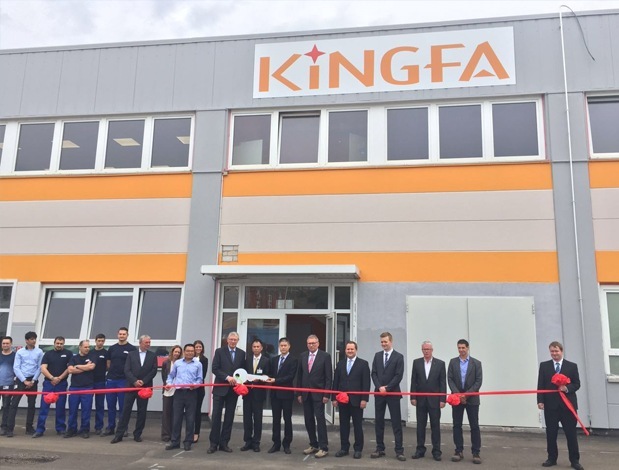
The subsidiary has facilities in Pune, Puducherry, Manesar, and just commissioned a new plant in Bhiwadi on February 22, 2026. Management is raising ₹500 crore (~₹499.99 crore, to be exact — Indian companies and their precision) through preferential shares to fund capacity expansion. At ₹3,470 per share, they found strategic investors fast. Which part of “we’re running out of capacity” didn’t the market hear?
Let’s break down why a company making plastic pellets matters more than it should.
New Plant Alert: Bhiwadi Unit (Plot C-583) commenced commercial production effective February 22, 2026. This is not a pilot. This is not a test. This is live. And it signals management’s confidence that demand will justify the capex.
03 — Business Model: WTF Do They Even Do?
Melting, Blending, Selling. Rinse. Repeat. Profit.
Kingfa buys virgin plastic resin (polypropylene, polyethylene, thermoplastic elastomer), mixes in additives, heats it to 200°C, extrudes it as pellets or compounds, and sells it to automotive OEMs, appliance makers, and PPE manufacturers. The inputs are commodities. The expertise is in formulation. The margin comes from knowing which chemicals to add so that, say, a car door panel doesn’t crack in Mumbai’s 45°C summer heat or snap in Kashmir’s -10°C winter.
The business splits three ways: automotive compounds (~50%+ of revenue), industrial/consumer products (~30%), and PPE (gloves, masks, newer safety products added in FY24). Geographic split: India represents ~92% of FY24 revenue, with exports to South Africa and Thailand recently started. The company has installed capacity of 100,000-110,000 MT per annum across its plants. Bhiwadi’s launch signals the company believes it can absorb even more production.
Kingfa’s parent company (Kingfa Science & Technology Co. Ltd, China) holds 67% of Indian subsidiary shares after the preferential issue. That’s ownership but not overcontrol — regulators and minority shareholders still matter. The parent brings global R&D muscle and OEM relationships; the Indian subsidiary brings ground expertise, local scale, and regulatory compliance. It’s a partnership, not a puppet show.
Automotive50%+Core Business
Industrial/Consumer30%Growing Segment
PPE15-20%Newer Products
Exports8%FY24 Revenue
EV Play: Kingfa has prioritized Electric Vehicle compounds. Flame-retardant formulations for 2W EVs commercialized in FY23. 4W EV compounds now in development. The company conducts on-campus demos at leading EV OEM facilities — basically speed-dating with engineers who get to decide what plastic their $30 lakh car is made of.
💬 Here’s the thing: when Maruti launches an EV, which plastic compounds go into the door panel? Kingfa. Do you know the name of that supplier? Nope. This is exactly why small-cap industrial companies trade cheap.
04 — Financials Overview
Q3 FY26: The Numbers That Should Wake You Up
Result type: Quarterly Results | Q3 FY26 EPS: ₹33.33 | Annualised EPS (Q3×4): ₹133.32 | TTM EPS: ₹131
| Metric (₹ Cr) |
Q3 FY26
Dec 2025 |
Q3 FY25
Dec 2024 |
Q2 FY26
Sep 2025 |
YoY % |
QoQ % |
| Revenue | 489 | 440 | 466 | +11.1% | +4.9% |
| Operating Profit | 62 | 51 | 61 | +21.6% | +1.6% |
| OPM % | 13% | 12% | 13% | +100 bps | Flat |
| PAT | 45.2 | 34.7 | 41.0 | +30.4% | +10.2% |
| EPS (₹) | 33.33 | 28.60 | 30.36 | +16.6% | +9.8% |
The Quiet Killer: Q3 profit jumped 30.4% YoY while revenue grew only 11.1%. That’s operating leverage in action — the factory was already built, margins widened, and boom — 30% PAT growth. TTM P/E is 33.4x but annualized Q3 EPS of ₹133 gives a forward P/E of 31x. Still expensive, but far less insane than the headline says.
05 — Valuation: Fair Value Range
Is ₹4,121 Expensive or a Bargain?