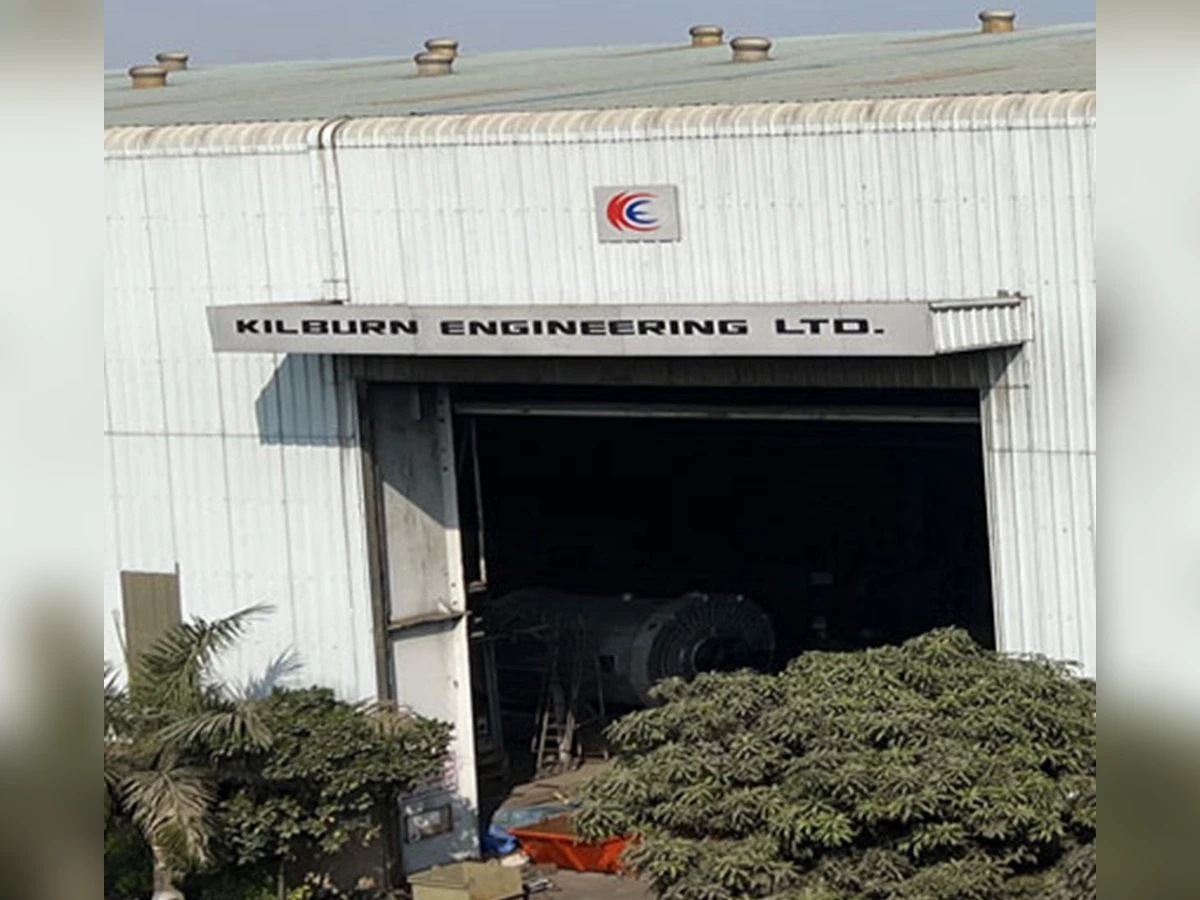
01 — At a Glance
The Dryer That Turned Into a Conglomerate
- 52-Week High / Low₹618 / ₹327
- Q3 FY26 Revenue₹157 Cr
- Q3 FY26 PAT₹23.2 Cr
- TTM EPS₹18.4
- Annualised EPS (Q3 Avg × 4)~₹17.9
- Book Value / Share₹108
- Price to Book4.61x
- FY26 Revenue Target₹625–₹650 Cr
- Order Book (Dec 2025)₹495 Cr
- ROCE21.7%
Flash Summary: Kilburn just posted Q3 PAT of ₹23.2 crore, up 52.7% YoY. Order book is ₹495 crore. Management is guiding for ₹625–₹650 crore revenue in FY26 (50% growth) and ₹800 crore by FY27. They acquired ME Energy in Feb 2024 for ₹99 crore and Monga Strayfield in Jan 2025. The stock is trading at 28.5x P/E. Wall Street would call this “priced for perfection.” Indians would call it “Ekta Kapoor serials of the stock market — drama guaranteed, ending uncertain.”
02 — Introduction
Why A Company That Dries Stuff Is Suddenly Diversifying
Let’s talk about Kilburn Engineering. Founded in 1987, they’re the OGs of industrial drying equipment in India. Rotary dryers, coolers, kilns, heat exchangers — you know, machines that take wet stuff and make it dry. Riveting stuff. Literally.
For 30+ years, they were content being the quiet masters of this niche. They served carbon black companies, fertilizer plants, petrochemical refineries, and the occasional pharmaceutical. Their customer base reads like a Forbes list: Reliance, BHEL, ONGC, Lupin, Cipla, PepsiCo. 3,000+ installations globally. Decent order book. Decent margins. Life was good.
Then around 2024, something shifted. The promoters looked around and said, “You know what? Dryers are cool and all, but let’s become thermal engineering experts. Let’s buy a waste heat recovery company. Let’s also acquire RF drying tech. Let’s become a $1 billion company by Thursday.” Enter ME Energy (February 2024, ₹99 crore) and Monga Strayfield (January 2025, ₹123 crore). Two acquisitions in 12 months. Two.
Management is now guiding for ₹625–₹650 crore FY26 revenue (50% growth), ₹800 crore FY27, and ₹1,000 crore after that. The order book swelled to ₹495 crore. ROCE is 21.7%. The rating agency upgraded them to ACUITE BBB+ with “Positive” outlook. And yet, the stock is down 11.5% in 3 months. Only in India does a company with 50% growth guidance trade lower than it did three months ago. Actually, that’s everywhere. Investors hate surprises, even good ones.
The Concall Verdict (Feb 2026): Management stayed confident on FY26 guidance, even after admitting Q3 margins were softer than expected. They cited freight costs from “very high exports” eating into other expenses. They acknowledged “quarter-to-quarter variability based on order mix.” And they kept reiterating ₹625–₹650 crore FY26, then ₹800 crore FY27. Translation: “We’re not wrong; the quarters are just zigzagging to the finish line.”
03 — Business Model: From Dryers to “Thermal Solutions”
They Dry Things. Then They Recovered Your Heat. Then They Bought RF Tech.
Here’s the original Kilburn: Design and manufacture customized drying systems. That’s it. Carbon black dryers, fertilizer coolers, soda ash kilns, pigment dryers. Complex, capital-intensive, long delivery periods (6-18 months per order), high barriers to entry because you need 30 years of tribal knowledge and a customer base that knows your reputation. They own 37% of their order book just from carbon black. Revenue was ₹330 crore in FY24, ₹424 crore in FY25.
Then came ME Energy (acquired Feb 2024): Thermal engineering, heat recovery systems, waste heat reutilization. The rationale? “Our dryers dry things. Their technology recovers heat from that drying process and reuses it. Synergy!” Makes sense, except ME Energy wasn’t doing well on its own — it needed a mother ship. Now it’s a wholly owned subsidiary, and Q3 saw ₹40 crore+ revenue from consolidated operations.
Then came Monga Strayfield (acquired Jan 2025): Radio frequency drying and heating technologies, sheet metal fabrication. Same story: “Another thermal piece of the puzzle.” It’s now also a wholly owned subsidiary with ~₹20 crore order book.
So Kilburn is now a “thermal and drying equipment company,” offering “bundled solutions” — dryer + heat recovery + RF tech + sheet metal. They’ve gone from being a dryer specialist to being a one-stop thermal shop. The concall makes it clear: management expects “the biggest growth coming from M.E. Energy” in FY27, while Kilburn standalone “continues to grow.” Translation: They bought growth. That’s one way to hit ₹800 crore.
Kilburn Standalone OB₹300 Crof ₹495 total
ME Energy OB₹170 CrBiggest growth driver
Export Mix~30%of FY26 revenue
Order Inquiry₹3,800-4,000 CrConsistent funnel
Management framed their expansion into a “three-company group” as strategic consolidation for “bundled solutions” to “tap existing client bases.” What they mean: “We bought our growth targets. Execution will tell if it actually works.” Order book at ₹495 crore provides ~8-9 months of revenue visibility at current run rate. On the concall, they expect to open FY27 with “₹500 crore plus” order book. That’s very deliberate language. Why? Because hitting ₹625–₹650 crore FY26 depends on it.
04 — Financials Overview
Q3 FY26: The Numbers Are Good, The Margins Are Confusing
Result type: Quarterly Results | Q3 FY26 EPS: ₹4.46 | Avg Q1–Q3 EPS (Jun, Sep, Dec): (₹4.40+₹5.23+₹4.46)/3 = ₹4.70 | Annualised EPS: ₹18.80
| Metric (₹ Cr) |
Q3 FY26
Dec 2025 |
Q3 FY25
Dec 2024 |
Q2 FY26
Sep 2025 |
YoY % |
QoQ % |
| Revenue | 157 | 108 | 154 | +44.8% | +2.0% |
| Operating Profit | 36 | 23 | 40 | +56.5% | -10.0% |
| OPM % | 23% | 22% | 26% | +100 bps | -300 bps |
| PAT | 23.2 | 15.2 | 27 | +52.6% | -14.1% |
| EPS (₹) | 4.46 | 3.19 | 5.23 | +39.8% | -14.7% |
The Margin Wiggle: Revenue is up 44.8% YoY. PAT is up 52.6% YoY. But Q3 margin came in at 23% (operating margin), down from Q2’s 26%. And PAT fell 14% QoQ. Management blamed “freight costs from very high exports” and “variability in other expenses including professional fees and provisions.” Translation: Q3 got squeezed, but the full-year 22–23% margin guidance is still locked in. They’re telling you: “Don’t judge us by one quarter. Judge us by the destination.” That’s either confidence or hope. Analysts love it when you can’t tell the difference.
💬 Q3 OPM fell to 23% from Q2’s 26%, yet management is confident on 22-23% FY26 margin. Do you think they’re managing expectations, or is this genuinely quarter-to-quarter lumpy due to project mix? Thoughts?
05 — Valuation Discussion – Fair Value Range Only
What Should This M&A-Happy Company Actually Cost?
Method 1: P/E Based
TTM EPS = ₹18.4 (rough annualization of rolling 12 months). Industry median P/E for capital goods = 27.6x. Kilburn trades at 28.5x, already at median. For a company doing inorganic growth with execution risk, a 25–30x P/E is justified if FY26 guidance is hit. Conservative band: 20–25x.
→ 20x × ₹18.4 = ₹368 25x × ₹18.4 = ₹460
Range: ₹368 – ₹460
Method 2: Price to Book Value
Book Value = ₹108. Current P/BV = 4.61x. For capital goods with 21.7% ROCE and growing order book, a 3.5–5x P/BV is fair. The upper band assumes FY27 ₹800 crore target is credible.
→ 3.5x × ₹108 = ₹378 5.0x × ₹108 = ₹540
Range: ₹378 – ₹540
Method 3: EV/EBITDA (Operational Basis)
TTM Operating Profit ≈ ₹145 Cr. Enterprise Value ≈ ₹2,668 Cr. EV/EBITDA = ~18.4x. Given order book visibility and growth targets, a 14–18x band is reasonable.
At 14–18x on TTM EBITDA, fair share value implies ₹400–₹500 range.
Range: ₹400 – ₹500
Consolidated View: Across all three methods, fair value converges around ₹380–₹540. The CMP of ₹499 sits squarely in the middle, suggesting the market is fairly pricing the growth story IF management delivers FY26 guidance and the acquisitions integrate smoothly. Upside exists if FY27 ₹800 crore target is hit; downside is real if margins compress further or order intake slows.
⚠️ EduInvesting Fair Value Range: ₹380 – ₹540. This fair value range is for educational purposes only and is not investment advice. Please consult a SEBI-registered investment advisor before making any financial decision.
06 — What’s Cooking: News, Triggers & Drama
Serial M&A, Capex Delays, And A New JV No One Asked For