01 — At a Glance
The Karnataka Story: Big Ambitions, Smaller Margins
- 52-Week High / Low₹233 / ₹163
- Q3 FY26 Revenue (₹ Cr)2,220
- Q3 FY26 PAT (₹ Cr)291
- Q3 FY26 EPS (₹)7.69
- Annualised EPS (Q3×4)30.76
- Book Value₹333
- Price to Book0.67x
- Dividend Yield2.24%
- Debt / Equity (Adj)8.27x
- TTM Profit Growth-11%
Whisper from the Auditor’s Chair: Karnataka Bank closed Q3 FY26 with ₹2,220 crore quarterly revenue (0.62% YoY decline), ₹291 crore PAT (2.54% YoY growth), and a P/E of 7.32x. On the surface, P/B of 0.67x looks cheap. But cheap sometimes just means the market is waiting for something good to actually happen. Meanwhile, management has swapped out half the leadership team since November 2025. New MD. New CRO. New CIO. Anyone else see a revolving door, or is it just me?
02 — Introduction
In the Land of Private Banks, Karnataka Bank Is the Underdog with Debt
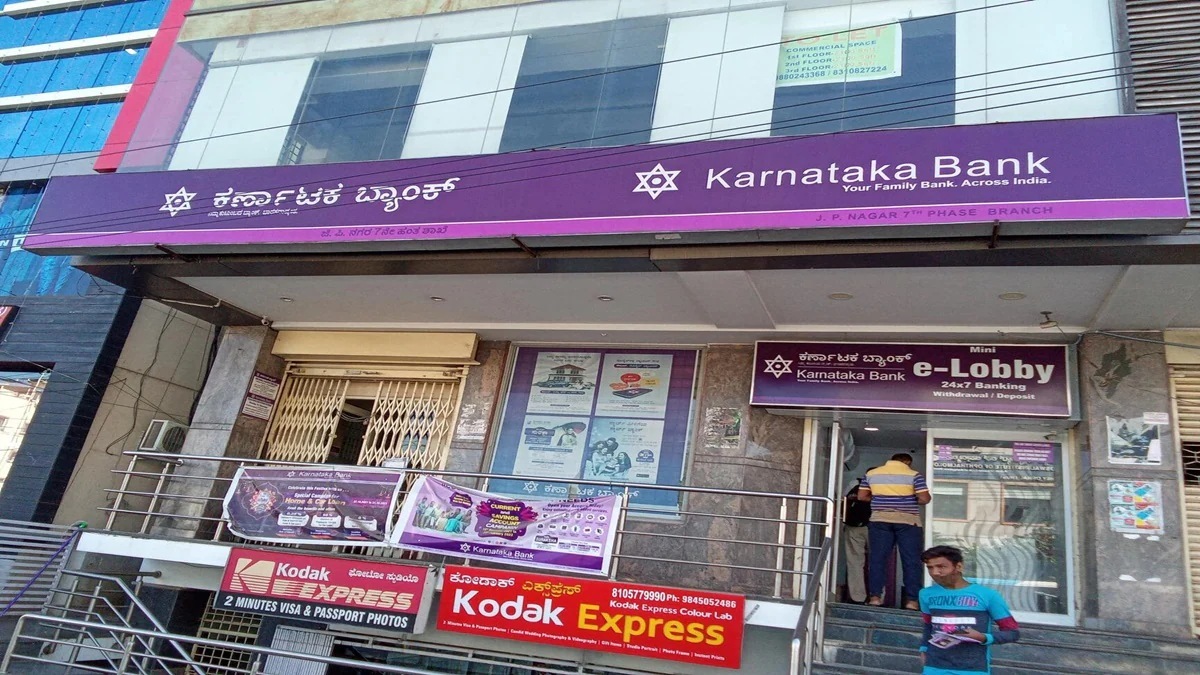
Welcome to Karnataka Bank. Not HDFC. Not ICICI. Not Axis. The bank that does things a little differently, and by “differently,” I mean it runs a 64-year regional franchise in Karnataka with a deposit franchise worth ₹1.04 lakh crore, mostly in a state that may or may not be in India’s economic center right now.
Karnataka Bank was born in 1924. It’s older than your grandparents’ bank accounts. It’s trusted by millions in Karnataka, has 952 branches, 1,506 ATMs, and a CASA ratio of 31.53% — which is respectable, except the industry average is 37%. Translation: they’re paying more for cheaper money because they haven’t scaled the automated deposit franchise yet. A problem, but a solvable one.
Q3 FY26 landed in December 2025, and the results? Profitability down YoY, margins compressed, management churn at an all-time high, and an ICRA rating outlook revision from “Positive” to “Stable” — which, in bond market speak, is someone politely saying: “We’re no longer convinced you’re going to get better next year, but you’re not collapsing either.”
And yet, the stock trades at 0.67x book value. The 5-year profit CAGR is 24%. The ROE is 13.1% on a 3-year average. The management is genuinely trying to fix the business — improving CASA, killing toxic wholesale deposits, driving retail growth, targeting 3%+ NIMs by March 2026 (per the concall). But the market is skeptical. We’ll figure out why by the end of this article.
Concall Reality Check (Feb 2026): MD Raghavendra S. Bhat: “We expect to return to NIM 3% plus by year-end.” Translation in market language: “We hope.” Reality check: NIM fell from 3.02% (Q3 FY25) to 2.92% (Q3 FY26). Betting on ₹0.20 crore of margin expansion in one quarter is like expecting your exam score to jump 20 points in the final test because you finally opened the textbook.
03 — Business Model: Banking, But Regional
They Take Deposits. They Lend. They Hope People Repay. Simple, No?
Karnataka Bank’s business model is straightforward to the point of being boring. Retail Banking (housing loans, auto loans, personal loans, gold loans) contributes 44% of revenue. Corporate Banking (working capital, term loans) is 36%. Treasury is 18%. Other stuff: 3%.
The balance sheet is ₹1.20 lakh crore in total assets. Deposits: ₹1.04 lakh crore (a 2.7% QoQ increase, slower than the bank would like). Advances: ₹77,283 crore (up 5% QoQ, which is decent). CD ratio: 74.23% — improving, but still below the bank’s own guidance of 76-80% for Q4.
Geographic footprint is almost entirely Karnataka (64% of branches), with some presence in Maharashtra (6%), Tamil Nadu (6%), Andhra Pradesh (5%), and Telangana (3%). Translation: you’re running an essentially single-state franchise trying to convince your investors you’re a national bank. It’s like calling your neighborhood tea stall a “global beverage operation.”
The real story: Karnataka Bank is transitioning from a “corporate + treasury dependent” bank to a “retail + MSME driven” bank. It’s deliberately running down low-yielding Treasury assets (IBPC fell from ₹1,860 crore to ₹1,639 crore QoQ) and replacing them with higher-yielding retail and MSME loans. The execution is real. The margin pressure is also real.
Retail Mix44%of revenue
Corporate Mix36%of revenue
Treasury Mix18%of revenue
CASA Ratio31.53%improving, slowly
Management Ambition Tracker: By end of FY26, management wants advances at ₹85,000 crore (vs ₹77,283 crore now = +10% growth). CD ratio in the 76-80% range. ROA at 1.1% or higher. NIM at 3% plus. Cost-to-income at 55%. These are not crazy targets. They are also not a sure thing given the deposit market is brutal and competition for retail is fierce. Pick your poison.
💬 Regional bank vs National bank — does the location matter more than the management’s ability to scale deposits? Drop your view in comments.
04 — Financials Overview
Q3 FY26: The Good, The Bad, The Ugly