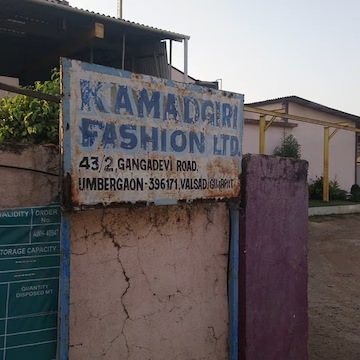
Kamadgiri Fashion Ltd Q2 FY26 – Kapde, Karz aur Kam Profit: When Fashion Walks the Ramp but Balance Sheet Trips
1. At a Glance
Kamadgiri Fashion Ltd, a 1987-born Mumbai-based textile player, has been dressing up the nation while its own margins are running out of fitting. With a market cap of just ₹50.8 crore and a P/E of 45.4, this smallcap fabric weaver is strutting down the stock market ramp like a couture model wearing discount tags. The stock trades at ₹86.6 after tumbling nearly 23% in the last 3 months, reminding investors that fashion is temporary, but losses are forever.
The company reported Q2 FY26 sales of ₹41.91 crore and a PAT of ₹0.12 crore, down a brutal 52% YoY. With an ROE of 4.23% and ROCE of 8.49%, Kamadgiri’s returns look more like a failed designer show than a textile triumph. Debt still lingers at ₹20.8 crore, and while the debt-to-equity ratio of 0.58 sounds modest, the interest coverage of 1.58 whispers—“bas guzar jaata hai.”
So yes, the company makes suiting, shirting, and uniforms for everyone from corporate warriors to future grooms—but right now, its profits are the ones needing tailoring.
2. Introduction
Kamadgiri Fashion Ltd (KFL) has seen everything—Future Group drama, PPE kits, and the pain of falling demand. In the grand Indian textile theatre, it plays the role of that dependable but underpaid tailor who makes everyone else look good. Incorporated in 1987, the company spent decades weaving dreams (literally) before being caught in the warp and weft of changing fashion and changing fortunes.
Operating out of Maharashtra and Gujarat, KFL runs a fully integrated operation—from weaving to stitching to brand launches. Yet, despite vertical integration, its financial results are stitched with red threads.
After years of being Future Group’s fabric supplier, the company got tangled in that group’s own unraveling saga. Still, with brands like True Value, True Linen, Incasso, and Bangkok Fashions, KFL keeps trying to make a comeback. But fashion isn’t kind to those who miss trends—and in FY25 and FY26, Kamadgiri’s trend has been: “Downward.”
The share price’s fall from ₹154 highs to ₹86 is like watching your favorite shirt fade after one wash.
3. Business Model – WTF Do They Even Do?
Alright, so what does Kamadgiri Fashion actually do? In short—weave, stitch, and pray.
The company makes fabrics (in-house) and readymade garments (outsourced or contract manufactured). Its product line includes everything from formal shirts, casual wear, suiting fabric, uniforms, and gifting packs to fancy linen products. It’s also known for offering customized uniform tailoring—from airlines to schools to corporates, if you’ve ever worn a uniform in India, chances are Kamadgiri had something to do with it.
They have four manufacturing facilities:
Two weaving units in Umbergaon (Gujarat)
One garment unit in Tarapur (Maharashtra)
One more in Sanjan (Gujarat)
In FY23, the weaving units ran at 84% capacity while garmenting dragged at 51%—basically, one half is sweating while the other is napping.
And the brands? Let’s meet the wardrobe:
True Value: Launched in 2005, offers premium shirting/suiting.
True Linen: Linen lovers’ delight.
Incasso: Readymade shirts for the stylish-but-broke.
Bangkok Fashions: The quick-fix tailor, promising stitching in 72 hours.
Zero Risque Mask: Launched during COVID—a virus-proof mask that didn’t protect the profits.
Basically, Kamadgiri is a vertically integrated fashion factory with Future Group ties and fabric in its veins. But in FY26, the looms may be spinning faster than the cash registers.
4. Financials Overview
Quarterly Results (Standalone in ₹ Crores)
Metric
Q2 FY26
Q2 FY25
Q1 FY26
YoY %
QoQ %
Revenue
41.91
44.03
36.31
-4.8%
15.4%
EBITDA
1.68
1.38
1.62
21.7%
3.7%
PAT
0.12
0.25
0.20
-52.0%
-40.0%
EPS (₹)
0.20
0.43
0.34
-53.4%
-41.2%
Commentary: Sales dipped marginally YoY, but profits collapsed faster than cheap polyester in the sun. EBITDA margin stood near 4%, up a whisker from the previous quarter. At this rate, the company’s profit margins are thinner than its linen fabrics. Annualised EPS is about ₹0.80, giving a P/E of 108x on trailing quarterly run rate—way above the industry’s comfort zone.
5. Valuation Discussion – Fair Value Range Only
Let’s break this down like a CA with a sense of humour.
(a) P/E Method
EPS (TTM): ₹1.91 Industry P/E: 19.4 So, Fair Value Range = ₹37 to ₹50 (using 20x to 26x earnings for educational purposes)
(b) EV/EBITDA Method
EV = ₹71.5 crore EBITDA (TTM) = ~₹7 crore EV/EBITDA = 9.5x Peers like KPR Mill and Trident trade between 8–15x, so KFL sits midrange. Fair Value Range = ₹70–₹90 crore enterprise value → translates to ₹85–₹110/share.
Educational Fair Value Range: ₹70–₹100 (This range is for educational purposes only and is not investment advice.)
6. What’s Cooking – News, Triggers, Drama
Oh, the gossip mill never sleeps in textiles.
April 2024: Board approved transfer of its fabric division to Tritoma Fashion Lab for ₹5.91 crore. Basically, selling the fabric arm to focus on garments.