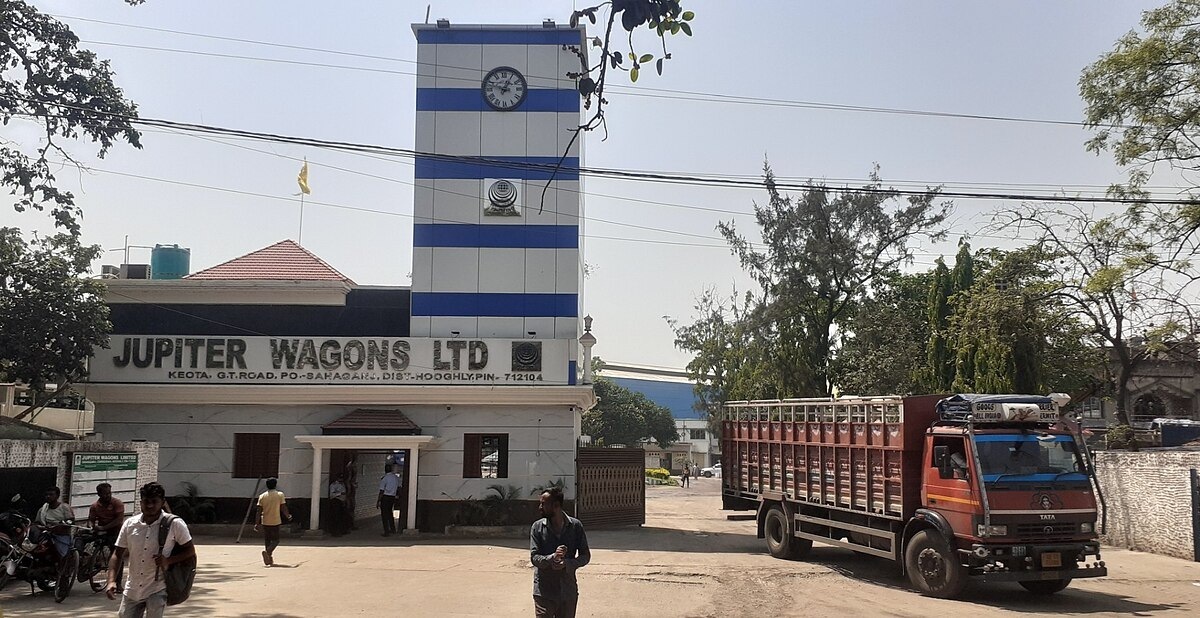
Jupiter Wagons Ltd Q2FY26 — When Wagons Stall, Electric Dreams Roll (₹796 Cr Revenue, ₹52.7 Cr PAT, -40.5% YoY Profit Crash)
1. At a Glance
If the Indian Railways ever needed a poster child for both ambition and irritation, Jupiter Wagons Ltd (JWL) would probably qualify. The stock, once the darling of railway-themed WhatsApp groups, now looks like it took a pit stop on the moon — orbiting between ₹270 and ₹588 while currently parked at ₹311. Market cap: a solid ₹13,206 crore, but the romance is fading — down 19.8% in six months and -33.8% over the last year.
The Q2FY26 results? Well, Jupiter delivered ₹796 crore in revenue, a decent haul considering the shortage of wheelsets (thanks to Indian Railways’ supply drama). Yet profits plunged -40.5% YoY, settling at ₹52.7 crore. Operating margin stuck at a respectable 13.6%, but it’s clear the wheel has lost some grease.
Still, this is a company with audacity: a ₹5,972 crore order book, 12 manufacturing facilities, and a ₹2,500 crore capex plan to build India’s first private rail wheel and axle forging plant. ROE is 17%, ROCE at 21.5%, and debt is a comfortable ₹590 crore with a D/E ratio of 0.21. So, not a crisis — just a slow-moving freight train stuck at a red signal.
2. Introduction
Once upon a time, the story of Jupiter Wagons was about one thing — wagons. Big, clunky, iron boxes moving India’s dreams and coal across the country. But in classic Bollywood style, the company diversified its script: from railway wagons to electric vehicles, containers, defense mobility, and even drones. Yes, drones — because apparently, “manufacturing wagons” isn’t exciting enough for 2025.
But this quarter, Jupiter learned the oldest truth in manufacturing — you can’t build wagons without wheels. The shortage from Indian Railways’ Wheel Factory hit production planning like a pothole on the Delhi-Gurgaon expressway. Sales crashed 27.4% YoY in Q2, and profits went down a steeper 40.5%.
Still, management keeps up the swagger: with global partners from Slovakia, Spain, and Slovenia, and a futuristic JV with RITES targeting Zimbabwe and Mozambique. Think of it as the “Make in India” train trying to go global — just hoping the rails are laid on time.
3. Business Model – WTF Do They Even Do?
In short, Jupiter makes things that move other things.
The Rail Mobility division is the star child — producing wagons for freight, defense, and passenger use. They’re India’s largest 25-tonne wagon manufacturer, and their range covers everything from open and covered wagons to container carriers. With 86% of FY24 revenue coming from wagons, it’s a solid steel-based cash cow — except when the Railway Wheel Factory decides to take a nap.
Then there’s the Road and Multimodal Mobility business, which is basically Jupiter’s way of saying: “We make cool stuff on wheels.” From water tankers and brake discs to BESS containers and electric light commercial vehicles (LCVs), it’s a manufacturing buffet.
And if that wasn’t enough, Jupiter went full Elon Musk — launching Jupiter Electric Mobility (JEM), rolling out the JEM TEZ (2.2T GVW) and EV STAR CC (7T GVW). They even opened a Bengaluru EV showroom and signed an MoU with Pickkup to deploy 300 e-LCVs.
So yes, this company builds everything from freight wagons to flying drones. Basically, if it moves — Jupiter probably wants a piece of it.
Jupiter’s quarterly profit graph looks like a roller coaster — thrilling, but definitely not for heart patients. QoQ rebound is solid, but YoY, the company’s growth engine misfired. Blame it on wheels or supply