1. At a Glance – Ayurvedic Multibagger or Valuation Ka Kadha?
Jeena Sikho Lifecare Ltd (JSLL) is currently valued at ₹9,240 crore, trading at ₹742 per share, with a stock P/E of 69.3x, which basically means the market already believes this company has achieved enlightenment. In the last 1 year, the stock is up 90%, and over 3 years, a jaw-dropping 184%. Not bad for a company that was practically invisible to Dalal Street a few years ago.
Latest quarterly numbers? Absolute masala. Q3 FY26 revenue came in at ₹222 crore, up 91.6% YoY, while PAT jumped 405% YoY to ₹66.7 crore. Operating margins are sitting pretty at ~45%, which for a hospital + product business is… borderline offensive to traditional healthcare players.
Debt is low at ₹106 crore, promoter holding is a confident 63.6%, and there is zero promoter pledge. The business runs 36 hospitals, 74 clinics, sells 350+ Ayurvedic products, and somehow manages to look both asset-heavy (hospitals) and asset-light (outsourced manufacturing) at the same time.
But here’s the real hook: the market isn’t valuing Jeena Sikho as a hospital chain. It’s valuing it like an FMCG-plus-platform-plus-healthcare-ecosystem-plus-faith-premium cocktail. Is that genius… or dangerous optimism? Let’s dig.
2. Introduction – From Ayurveda OPD to Dalal Street ICU
Ayurveda has always been that one subject Indians swear by when sick, but hesitate to invest in when it comes to listed companies. Jeena Sikho Lifecare just walked in and said, “Challenge accepted.”
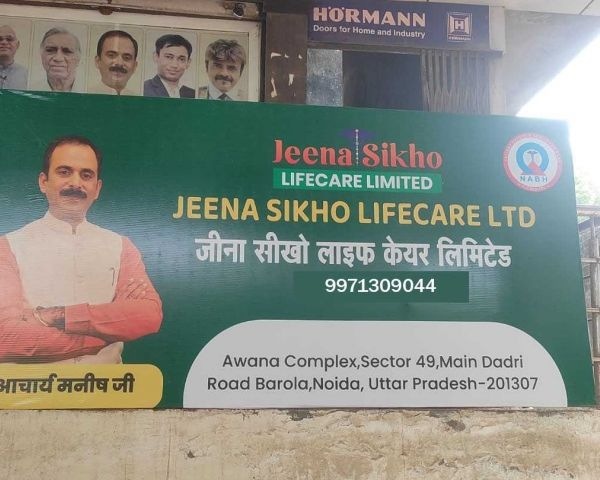
Over the last decade, JSLL has quietly built a nationwide Ayurvedic healthcare network spanning 21 states and 100+ cities. Unlike your neighbourhood vaidya who treats cough with ginger and gyaan, Jeena Sikho has NABH-accredited hospitals, structured clinical processes, and a call-centre engine that would make telecom companies jealous.
The real turning point? Scale plus systems. The company isn’t just running hospitals; it’s running patient funnels. Clinics feed hospitals. Call centres feed clinics. Products monetize patients long after discharge. It’s healthcare… but with CRM thinking.
Financially, FY25 closed with ₹469 crore revenue and ₹80 crore PAT, translating to ~17% net margin. For context, many listed hospital chains struggle to hit double-digit net margins consistently.
But with greatness comes valuation
risk. At ~26x book value and ~70x earnings, Jeena Sikho is priced like everything will go right, beds will fill up, OTC products will fly off shelves, and international expansion won’t burn cash. That’s a lot of faith—ironically fitting for an Ayurveda company.
So the question is simple: is this a structurally strong healthcare platform in the making, or is the stock already living in 2030?
3. Business Model – WTF Do They Even Do?
Let’s simplify this for a smart but lazy investor.
Step 1: Clinics Catch You
Jeena Sikho runs 74 clinics/daycare centres, many of which are franchise-operated. These are low-capex entry points where patients come for consultations, Panchakarma therapies, or chronic condition advice.
Step 2: Hospitals Treat You
Serious cases get referred to 36 hospitals with 1,530 operational beds. Average occupancy is 51%, which means there’s still room to sweat assets harder. Average revenue per bed is ₹8,100, which improves sharply as occupancy rises.
Step 3: Products Follow You Home
Once treated, patients don’t leave empty-handed. They enter the Shuddhi product ecosystem—350+ SKUs, outsourced manufacturing, ~90% gross margins. That’s not healthcare margin—that’s FMCG margin wearing a stethoscope.
Step 4: Call Centre Never Forgets You
The company handled ~59,000 video consultations in H1 FY25. This is not a hospital; this is a sales funnel with medical degrees. Repeat orders, follow-ups, cross-selling—everything is systemized.
Revenue split?
- Hospitals & Clinics: 53%
- Products: 47%
This balance is key. Hospitals build credibility. Products mint cash. Together, they justify premium
