1. At a Glance
James Warren Tea Ltd is that old-school Assam tea company which looks cheap, smells premium, and occasionally punches its own P&L in the face. Market cap sitting at ~₹119 Cr, stock price around ₹321, trading at a sleepy P/E of 5.5 and an even sleepier 0.53× book value. On paper, it looks like a deep-value investor’s dream — debt-free, ROCE ~24%, ROE ~24%, and promoters holding a confident 68.6% stake with zero pledge.
But then you open the quarterly results and boom — Q3 FY26 PAT is a loss of ₹1.44 Cr, revenue down 32% YoY, and operating margins doing bhangra between +50% and -400% depending on the quarter. Other income casually drops ₹58 Cr in one quarter like it’s loose change found under the sofa.
So what is this company?
A steady tea business?
A plantation REIT in disguise?
Or an accounting smoothie where tea leaves are optional?
Let’s sip slowly. ☕
2. Introduction
James Warren Tea Ltd has been around since 1983, which in Indian stock market terms means it has survived Harshad Mehta, Ketan Parekh, UPA-I, UPA-II, Demonetisation, COVID, and WhatsApp forwards predicting the end of capitalism.
The company owns multiple tea estates in Assam and produces both CTC and orthodox teas, selling through auctions and private channels. Sounds boring? Good. Boring businesses often make money.
But here’s the twist: this is not a FMCG brand story like Tata Consumer. This is a plantation + asset-heavy + other-income-heavy story. And that combination creates financial statements that look calm annually but emotionally unstable quarterly.
FY25 net profit came in at ₹101 Cr, which is more than 80% of the company’s market cap. That alone should make you suspicious — or excited — depending on how much coffee you’ve had.
So let’s break it down properly before we accuse the tea leaves of insider trading.
3. Business Model – WTF Do They Even
Do?
At its core, James Warren Tea does three things:
- Grow tea
- Process tea
- Sell tea
That’s it. No fintech pivot. No EV tea kettles. No blockchain chai.
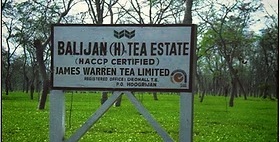
The company owns about 4,000 hectares of tea estates in Assam, spread across seven gardens including Thowra (flagship), Balijan, Deamoolie, Dhoedaam, Rajah Alli, Tippuk, and Zaloni. These estates are EU MRL compliant, HACCP certified, and ethical-trade approved — basically, German inspectors won’t faint after drinking it.
The tea produced is:
- CTC tea (mass consumption, auction-driven)
- Orthodox tea (export-focused, premium pricing)
Exports go to Germany, UK, USA, Japan, China, CIS, and the Middle East — though exports contribute only ~3% of FY23 revenue. So don’t get carried away imagining Euro revenues.
They also sell packaged tea under:
- Loose CTC packs
- Tea bags
- Assam 1860, a Rainforest Alliance-certified product
But here’s the truth bomb: this is not a consumer brand company. It’s a plantation company that occasionally pretends to be FMCG on weekends.
So where does the real money come from?
4. Financials Overview
| Metric | Latest Qtr (Dec’25) | YoY Qtr (Dec’24) | Prev Qtr (Sep’25) | YoY % | QoQ % |
|---|---|---|---|---|---|
| Revenue | 34.82 | 51.56 | 47.28 | -32.5% | -26.3% |
| EBITDA | -3.50 | -1.81 | 22.24 | NA | NA |
| PAT | -1.44 | 10.30 | 20.89 | -114% | -107% |
| EPS (₹) | -3.89 | 27.84 | 56.46 | NA | NA |
Annualised EPS (Q3 rule):
Average of Q1, Q2, Q3 EPS × 4
But since Q3 is a loss and quarterly
