Ladies and gentlemen, please welcome Jagran Prakashan Ltd (JPL) — the great Indian media buffet that serves you everything from newspapers to nagging radio ads, with a digital side dish and a dash of litigation masala. The stock is chilling at ₹70.5, giving a not-so-subtle “read me, don’t buy me” vibe. The company flaunts a market cap of ₹1,534 crore, P/E of 8.89, and a book value of ₹89.3 — yes, it’s trading below its own self-worth at just 0.79x book value.
Quarterly revenue stood at ₹467 crore, with a PAT of ₹56.9 crore, flexing a 36.4% jump in profits QoQ. Not bad for a company whose FM stations sound like they’re from another era. With a dividend yield of 8.51%, Jagran is basically the HDFC Bank of the media world—old-school, dependable, but not exactly doing cartwheels. Debt? A modest ₹198 crore. Cash? Enough to make any journalist jealous — over ₹1,000 crore net cash as per the latest investor presentation.
And the punchline: while print still contributes 80% of revenue, the company’s digital arm is growing, the radio business keeps losing money, and the Gupta family drama is spicier than the average evening prime-time debate.
2. Introduction
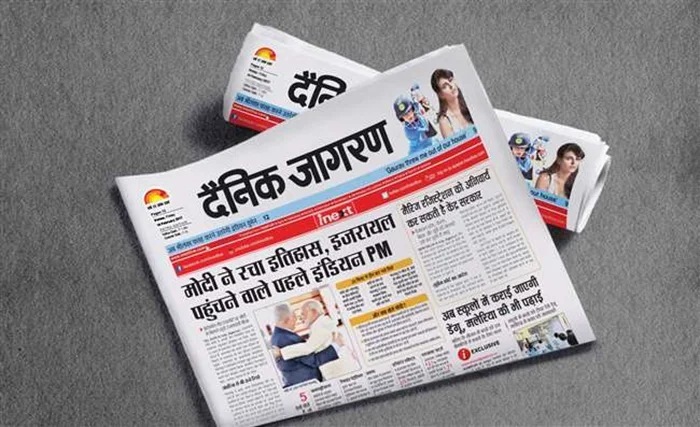
Let’s be honest — if news were truly profitable, half the anchors in India wouldn’t be selling crypto courses. Jagran Prakashan, however, continues to run the old-school show, with its mighty Hindi daily Dainik Jagran (83+ million readers) dominating chai tables across India. But don’t be fooled by nostalgia. This empire is fighting a three-front war — print ad decline, radio irrelevance, and digital disruption.
For a company that practically invented “news for everyone,” Jagran is now playing defense like a retired wicketkeeper. Yet it still manages to pull off a decent PAT, generous dividends, and a balance sheet that refuses to die. Maybe because, unlike many startups, Jagran actually earns money before it burns it.
But not all is calm in the newsroom — the Gupta vs Gupta shareholder feud is currently on NCLT’s playlist, proving that even family businesses are better at producing drama than content. Still, the show goes on, and the real question is — can this legacy print giant rewrite its digital script before Gen Z forgets what a newspaper looks like?
3. Business Model – WTF Do They Even Do?
Jagran Prakashan is basically India’s media thali — one plate, many items. Here’s what’s on the menu:
a) Print Business (80% of FY24 Revenue): The heart and lungs of JPL. With Dainik Jagran leading Hindi print and Inquilab leading Urdu, this division alone covers 13 states and 300+ editions. It’s the desi Google News — except printed on actual paper. But growth? Flat as yesterday’s newspaper.
b) Radio Business (12% of Revenue): Radio City operates 39 stations with a 19% market share. Once a cool kid, now more of a nostalgia act. It’s been losing money consistently — a reminder that in 2025, people prefer Spotify algorithms over RJ chatter. Still, management insists the cash flow will soon “outpace revenue growth.” Translation: “we’ll make less money, but somehow feel better about it.”
c) Digital Business (Growing Fast): Platforms like Jagran.com, Jagran Josh, and Her Zindagi keep the younger audience hooked between reels. The network spans 19 digital properties across multiple languages. It’s still small compared to print, but it’s the only segment not aging faster than its readership.
d) Others (8% of Revenue): This includes outdoor advertising, events, and marketing solutions. Basically, if you saw a Jagran hoarding or a random “Radio City Gig,” that’s this segment earning its keep.
In short: Jagran sells news, noise, and nostalgia — profitably (mostly).
4. Financials Overview
Metric (₹ Cr)
Latest Qtr (Sep’25)
YoY Qtr (Sep’24)
Prev Qtr (Jun’25)
YoY %
QoQ %
Revenue
467
447
460
+4.5%
+1.5%
EBITDA
67
75
64
-10.7%
+4.7%
PAT
56.9
42
67
+35.4%
-15.0%
EPS (₹)
2.69
1.97
3.09
+36.5%
-12.9%
Commentary: It’s like the company’s profit graph is auditioning for a roller coaster. Revenue growth is mild, but margins are under pressure. PAT still shines thanks to cost control and other income (₹31 crore this quarter). EPS annualized is ₹10.8 — giving a P/E of just 6.5x annualized, which screams undervalued louder than Radio City’s RJs.
5. Valuation Discussion – Fair Value Range
Let’s calculate like a good CA.
a) P/E Method: Annualized EPS = ₹2.69 × 4 = ₹10.76. Media industry P/E = ~12x (as per peers). Fair value = ₹10.76 × 12 = ₹129. At CMP ₹70.5 → trades at ~0.55x fair value.
b) EV/EBITDA Method: EV = ₹1,649 crore; EBITDA (TTM) = ₹295 crore. EV/EBITDA = 5.6x (vs industry avg 9x). Fair EV range (8x–9x) = ₹2,360–₹2,655 crore → per-share value ₹100–₹115.
c) DCF (Simplified): Assuming FCFE ~₹250 crore, 2% terminal growth, 12% discount → fair value ≈ ₹95–₹105.
🎯 Fair Value Range: ₹95–₹120 (Educational Estimate) Disclaimer: This fair value range is for educational purposes only and not investment advice.
6. What’s Cooking – News, Triggers, Drama
Oh, where do we begin? The Gupta family feud is still live-streaming at NCLT. Multiple hearings, adjournments, affidavits — the only thing missing is Arnab Goswami moderating it. The dispute revolves around control at Jagran Media Network