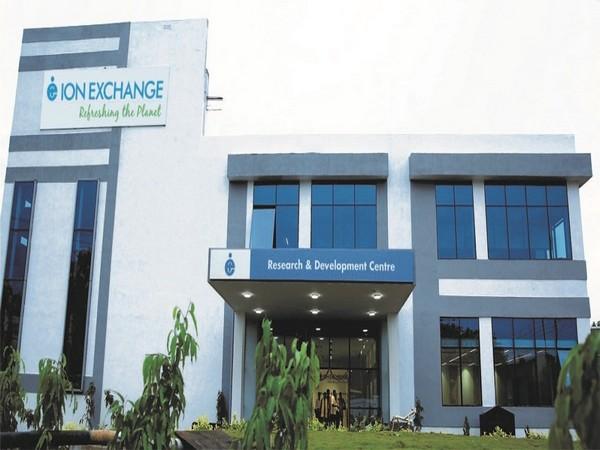
Ion Exchange: 100,000 Installations, 151 Debtor Days, and Still Thirsty for Cash Flow
1. At a Glance
Ion Exchange (India) Ltd wants to save the world one water plant at a time — but its balance sheet sometimes looks like it’s drowning. With over 100,000 installations globally, seven factories, and a ₹6,272 Cr market cap, it’s a giant in water management. Yet, despite hydrating the planet, the stock is dehydrating investors with a -36% return in the last year. Maybe they should try recycling not just wastewater, but shareholder value too.
2. Introduction
Water is life, and Ion Exchange is the plumber-in-chief to industries, cities, and hotels. Founded decades ago, it has become a full-stack solutions company for everything liquid: from desalination plants in the Middle East, to sewage treatment in India, to packaged drinking water units in your neighborhood hospital.
But let’s be honest: when you hear “water company,” you expect boring annuity-style returns, not wild stock swings. And yet Ion Exchange is trading like a mid-cap biotech stock. Why? Because large EPC (Engineering, Procurement & Construction) contracts come in waves: one year you’re surfing ₹800 Cr Jal Nigam projects, next year you’re paddling in shallow puddles of delayed payments.
The company also has a “consumer products” division that sells purifiers to hotels, labs, and households. Noble mission, except it lost money again in Q1 FY25 (EBIT = –₹3.4 Cr). Meanwhile, the Chemicals division — their unsung hero — quietly delivers 25% EBIT margins and keeps the whole operation afloat.
In short: Ion Exchange is like that overachieving cousin at weddings — doing everything, everywhere, all at once — but still getting grilled by relatives about when they’ll settle down (financially).
3. Business Model (WTF Do They Even Do?)
Think of Ion Exchange as the Swiggy of water — they’ll deliver clean water in any form you want.
Engineering (58% of revenue): Big-ticket projects like desalination, ZLD (Zero Liquid Discharge) plants, recycling systems. Clients = NTPC, Reliance, IOCL, state governments. Margins ~8% (because EPC = low-margin, high-drama).
Chemicals (~30%): Resins, adsorbents, specialty chemicals. High-margin (~25%) and growing 36% YoY in Q1 FY25. Basically the cash cow in a herd of unpredictable buffaloes.
Consumer Products (~12%): Purifiers for hotels, hospitals, defense, labs. Revenue grew 9% YoY, but EBIT is consistently negative. It’s their “Zomato Hyperpure” experiment — big dreams, no profits yet.
Geography: 78% domestic, 22% exports (to everywhere from Africa to Canada).
So the business is project-heavy, chemical-steady, consumer-lossy.
4. Financials Overview
Quarterly Snapshot (Q1 FY25 – Jun’25):
Metric
Latest Qtr
YoY Qtr
Prev Qtr
YoY %
QoQ %
Revenue
₹583 Cr
₹568 Cr
₹835 Cr
+2.8%
-30.2%
EBITDA
₹63 Cr
₹64 Cr
₹86 Cr
-1.6%
-26.7%
PAT
₹48.7 Cr
₹45 Cr
₹63 Cr
+8.3%
-22.7%
EPS (₹)
3.3
3.1
4.3
+6.5%
-23.0%
Commentary: YoY looks okay, QoQ looks like a drought. Annualized EPS ~₹14 → at CMP ₹428, recalculated P/E ~29.7x (almost same as industry PE 26.6). Reasonable, but not a bargain when growth is this patchy.