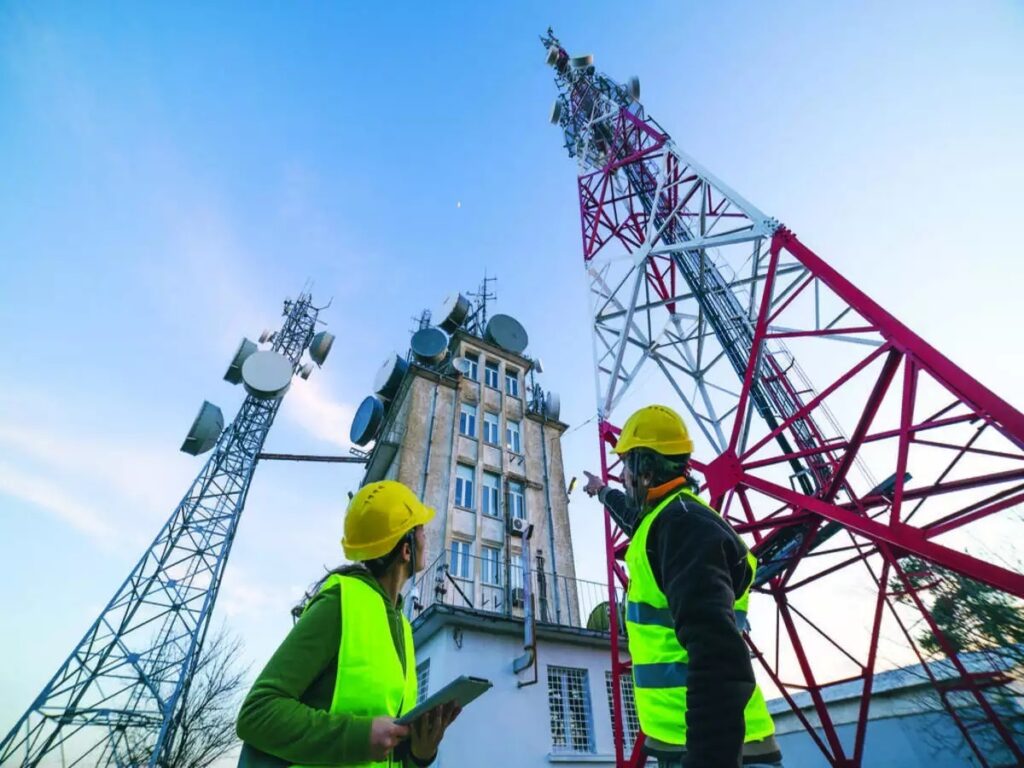
1. At a Glance – The Tower That Prints Cash… and Stress
Indus Towers is that rare Indian infra company which looks boring, smells boring, and yet prints money like a PSU on steroids. Market cap at a hefty ₹1.13 lakh crore, stock price chilling around ₹432, and a ROCE of ~29% that would make most infrastructure companies cry in EPC margins. Q3 FY26 revenue came in at ₹8,146 crore (+7.9% YoY) while PAT nose-dived to ₹1,776 crore (-55.6% YoY) — not because business collapsed, but because accounting and one-time effects decided to show up uninvited.
Operating margins are still a ridiculous 55%+, debt is manageable at ₹20,948 crore, and the company controls ~2.6 lakh telecom towers, basically owning the steel backbone of India’s data addiction. Stock has delivered 26.6% return in 6 months, and yet investors are still squinting suspiciously.
So is this a boring cash cow? A leveraged infra play? Or a hostage to telecom drama (hello Vodafone Idea 👀)? Let’s climb this tower floor by floor.
2. Introduction – The Silent Landlord of Indian Telecom
You stream reels. You binge IPL. You doomscroll Twitter at 2 a.m.
Indus Towers gets paid for all of it.
Indus doesn’t sell SIM cards. It doesn’t advertise flashy data plans. It simply rents steel towers to telcos and collects rent like a grumpy landlord who doesn’t care about your startup dreams. Long-term contracts. Locked-in customers. High switching costs.
Sounds perfect, right? Except… telecom in India is a warzone. Tariffs are political tools, ARPUs crawl instead of sprint, and one large tenant (Vodafone Idea) keeps the entire ecosystem on emotional life support.
Yet, Indus has survived spectrum auctions, AGR nightmares, bankruptcies, and government mood swings. Q3 FY26 again proves one thing clearly: this is not a growth fairy tale — this is
a cash-flow story with drama seasoning.
3. Business Model – WTF Do They Even Do?
Explained like you’re smart but lazy.
Indus Towers owns telecom towers.
Telcos install antennas.
Telcos pay monthly rent.
Repeat for 10–15 years.
That’s it. No rocket science.
Key points:
- Shared infrastructure model → multiple tenants on one tower = higher margins
- Long-term MSAs (10 years renewed in FY23) → predictable revenue
- Pan-India presence → all 22 telecom circles
- Customer concentration → Airtel + VIL = ~80–85% revenue
They also do some fancy stuff now:
- Micro Data Centers (mini MSCs)
- Solar + hybrid power solutions
- Drone inspections, IoT monitoring, AI chatbots
But let’s be honest — the core business is still rent collection from telcos who can’t afford to build their own towers anymore.
4. Financials Overview – The Numbers Don’t Lie (But They Do Troll)
| Metric | Latest Qtr (Q3 FY26) | YoY Qtr (Q3 FY25) | Prev Qtr (Q2 FY26) | YoY % | QoQ % |
|---|---|---|---|---|---|
| Revenue (₹ Cr) | 8,146 | 7,547 | 8,188 | 7.9% | -0.5% |
| EBITDA (₹ Cr) | 4,509 | 6,958 | 4,572 | -35.2% | -1.4% |
| PAT (₹ Cr) | 1,776 | 4,003 | 1,839 | -55.6% | -3.4% |
| EPS (₹) | 6.73 | 15.17 | 6.97 | -55.6% | -3.4% |
Annualised EPS (Q3 FY26)
Avg(Q1 6.58, Q2 6.97, Q3 6.73) = 6.76 × 4 = ₹27.0
Yes, profits crashed YoY — but no, the business didn’t break. EBITDA compression came largely from cost normalization and absence
