At a Glance
Indraprastha Medical Corporation Ltd (IMCL) is not your average hospital setup; it is a high-stakes clinical marriage between the State Government of Delhi (26%) and the healthcare behemoth Apollo Hospitals (22%). While most joint ventures in the public-private space end up as bureaucratic nightmares, this one has quietly transformed into a cash-generating machine in the heart of the National Capital Region.
The numbers are screaming for attention. We are looking at a company that has managed to push its Average Revenue Per Occupied Bed (ARPOB) from ₹44,333 in FY20 to a staggering ₹66,064 in FY26. That is not just inflation; that is a clinical masterclass in moving toward high-value, complex quaternary care like robotic surgeries and organ transplants. With a Market Cap of ₹3,480 Cr and a Stock P/E of 19.0, the market is finally waking up to the fact that this “government-linked” entity operates with the surgical precision of a private titan.
However, beneath the shiny surface of 35.8% ROCE, there are red flags that should make any serious analyst squint. The company is essentially a “two-trick pony,” with almost 95% of its revenue flowing from a single 718-bedded facility in Sarita Vihar. Any regulatory sneeze from the Delhi Government or a local zoning issue could theoretically cripple the entire topline. Furthermore, the shadow of a sub-judice PIL regarding free medicines for poor patients looms like an unpaid bill. If the Supreme Court decides that IMCL must foot the pharmacy bill for its mandatory free-bed quota, the current 18% Operating Margins could face a surgical strike.
Despite these risks, the sheer financial velocity is undeniable. The company has delivered a 132% CAGR in profit growth over the last 5 years. With a planned ₹550 Cr capex to add 350 more beds at Sarita Vihar, the management is doubling down on its crown jewel. Will the new capacity ramp up fast enough to justify the capital outlay, or will the “Law of Large Numbers” finally catch up?
Introduction
Indraprastha Medical Corporation Ltd (IMCL) represents a unique experiment in the Indian healthcare landscape. Founded in 1988, it was designed to bridge the gap between world-class private healthcare and public accessibility. Today, it stands as a 764-bed powerhouse (operational capacity) that serves as the flagship for the Apollo brand in North India.
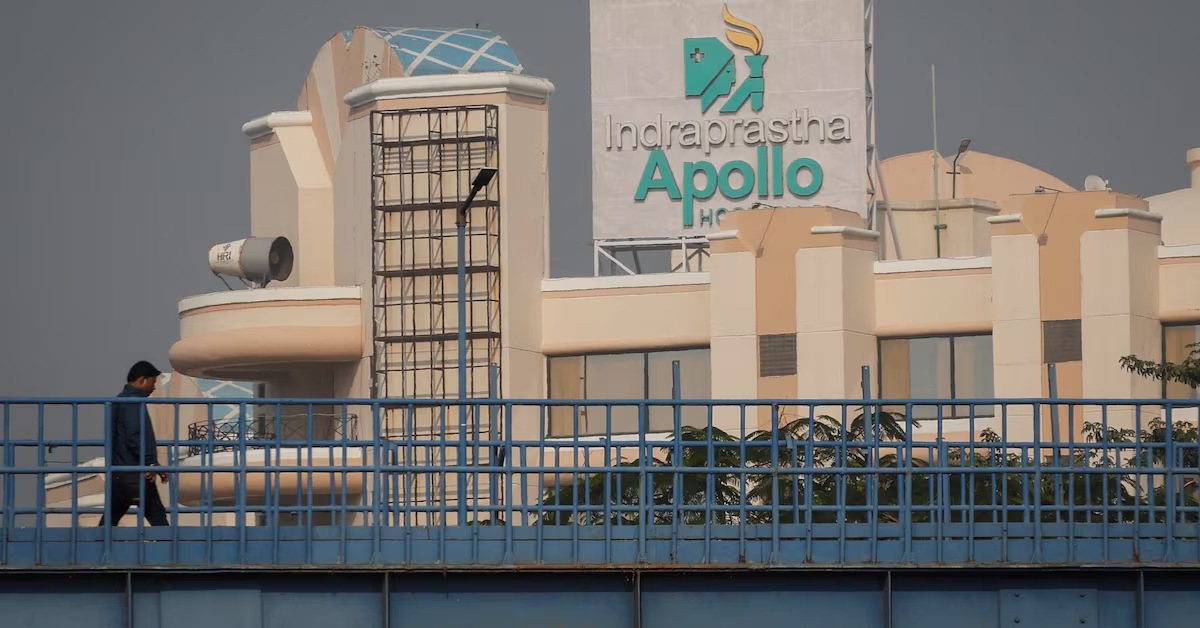
The company’s primary asset is the Indraprastha Apollo Hospital in Sarita Vihar, New Delhi. This facility isn’t just a hospital; it is a clinical hub with 52 specialty departments ranging from advanced oncology to complex hepatobiliary transplants. By leveraging the Apollo ProHealth AI-driven diagnostics and the newly installed ZAP-X Gyroscopic Radiosurgery, the company is aggressively targeting the premium segment of the medical market.
Financially,