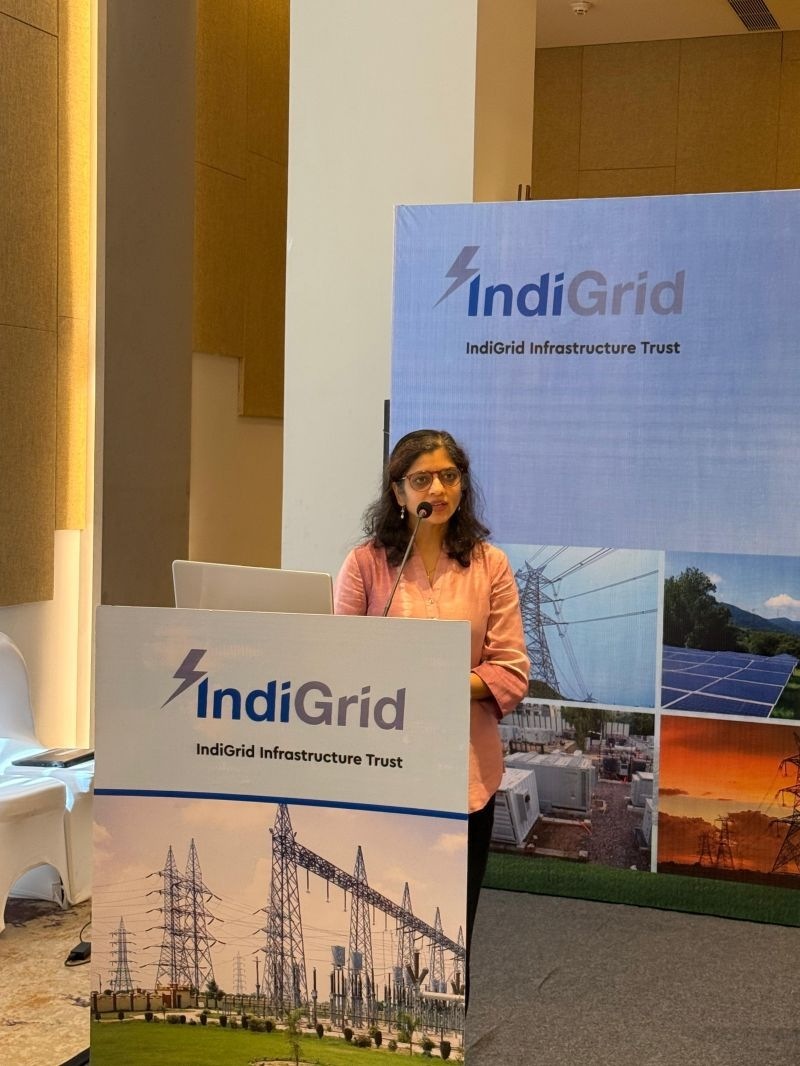
IndiGrid Infrastructure Trust Q2 FY26 – The Power Monk of Dividends, Borrowings & 100% Uptime
(Because in the kingdom of cables, IndiGrid sits on a golden throne made of AAA-rated wires and 6.5% dividend yield!)
1. At a Glance
There’s electricity in the air — literally and financially — when you talk about India Grid Trust (IndiGrid). This isn’t your regular company; it’s India’s first listed Infrastructure Investment Trust (InvIT), born out of Sterlite Power’s grid dreams and KKR’s private equity muscles. As of Q2 FY26, IndiGrid runs 7,790 ckm of transmission lines, 12 substations (14,550 MVA), and 100 MW of solar assets spread across 19 states. If India’s grid was a Netflix series, IndiGrid would be the dependable protagonist that never lets the lights go off.
With a market cap of ₹17,858 crore, debt of ₹22,036 crore, and a P/E ratio of 62.9, this Trust isn’t shy of numbers. It throws a dividend yield of 6.51%, a ROE of 6.6%, and a ROCE of 7.5%. These may look modest until you realize they’re coming from a regulated, annuity-style model that even Lord Krishna would call “Nitya Niyam” — eternal order.
Latest quarter (Q2 FY26):
Revenue: ₹827 crore (down 1.08% QoQ)
PAT: ₹43.1 crore (down 54.9% QoQ)
EPS: ₹0.52 Still, the Trust maintained a DPU (Distribution per Unit) of ₹4.00 for H1 FY26 — meaning, even when profits dip, your payouts don’t. Truly, a dividend monk in a market full of gamblers.
2. Introduction
Once upon a time in 2016, the government said, “Let there be electricity for everyone!” and Sterlite Power said, “Sure, but let’s also make money out of it.” Thus, IndiGrid Infrastructure Trust was born — a financial version of the Mahabharata’s Krishna: ever-present, calm, and quietly controlling 42 transmission lines without fanfare.
IndiGrid’s story isn’t about rockets or AI. It’s about transformers, cables, substations, and boringly stable cash flows — the kind of stuff that puts adrenaline traders to sleep but dividend hunters to bliss. The Trust structure ensures 90% of distributable cash flows go back to unitholders. That’s not generosity; it’s regulation — and investors love regulated affection.
While most companies chase quarterly drama, IndiGrid plays the long game. With KKR owning ~24%, GIC Singapore at 20%, and foreign institutional investors holding over half the units, the Trust’s guest list is full of global power players who’d rather earn 6% in peace than lose 30% in excitement.
3. Business Model – WTF Do They Even Do?
Think of IndiGrid as the landlord of India’s electricity highways. Instead of apartments, it owns power transmission assets — massive steel towers and substations that carry electricity across states. Instead of tenants, it has Transmission Service Agreements (TSAs) that run for 35 years, guaranteeing fixed, inflation-linked rent.
Here’s the flow:
IndiGrid buys an operational project from Sterlite or a third party.
It earns predictable revenues under long-term contracts with PGCIL or state utilities.
90% of the Net Distributable Cash Flow (NDCF) goes straight to unitholders every six months.
The remaining 10% keeps the trust’s engines running — including investment manager fees (~₹3 crore) and project manager fees (~₹3 crore).
The investment manager, IndiGrid Investment Managers Ltd (controlled by KKR), runs the show. The project manager, Sterlite Power Transmission Ltd, keeps the towers standing. And the unit holders? They sip their tea, count their dividends, and pray that no cyclone hits a substation.
In essence, IndiGrid is like a toll road operator — minus the cars, with cables instead of roads, and income that comes in whether the grid is busy or bored.
P/E not for the faint-hearted — IndiGrid trades like a luxury InvIT with a power fetish. While profits flicker quarter to quarter, cash flows remain uninterrupted, keeping those ₹4 per unit DPU cheques flowing. Who needs EPS when your EMI is covered by dividends?
5. Valuation Discussion – Fair Value Range (Educational)
Let’s attempt some back-of-the-envelope sanity:
(a) P/E Approach: Industry median P/E: ~16.6 (PowerGrid Corp). IndiGrid’s EPS (annualised): ₹2.08. Fair value range (if normalized P/E applied): ₹33 – ₹45. But since InvITs are yield-based, P/E doesn’t make full sense.
(b) EV/EBITDA Approach: EV = ₹39,281 Cr; EBITDA (TTM) = ₹2,842 Cr → EV/EBITDA = 13.8x. Sector median ≈ 10x. Hence, fair EV range = ₹28,000 – ₹31,000 Cr. Implied unit value = ₹120 – ₹150.
(c) DCF (Cash Distribution Model): DPU (FY25): ₹12.4 per unit; assume 5–6% growth; discount rate 9%. Fair value = ₹170–₹190 per unit.
🎯 Fair Value Educational Range: ₹120 – ₹190 per unit. This range is for educational purposes only and not investment advice.
6. What’s Cooking – News, Triggers, Drama
If IndiGrid were a daily soap, the latest season (FY26) would be called “The Rise of Battery Storage.”
Highlights from recent announcements:
Aug 2025: Signed an agreement to acquire 187.5 MW /