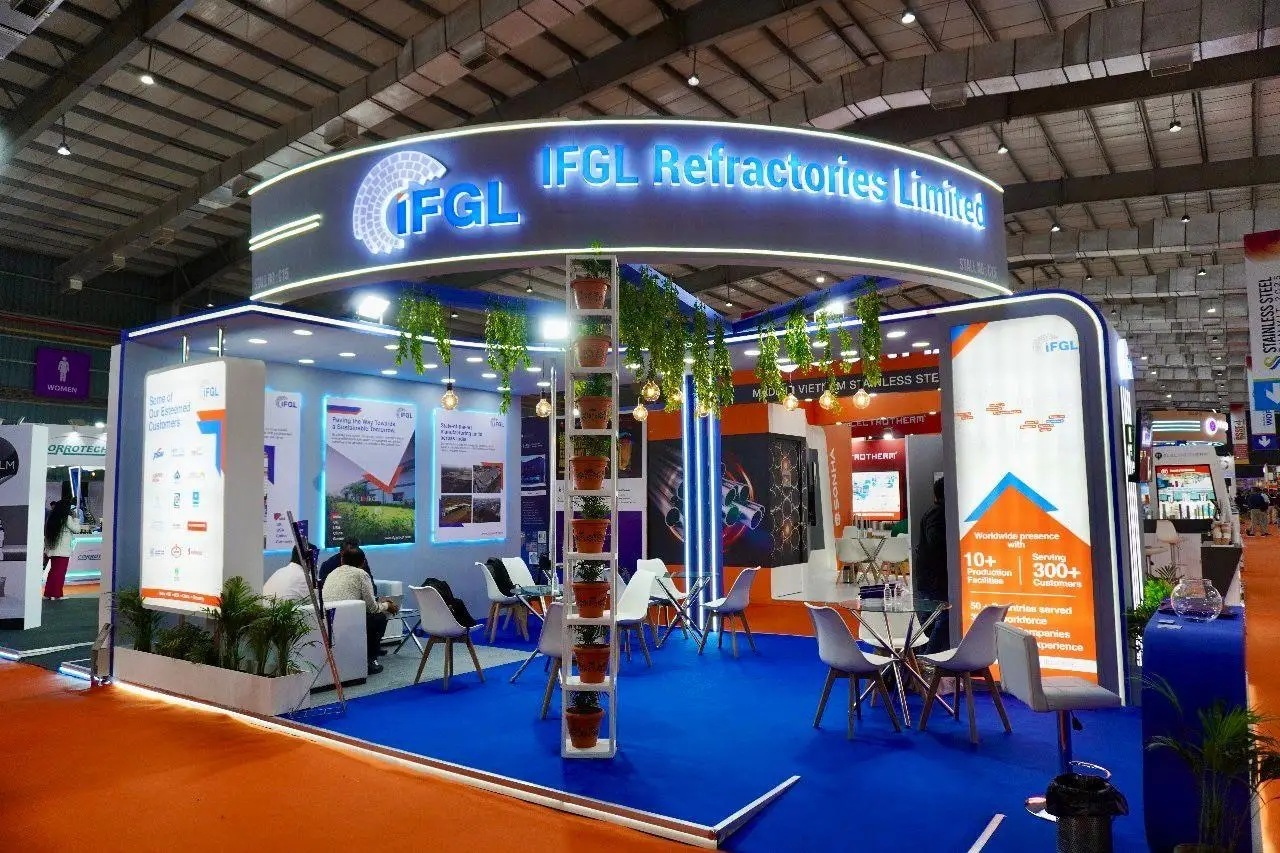
IFGL Refractories Ltd Q2FY26 | Profit Still Melting, Management Changing, and Odisha Plant Getting Spicy (₹489 Cr Sales, ₹12.7 Cr PAT, P/E 55.9)
1. At a Glance
If steel is the muscle of modern civilization, refractories are its bones — and IFGL Refractories Ltd just reported another quarter proving bones can ache too. The company clocked ₹489 crore in consolidated revenue for Q2FY26, up 18.8% YoY, but net profit only crept up 5.05% to ₹12.7 crore. For a stock with a P/E of 55.9, that’s like paying for gold and getting bronze filings.
At a market cap of ₹1,664 crore and a stock price of ₹231, IFGL is a global refractory manufacturer juggling 10 plants, 50+ countries, and about 12 management reshuffles per fiscal year (give or take). Return ratios are chilling — ROE 3.94%, ROCE 5.71% — and the debt of ₹213 crore ensures that “heat-resistant” applies more to their furnaces than their financials.
Still, the stock’s dividend yield of 1.52% keeps long-term holders mildly comforted — like a free samosa after a delayed flight.
2. Introduction
Once upon a furnace, there was IFGL Refractories — a company that lives and dies by how hot steel gets. Promoted by India’s S.K. Bajoria Group and Japan’s Krosaki Harima Corporation, it’s the global melting pot of refractory technology. Think of IFGL as the guy who sells armor to knights — but for molten iron.
They make products that withstand thousands of degrees Celsius, yet their profits can’t withstand a weak quarter. For FY25, sales grew 11.6%, but profits fell 41.4% — a financial rollercoaster that screams “furnace malfunction.”
While the refractory sector serves primarily the steel industry (about 70% market share), the ironies are red-hot: as steel shines, refractory makers often burn quietly in the background. Still, IFGL’s reach — from Odisha to Ohio — is impressive. Its overseas arms like Monocon, Hofmann Ceramic, and EI Ceramics are the global tentacles of this heatproof empire.
And yet, beneath the technical complexity, the story is simple — heat up materials, cool down margins, and hope next quarter’s CFO doesn’t resign.
3. Business Model – WTF Do They Even Do?
IFGL Refractories manufactures high-performance refractory products — essentially, industrial armor for steel plants. When molten steel flows, IFGL’s slide gate systems, ladle linings, tundish furniture, and purging systems step in to stop a meltdown — literally.
Here’s their revenue anatomy:
85% from sale of finished goods (the actual heat-shields),
~12% from traded goods (fancy reseller work),
3% from other income (because side hustles matter).
And geographically, 55% domestic and 45% overseas — a fairly even split that reflects both their global reach and global stress levels.
They supply the who’s who of steel: ArcelorMittal, Tata, SAIL, JSW, Thyssenkrupp, Nucor, and a few others whose plants probably run hotter than their balance sheets. Top five customers bring in 30–35% of total sales — so one steel client sneezes, and IFGL catches pneumonia.
In short: IFGL doesn’t make steel. It makes steel-making possible. But as every Indian business grad knows, supporting heroes rarely make hero-level money.
4. Financials Overview
Metric
Q2FY26 (Sep 2025)
Q2FY25 (YoY)
Q1FY26 (QoQ)
YoY %
QoQ %
Revenue (₹ Cr)
489
411
454
18.8%
7.7%
EBITDA (₹ Cr)
38
33
36
15.2%
5.6%
PAT (₹ Cr)
12.7
12.1
11.0
5.05%
15.4%
EPS (₹)
1.76
1.68
1.50
4.8%
17.3%
Annualised EPS = ₹1.76 × 4 = ₹7.04, giving a P/E of ~32.8x on annualised basis — more modest than the trailing 55.9x, but still feels like designer pricing for an industrial product line.
Commentary: Revenue’s glowing like a well-fired kiln, but profit growth barely flickers. The OPM at 8% screams “inflation ate my margins,” and with refractory raw materials tied to global metals, costs can fluctuate faster than a Sensex meme.
5. Valuation Discussion – Fair Value Range Only
Method 1: P/E Method
Annualised EPS: ₹7.04
Industry Average P/E: ~39.1
Applying P/E range 30–40 ⇒ Fair Value Range: ₹211 – ₹282
Method 2: EV/EBITDA Method
EV = ₹1,813 Cr
FY25 EBITDA = ₹124 Cr
EV/EBITDA = 14.6x (current)
Industry typical 10–12x ⇒ Fair EV range = ₹1,240–₹1,490 Cr
Fair Value per share = ₹165 – ₹198
Method 3: Simplified DCF Assuming flat FCF of ₹28 Cr (FY25), 5% growth, and 12% discount rate ⇒ Intrinsic Value ≈ ₹220 – ₹250
🧮 Fair Value Range (Educational Purpose Only): ₹200 – ₹260 per share Disclaimer: This fair value range is for educational purposes only and is not investment advice.
6. What’s Cooking – News, Triggers, Drama
IFGL’s management news reads like a soap opera set in a furnace. In FY25, they approved a 1:1 bonus, 70% dividend, and new MD appointment — only for said MD to later resign. Then Odisha SPCB issued a show-cause notice threatening environmental consent withdrawal for Kalunga Unit II.
By August 2025, even the successor MD “stepped back due to personal reasons.” HR must be keeping their LinkedIn alerts on full time.
Meanwhile, IFGL’s Odisha government-approved DBM Bricks project and 16-acre Kutch plant hint at expansion firepower. They’ve even incorporated a new subsidiary — IFGL Marvels Refractories Ltd — perhaps to marvel at how many legal entities one group can create.