01 — At a Glance
You’ve Never Heard of Them. Their Customers Have. Everyone’s Waiting to Know Why.
- Incorporation2007 (19 years old)
- Latest Revenue (Dec 2025)₹14.41 Cr
- Latest PAT (Dec 2025)₹3.41 Cr
- Latest EPS (Dec 2025)₹7.19
- EBITDA Margin39.26%
- Latest Net Worth (Dec 2025)₹10.03 Cr
- Total Borrowing (Dec 2025)₹8.20 Cr
- Price to Book Value4.20x (Pre-IPO)
- ROE40.97%
- Total Assets (Dec 2025)₹24.03 Cr
Flash Summary: Highness Microelectronics is a teenage company that makes LCD screens and display modules for medical devices, trains, cars, and ATMs. They’re profitable with explosive margins (39.26% EBITDA). They have ₹40.97% ROE, which is stupidly high for a manufacturing company. But here’s the thing — they’re listing on BSE SME (not BSE main), they have ₹61.96 crore pre-IPO market cap (tiny), and the P/E of 16.7x is punchy for a ₹14 crore revenue firm. The IPO itself is tiny: ₹21.67 crore. If this company is so good, why aren’t the big boards fighting for them?
02 — Introduction
The Company Your Commute Depends On But You’ll Never See
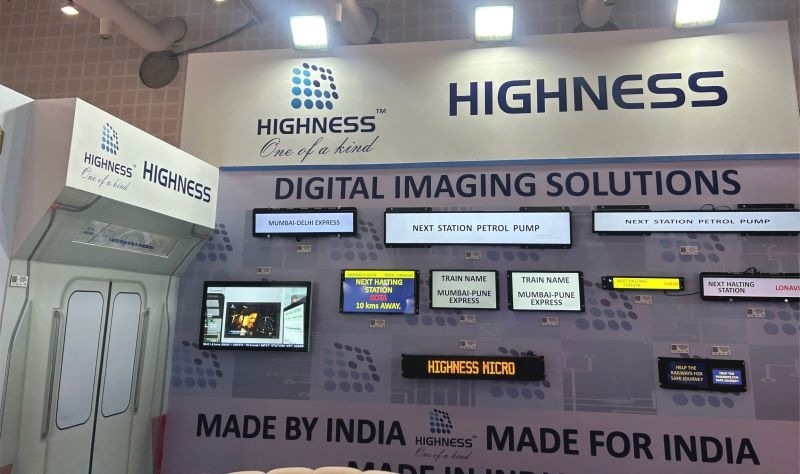
Imagine you’re sitting in a Bangalore Metro train, looking at the passenger information display. That display? Probably made by a company you’ve never heard of. You’re withdrawing cash from an ATM in Hyderabad, staring at a black LCD screen that shows your balance. That screen? Made by a different company, also you’ve never heard of. You’re at a hospital, watching a medical monitor showing your vitals. That monitor’s display? Could be made by Highness Microelectronics.
For 19 years, Highness has been quietly building screens for industries that don’t advertise. They make display modules for industrial automation, medical devices, defence, transportation, and surveillance systems. Not sexy. Not consumer-facing. But profitable. Very profitable. EBITDA margins of 39.26% are the kind of numbers that make FMCG companies weep into their portfolio statements.
The company is run by three promoters: Gaurav Manjul Kejriwal, Manjul Kumar Kejriwal, and Shruti Gaurav Kejriwal. They own 99.90% pre-IPO, which means this is a family business. And family businesses listing on BSE SME usually have one of three stories: (a) the bank rejected them, (b) they’re genuinely too niche, or (c) they’re using the IPO as a first step to later migrate to the main board. Highness’s numbers suggest (c) is most likely — but only if execution goes right.
The Elephant in the Room: The IPO subscription status (as of Mar 24, 2026 10:54 AM on Day 1) shows 0.02x subscription overall. NII and retail investors have barely shown interest. This is not a hot IPO. Is it because the market sees structural risks, or because ₹21.67 crore is so small that serious money hasn’t bothered showing up yet? That distinction matters.
03 — Business Model: They Make Screens. You Don’t See Them.
B2B Display Manufacturing: The Invisible Billions.
Highness operates in two buckets: off-the-shelf products and custom market-specific solutions. Off-the-shelf means they make TFT LCD modules, LCD controllers, electroluminescent displays, vacuum fluorescent displays, and touch screens that they sell to customers who integrate them into larger systems. Custom solutions means they take a customer’s requirements and build a bespoke display solution for applications like train passenger information systems, medical-grade monitors, defence equipment, ATMs, and surveillance.
The company is ISO 9001:2015 and ISO 13485:2016 certified — the latter being medical device certification, which hints at the quality bar they’ve set. They sell into industrial automation, medical and healthcare, transportation (trains, metros, cars), and surveillance and defence. Not retail. Not consumer. B2B only.
The revenue mix tells you something: they make ₹14.41 crore in revenue and ₹3.41 crore in PAT. That’s a 23.66% net margin. For a manufacturing business, that’s frankly bonkers. EBITDA margins at 39.26% suggest they have pricing power, operational discipline, or both. The question every analyst will ask: can they scale this while maintaining the margin? Or does growth come at the cost of pricing pressure?
EBITDA Margin39.26%Dec 2025
Net Margin23.66%PAT / Revenue
ROE40.97%Bonkers for manufacturing
Revenue Growth+28.8%Dec 2025 vs Mar 2025
Fun fact: The IPO proceeds are allocated as ₹5.27 crore for capex (assembly line), ₹6.71 crore for working capital, and ₹1.89 crore for debt repayment. That’s roughly 38% to growth, 48% to survival, and 14% to deleveraging. The debt/equity pre-IPO is 0.82x, which is reasonable but not zero. They’re borrowing to finance operations — which suggests they’re in growth mode and the IPO is a way to get cheaper capital than banks.
04 — Financials Overview
From Teenager to Teenager: FY23–Dec 2025. This is Not a Stable Company Yet.
Latest Result: Half-Yearly (Dec 2025) | EPS Dec 2025: ₹7.19 | Annualised EPS (×2): ₹14.38 | Pre-IPO P/E: 16.7x (on annualised EPS)
| Metric (₹ Cr) |
Dec 2025
(Latest) |
Mar 2025
FY25 |
Mar 2024
FY24 |
Mar 2023
FY23 |
YoY %
(vs Mar 2025) |
| Revenue | 14.41 | 14.17 | 10.99 | 9.91 | +1.69% |
| EBITDA | 5.55 | 4.52 | 5.97 | 3.13 | +22.77% |
| EBITDA Margin % | 39.26% | 31.90% | 54.32% | 31.59% | +730 bps |
| PAT | 3.41 | 2.52 | 2.39 | 0.44 | +35.32% |
| EPS (₹) | 7.19 | 5.34 | 5.07 | 0.93 | +34.64% |
The Volatility Dance: Revenue grew only 1.69% YoY (Dec 2025 vs Mar 2025), but EBITDA jumped 22.77%. That’s a margin story — they got more efficient, not bigger. PAT up 35.32% is juicier, but remember, we’re comparing a 6-month period (Dec 2025) to a full year (FY25). When you annualise the H1 PAT (₹3.41 × 2 = ₹6.82 crore), the FY25 full-year PAT was ₹2.52 crore. So H1 is tracking to roughly 2.7x FY25 PAT. Either growth accelerated dramatically, or H1 was seasonal. Check the detailed breakup before trusting the narrative.
Red Flag Alert: FY24 EBITDA margin was 54.32% — nearly 15 percentage points higher than Dec 2025’s 39.26%. Margins compressed. Badly. Either the company faced pricing pressure, increased input costs, or FY24 was an outlier quarter. A 23.66% net margin is still excellent for manufacturing, but the trend is your enemy if it’s downward. This is exactly the kind of thing due diligence needs to clarify.
💬 The EBITDA margin collapsed from 54% in FY24 to 39% in Dec 2025. Is this a return to “normal” margins (i.e., FY24 was an outlier), or a sign that competitive pressure is mounting? Your thoughts in the comments.
05 — Valuation: Fair Value Range
Is 16.7x P/E Expensive for a 19-Year-Old Manufacturing Company?