1. At a Glance – Blink and You’ll Miss the Plot
Gujarat Poly Electronics Ltd is a ₹58-crore microcap that manufactures ceramic capacitors… and occasionally manufactures profits out of land sales.
Current price sits around ₹67, market cap ~₹57.9 Cr, while Q3 FY26 PAT alone is ₹24.6 Cr. Sounds like a semiconductor miracle? Hold your soldering iron.
Sales for the latest quarter are a modest ₹3.53 Cr, down ~15% QoQ, but profits exploded 5,145% YoY because the company sold land worth ₹29 Cr. Yes, one land deal earned more than an entire decade of operating profits.
ROE looks sexy at ~21%, P/E at ~13× looks cheap, EV/EBITDA at ~2× screams bargain — until you realize EBITDA is not coming from capacitors, but from real estate liquidation.
So the real question:
Is Gujarat Poly an electronics company… or a land monetization event with a capacitor side-hustle?
2. Introduction – The Curious Case of the Capacitor Company That Discovered Real Estate
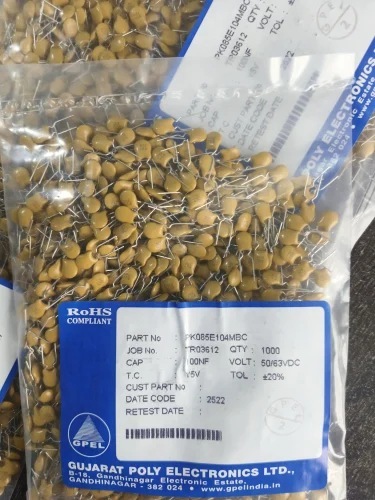
Founded in 1992, Gujarat Poly Electronics (GPEL) operates in a boring but essential corner of electronics — ceramic capacitors and varistors. These are the “salt” of electronics: cheap, everywhere, and nobody brags about them at dinner.
But GPEL’s stock chart doesn’t move on capacitor demand. It moves when property deals hit the BSE announcement page.
Historically, the company even earned the prestigious Indian badge of honour — BIFR “sick industrial undertaking” status in FY10, followed by debt restructuring and interest waivers of ~₹29 Cr. That rehabilitation is the reason GPEL is alive today.
Fast-forward to FY25–FY26, and instead of capex announcements or capacity expansion, we see:
- Sale of Gandhinagar land for ₹29 Cr
- Redemption of preference shares
- Acquisition of a smaller leasehold land (₹3.65 Cr)
Operationally? Still crawling.
Financially? One-time jackpot.
Does this make GPEL clever capital allocators or just lucky landlords? Let’s dig.
3. Business Model – WTF Do They Even Do?
On paper, GPEL:
- Manufactures single-layer & multilayer ceramic capacitors
- Trades/imports components
- Acts as dealer for Diotec Semiconductors’ diodes
- Sells to OEMs, EMS players, distributors
In reality:
- Core electronics business generates ₹15–18 Cr annual revenue
- Operating margins hover around 4–11%
- Scale is tiny, pricing power is nonexistent
- Imports + trading dominate over hardcore manufacturing muscle
This is not Murata, TDK, or even a domestic challenger. It’s a small-batch, low-margin component supplier surviving on relationships, not technology moats.
Ask yourself:
If the land wasn’t there, would anyone track this stock?
4. Financials Overview – When “Other Income” Does the Heavy Lifting
Quarterly Comparison (₹ Cr)
| Metric | Latest Qtr (Dec-25) | YoY Qtr | Prev Qtr | YoY % | QoQ % |
|---|---|---|---|---|---|
| Revenue | 3.53 | 4.14 | 4.14 | -14.7% | -14.7% |
| EBITDA | -0.5 | 0.3 | 0.4 | NA | NA |
| PAT | 24.6 | 0.47 | 0.49 | 5145% | 4920% |
| EPS (₹) | 28.83 | 0.55 | 0.49 | 5145% | 4885% |
Important reality check:
This PAT is driven by ₹29 Cr other income from land sale.
So yes, EPS × 4 would give ₹115+ annualised…
…but STRICT RULE:
👉 Do not annualise one-off windfall quarters.
This EPS is not repeatable. Period.
5. Valuation Discussion – Numbers That Lie Politely
Let’s still do it properly.
Method 1: P/E (Normalized)
- Normal operating EPS (FY25): ~₹2.5
- Industry P/E: ~24
- Fair EPS multiple range: 10–15×
Implied value: ₹25–40
Method 2: EV/EBITDA (Core ops)
- Core EBITDA ~₹1.5–2 Cr
- EV
