1. At a Glance
Let’s get this straight before the chai gets cold. Gujarat Gas Limited (GGL) is a PSU-backed, pipeline-owning, CNG-selling, PNG-pushing, volume-obsessed city gas giant that has somehow managed to stay boring and relevant at the same time. Market cap sits at ₹27,149 Cr, stock hovering around ₹394, down ~5.5% in 3 months and a painful ~21% over one year — because markets don’t like slow dancers.
Q3 FY26 came in with Revenue of ₹3,658 Cr (YoY -11.9%), but PAT of ₹266 Cr (YoY +19.8%) — yes, sales dipped but profits flexed. Margins quietly improved while volumes sulked. ROCE at ~19.6%, ROE ~14.3%, Debt-to-equity a microscopic ~0.02, and dividend yield at ~1.5% — not bad for a PSU that actually sends cash back home.
Volumes are still heavily industrial (60.5%), CNG clocks 30%, and the rest is household masala. The stock trades at ~23.4x P/E, slightly richer than industry median, but you’re paying for monopoly-ish pipes and predictable cash flows. Question is — are predictability and boredom still sexy in FY26?
2. Introduction
Gujarat Gas is that one uncle at every family function — doesn’t talk much, pays the bills on time, owns land, and quietly judges your startup dreams. Formerly known as GDNL, now a full-blown City Gas Distribution (CGD) heavyweight, GGL supplies natural gas across South & Central Gujarat and Saurashtra, and has stretched its pipelines into 6 states and 1 UT.
It’s part of the GSPL ecosystem, where upstream, midstream, and downstream all sit at the same dining table. GSPC trades gas, GSPL transmits it, and Gujarat Gas sells it to you for cooking, driving, and running factories. Vertical integration, PSU-style.
But here’s the catch: CGD is not a hyper-growth SaaS business. It’s capital-heavy, regulated, volume-driven, and sensitive to gas prices. When industrial demand sneezes, volumes catch a cold. When gas prices spike, margins do bhangra.
Q3 FY26 showed exactly that — volumes under pressure, but cost management and pricing discipline saved profitability. So the big question: is this a temporary industrial slowdown story, or the new normal for a matured CGD behemoth?
3. Business Model – WTF Do They Even Do?
In simple words: they buy gas, move gas, and sell gas — legally, safely, and with pipelines instead of WhatsApp forwards.
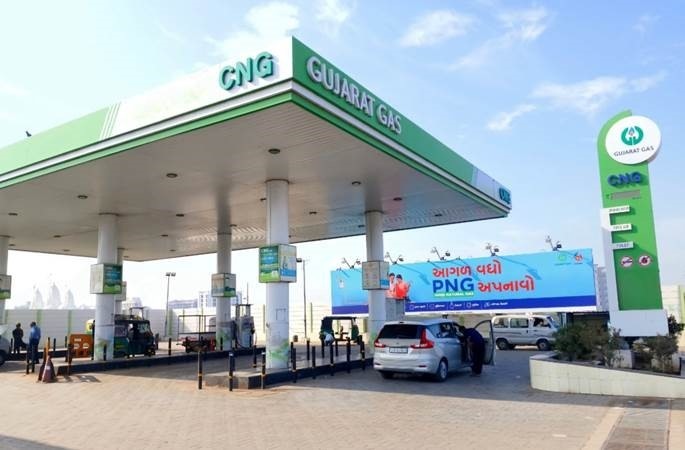
Gujarat Gas operates in CNG (vehicles) and PNG (homes, shops, factories). Once a pipeline is laid, competition becomes mostly theoretical. You don’t wake up one day and switch your gas supplier like a telecom SIM.
Their network stats read like a civil engineer’s flex:
- 38,100+ km pipeline network
- 817 CNG stations
- ~21 lakh domestic PNG connections
- ~4,350 industrial PNG clients
Revenue is driven by volume × margin. Industrial customers bring bulk volumes but low margins. CNG and domestic PNG offer higher margins but grow slower. So Gujarat Gas constantly juggles — chasing volumes without sacrificing spreads.
They’ve also launched FDODO (Full Dealer Owned Dealer Operated) model to expand CNG stations faster without burning balance sheet cash. Translation: “Tum lagao station, hum gas denge.”
The model is boring, regulated, and capital-intensive — but once built, it prints predictable cash flows. Question for you: do you prefer predictable boring money or exciting volatile money?
4. Financials Overview (Q3 FY26 – Quarterly Results Locked)
EPS Treatment:
Result heading clearly states Quarterly Results → treated as Q3.
Annualised EPS Rule for Q3: Average of Q1, Q2, Q3 EPS × 4
Q1 FY26 EPS: ₹4.75
Q2 FY26 EPS: ₹4.08
Q3 FY26 EPS: