1. At a Glance
Gateway Distriparks is that quiet logistics uncle who never posts on Instagram but somehow owns half the neighbourhood. Q3 FY26 came in hot with ₹566.2 crore revenue, ₹128.2 crore EBITDA, and ₹67.2 crore PAT, moving 1,90,675 TEUs in the quarter. Not flashy, not viral — but solid, heavy, steel-on-rail execution.
Market cap sits around ₹3,035 crore, CMP hovering near ₹60–61, down ~9% over six months and ~19% over one year. Dividend yield at ~3.3% tells you this company prefers sending cash to your bank account rather than tweeting growth stories.
P/E at ~12.4, EV/EBITDA at ~7.5, ROCE ~10.6%, ROE ~12.2% — basically screaming: “I’m not sexy, but I pay the bills.”
Latest quarter sales grew ~39% YoY, but PAT dipped ~6.5% YoY. Classic logistics problem: volumes go brrrr, margins ask for chai break. Add a special + interim dividend, a ₹150 crore Indore ICD announcement, and suddenly this boring rail-yard operator has some spice.
So the real question: is Gateway just another cyclical logistics stock… or a quietly compounding rail-first infrastructure play hiding behind dusty containers?
2. Introduction
If logistics companies were people, Gateway Distriparks would be that guy who shows up on time, does the job, doesn’t talk much, and somehow survives every economic cycle without drama — except when the tax department knocks.
India’s EXIM logistics is a brutal business. Low margins, high capital intensity, regulatory headaches, rail permissions, port congestion, fuel costs, and customers who negotiate like it’s a wedding pandit. In that chaos, Gateway has built a rail-centric, asset-heavy, pan-India multimodal network and stubbornly stuck to it.
No “asset-light platform” buzzwords. No app screenshots. Just ICDs, CFSs, rakes, trailers, cranes, land banks, and TEUs. Lots of TEUs.
Q3 FY26 reinforced that identity. Volumes are rising sharply, rail utilization is improving, and new capacity is being added — but profitability is still very much tied to operating leverage and cost discipline.
Gateway isn’t trying to be Delhivery. It’s trying to be the Indian rail logistics backbone for EXIM cargo, and that’s a very different (and far less glamorous) ambition.
But boring businesses, when bought at boring valuations, sometimes
do exciting things. Or at least quietly pay dividends while the rest of the market fights on Twitter.
3. Business Model – WTF Do They Even Do?
Let’s break this down like you’re explaining it to a smart investor who skipped logistics classes.
Gateway Distriparks runs container terminals and trains. Think of it as the middleman between factories in North India and ports like JNPT, Mundra, Pipavav.
Core building blocks:
1. ICDs (Inland Container Depots)
Factories don’t want to drive containers all the way to ports. Gateway runs ICDs in places like Gurgaon, Faridabad, Ludhiana, Ahmedabad, Kashipur. Containers come here, get customs cleared, loaded onto trains, and shipped to ports.
2. CFSs (Container Freight Stations)
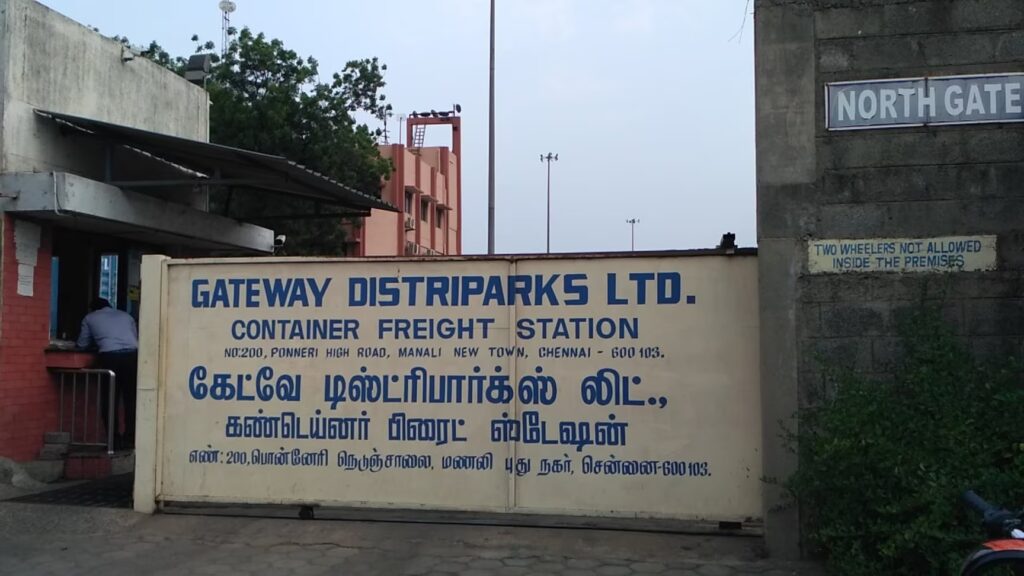
These are near ports — Nhava Sheva, Chennai, Vizag, Kochi, Krishnapatnam. Containers are de-stuffed, stored, handled, and shipped onward.
3. Rail Operations (The Real Moat)
Gateway operates ~34 rakes (21 owned, rest leased) with a pan-India rail license. Rail is cheaper, cleaner, and more scalable than road for long distances. Alignment with the Western Dedicated Freight Corridor is a massive structural tailwind.
4. Road Transport
First-mile and last-mile using 500+ trailers. Not fancy, but essential.
5. Warehousing & VAS
Bonded, general, domestic warehousing, inventory management, garment-on-hanger, palletizing, etc. Low glamour, decent margins.
Revenue Mix FY24:
- ICD: ~80%
- CFS: ~20%
In short: Gateway owns land, terminals, trains, and steel. This is capital-heavy, slow to scale, but very hard to replicate once built.
Now ask yourself: how many new
