01 — At a Glance
The Solar Rookie That’s Already Doing 100 Pushups
- 52-Week High / Low₹231 / ₹171
- Q3 FY26 Revenue₹588 Cr
- Q3 FY26 PAT₹67.3 Cr
- Q3 EPS (₹)₹2.20
- Annualised EPS (Q3×4)₹8.80
- Book Value₹17.2
- Price to Book10.6x
- Dividend Yield0.00%
- Debt / Equity1.38x
- ListedNov 2025
The Auditor’s Opening: Fresh IPO Heat. Fujiyama Power listed in November 2025, raised ₹828 crore, and immediately decided to double production capacity while tripling profitability. Three months in, they’ve commissioned a ₹300 crore solar cell plant at Dadri faster than most people finish a home renovation. Q3 FY26 revenue: ₹588 crore (+73.8% YoY). PAT: ₹67.3 crore (+124% YoY). 9M FY26 revenue: ₹17,537 crore, compounding at 65.4% YoY. Nobody’s paying attention because Nvidia is up 2%, but when this hits ₹2,000 crore revenue run-rate, someone will remember reading this.
02 — Introduction
The Company That Builds Solar Systems While Your Startup Builds Pitch Decks
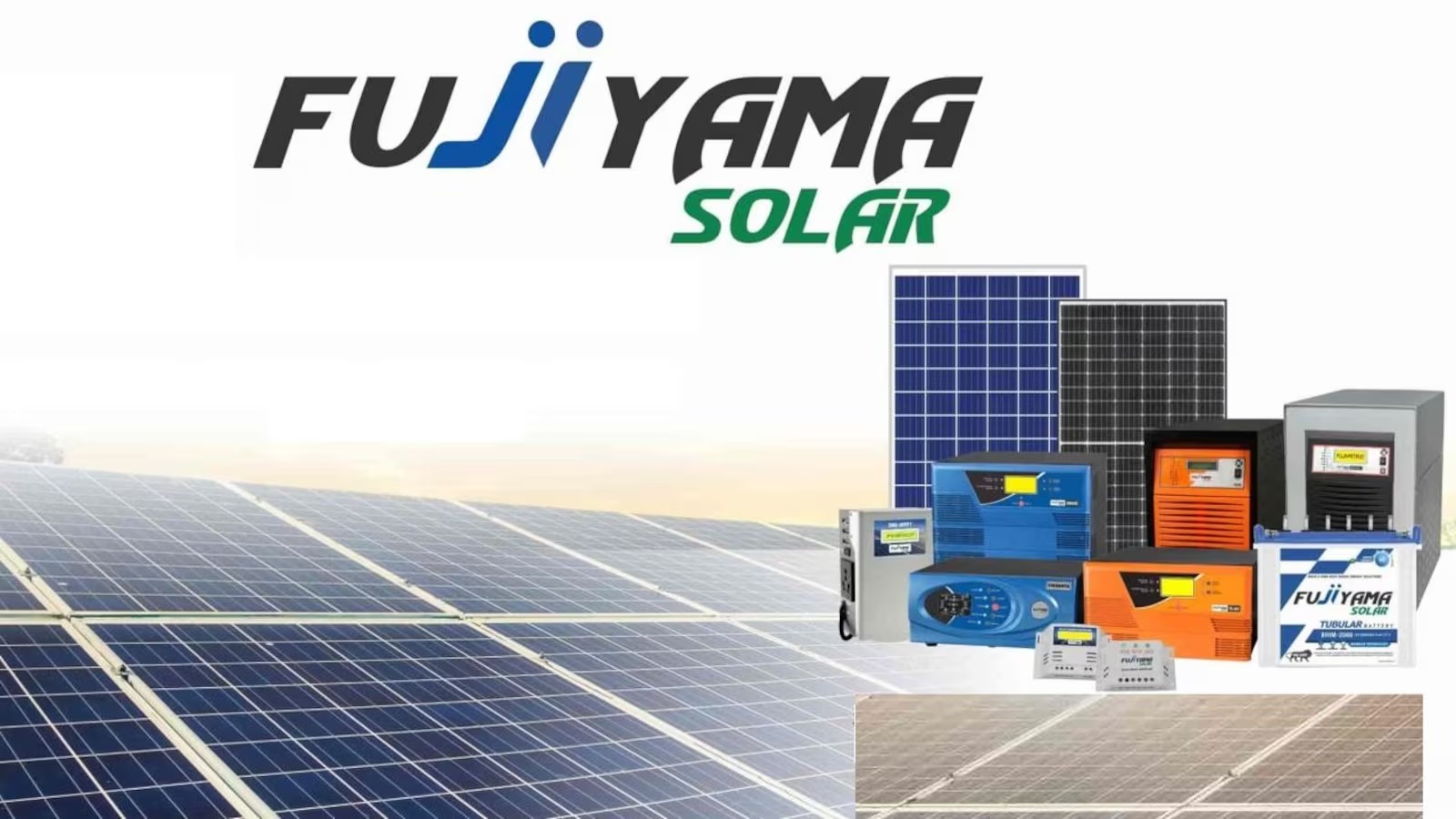
Let’s talk about Fujiyama Power. Not a Tesla story. Not a solar “platform.” A company that manufactures solar panels, inverters, batteries, and UPS systems in three states across India, ships them to 725 distributors, 5,546 dealers, and 1,100 UTL Shoppes, and actually makes people’s rooftops generate electricity.
They didn’t invent solar. They didn’t revolutionize anything. They just built factories, hired engineers, and figured out how to make the entire stack in-house faster and cheaper than importing parts. In January 2026, they commissioned a 1 GW solar cell manufacturing facility in six months—while most project timelines slip by that margin just in planning.
The backstory: 29 years of legacy under the UTL Solar and Fujiyama Solar brands. Started in the UPS and power backup game, pivoted to rooftop solar around 2015. Promoted by Pawan Kumar Garg and Yogesh Dua—two guys who actually know how to run manufacturing operations, not how to speak on CNBC. Went public in Nov 2025, raised ₹828 crore, and immediately deployed it to build more factories while the stock climbed 50%.
Q3 FY26 results arrived in early Feb 2026. Revenue up 74%, profit up 124%. And management’s tone on the concall was less “we’re disrupting solar” and more “we’ve got demand to fill and capacity to build.” Which, honestly, is the vibe of a company that’s about to grow very large very quickly.
The Concall Moment (Feb 2026): “Quantify at this stage is very difficult… next earnings call.” Management refusing to estimate cell integration benefits until stabilization. That’s either humility or strategic conservatism. We’ll know by June.
03 — Business Model: WTF Do They Even Make?
Everything Solar. In-House. At Scale.
The business is refreshingly linear. India’s rooftop solar market is growing. Homes and businesses need on-grid, off-grid, and hybrid systems. Each system needs panels, inverters, batteries, and wiring. Fujiyama manufactures ~80% of the stack in-house across four facilities: Greater Noida (UP), Parwanoo (HP), Bawal (Haryana), and newly Dadri (UP). They sell through a distributor-dealer network (B2C 89.5%, B2B 10.5%) and install 1 GW+ cumulative rooftop systems annually.
Revenue mix (Q3 FY26, ₹588 crore): Solar panels ~₹299 crore (51%), Batteries ~₹100 crore (17%), Inverters/UPS/Chargers ~₹160 crore (27%), Others ~₹29 crore (5%). The shift to panels is intentional—they’ve got gross margins ~25–28% on panels vs lower margin inverters and batteries, but they bundle them as “packages” (80% of revenue) so the mix stabilizes naturally.
Customer base: 725 distributors, 5,546 dealers, 1,100 UTL Shoppes (exclusive retail outlets), 602 service engineers. They’re aggressively tier-2 and tier-3 focused. Why? Because big metros have established competitors. Tier-2 cities have power cuts and zero brand awareness—perfect for aggressive distribution and solutioning. Three new lines at the flagship Greater Noida plant came online in June 2025 (600 MW inverters, 500 MWh Li-ion batteries). Dadri’s 1 GW cell line went live Jan 2026. Ratlam (MP) is under construction to add 2 GW each of panels, inverters, and Li-ion packs—completing a west-coast manufacturing footprint.
Market ShareEmergingRooftop Solar
Installed Base1 GW+Cumulative Deployed
9M Volume460 MWSolar Panels 9M FY26
Capex Pace₹300 CrDadri in 6 Months
The Subsidy Unlock: India’s PM Surya Ghar Yojana requires Domestic Content Requirement (DCR) panels — i.e., cells made in India. Before Dadri, Fujiyama was locked out of ~30% of the market. Now they’ve got in-house cells. Management expects to unlock ₹200–250 crore in incremental subsidy-based revenue FY26–FY27. That’s not yet in consensus estimates.
💬 Question: If they can grow capex that fast, what’s stopping them from becoming the Reliance of solar components? Drop your theory in the comments.
04 — Financials Overview
Q3 FY26: The Numbers That Make Analysts Blink
Result type: Quarterly Results | Q3 FY26 EPS: ₹2.20 | Annualised EPS (Q3×4): ₹8.80 | 9M FY26 EPS: ₹6.24
| Metric (₹ Cr) |
Q3 FY26
Dec 2025 |
Q3 FY25
Dec 2024 |
Q2 FY26
Sep 2025 |
YoY % |
QoQ % |
| Revenue | 588 | 339 | 568 | +73.8% | +3.6% |
| Operating Profit (EBITDA) | 110 | 52 | 103 | +111% | +6.7% |
| EBITDA Margin % | 18.7% | 15.5% | 18.1% | +320 bps | +60 bps |
| PAT | 67.3 | 30 | 63 | +124% | +7.0% |
| EPS (₹) | 2.20 | 1.07 | 2.25 | +105.6% | -2.2% |
Recalculated P/E: Annualised EPS (Q3×4) = ₹2.20 × 4 = ₹8.80. CMP ₹182 ÷ ₹8.80 = P/E 20.7x. Screener shows 29.0x because they’re using full-year FY25 EPS (₹5.58) — which is ancient in this growth context. Sector median PE is 22.5x. Fujiyama at 20.7x annualised is actually cheaper than peers on forward growth. EBITDA margins jumped from 15.5% (Q3 FY25) to 18.7% (Q3 FY26) — a 320 bps expansion driven by in-house backward integration (panel + battery + inverter manufacturing reduces reliance on imported components). This is the kind of margin expansion that usually sticks around unless raw material prices crater.
05 — Valuation Discussion
Fair Value Range: Three Methods, One Verdict