Essen Speciality Films Ltd H1 FY26 – Plastic Dreams, IKEA Schemes, and the ₹428 Cr Packaging Drama!
1. At a Glance
If IKEA had an Indian cousin making plastic curtains, yoga mats, and decorative fake plants – it’d be Essen Speciality Films Ltd (ESFL). This Rajoo Group baby, born in 2002, manufactures everything from bath mats to tarpaulins, and even your favorite “no-slip” bathroom liner that secretly saves lives. With a market cap of ₹428 crore, a stock P/E of 43.2, and a book value of ₹63.5, Essen’s financials look decent, though the stock seems to be having an existential crisis – down over 71% in one year.
Its latest quarter (Q2 FY26) saw revenue of ₹48.36 crore and PAT of ₹5.19 crore, with YoY sales up 4.4% and profit falling 17.9%. Export-heavy (74% of revenue), ESFL is clearly loved more abroad than at home. But before you get too impressed, here’s a catch — top five customers contribute 75% of its total revenue. That’s like putting all your IKEA chairs on one wobbly leg.
Still, the company flaunts ROCE of 11.5%, ROE of 7.88%, and a respectable debt-to-equity ratio of 0.17, so it’s not entirely shaky. It’s just… volatile. Like your cousin who sells plastic yoga mats and calls himself a “global exporter.”
2. Introduction
Let’s talk about the silent warriors of our homes — plastic films, mats, liners, and artificial flowers. They don’t get Instagram likes, but they’re in every bathroom, kitchen, and gym corner. Essen Speciality Films Ltd (ESFL) has made a business empire out of this unsexy yet indispensable niche.
Incorporated in 2002, ESFL operates from an ISO 9001:2015-certified manufacturing unit with a massive installed capacity of ~9,450 MTPA. That’s a lot of plastic, and no, Greta Thunberg wouldn’t approve. But your floor mats and table covers would.
What’s truly impressive is ESFL’s client list — IKEA, Walmart, Kmart, Bed Bath & Beyond, H&M, and more. Basically, if you’ve bought any plastic décor item abroad, chances are it came from Rajkot.
However, it’s been a rough ride lately. The stock is down nearly 50% in the last 3 months. Investors who bought at ₹745 are now reminiscing about happier times, as the current price languishes at ₹172. Profitability’s also wobbling — profit after tax for TTM stands at ₹9.9 crore, down from ₹14 crore in FY24.
But hey, they paid ₹1 dividend per share recently, proving that at least they have the decency to give back some pocket change while the stock sinks.
3. Business Model – WTF Do They Even Do?
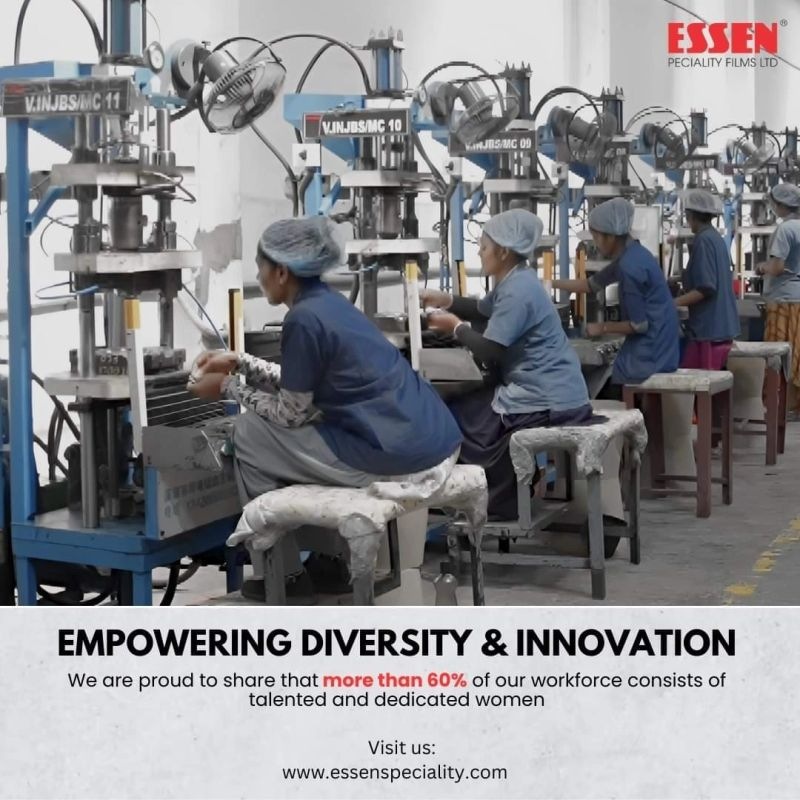
Essen’s core play is manufacturing EVA and LDPE-based plastic products tailored for home, décor, lifestyle, and outdoor applications. Think of them as the “backstage crew” for global furnishing brands — unseen, essential, and surprisingly profitable (on good days).
Their product range reads like a household inventory list:
Bath & Accessories: Shower curtains, bath mats, liners, hooks — because nobody wants to flood the bathroom.
Kitchen & Dining: Table covers, chopping boards, and placemats for those who host one dinner party a year.
Fitness & Lifestyle: Yoga mats and puzzle mats — because stretching on cold tiles is overrated.
Home Décor & Outdoor: Artificial plants, tarps, vehicle covers — plastic that pretends to be classy.
Exports dominate — 74% of FY23 revenue came from international sales, with domestic sales forming the humble 26%. Their clientele includes big retailers like IKEA and Walmart, meaning ESFL’s products might have better air miles than most Indian tourists.
But all that glamour hides concentration risk — top 5 customers = 75% of revenue. If even one giant cuts orders, Essen might have to do yoga on its own mats for stress relief.
4. Financials Overview
Here’s how Q2 FY26 stacked up against its peers and past quarters:
Metric (₹ Cr)
Latest Qtr (Sep’25)
YoY Qtr (Sep’24)
Prev Qtr (Jun’25)
YoY %
QoQ %
Revenue
48.36
46.31
41.16
4.4%
17.5%
EBITDA
9.44
7.68
3.52
22.9%
168%
PAT
5.19
6.32
1.78
-17.9%
191.6%
EPS (₹)
2.09
2.55
0.72
-17.9%
190%
Commentary: Revenue’s crawling up, but profits are sliding faster than your shower mat after a water spill. QoQ rebound looks strong though, proving plastics are resilient — both chemically and financially.
5. Valuation Discussion – Fair Value Range Only
Let’s run the holy trinity: P/E, EV/EBITDA, and DCF.
P/E Method: EPS (TTM) = ₹3.99 Industry P/E = 40.7 Fair Range = 35x to 45x = ₹140 – ₹180 per share
EV/EBITDA: EV = ₹436 Cr EBITDA (TTM) = ₹21 Cr EV/EBITDA = 20.8x Sector average ≈ 16–18x → fair range implies ₹350–₹380 Cr EV ⇒ ₹150–₹165/share
DCF (Simplified): Assuming conservative growth of 10% and discount rate 12%, fair value ≈ ₹160–₹175
Fair Value Range: ₹150 – ₹180
Disclaimer: This fair value range is for educational purposes only and is not investment advice.
6. What’s Cooking – News, Triggers, Drama
Recent corporate masala:
H1 FY26 Results (Nov 2025): Revenue ₹48.36 crore; H1 profit ₹6.86 crore; EPS ₹2.8 — the company’s kitchen is warm, not boiling.