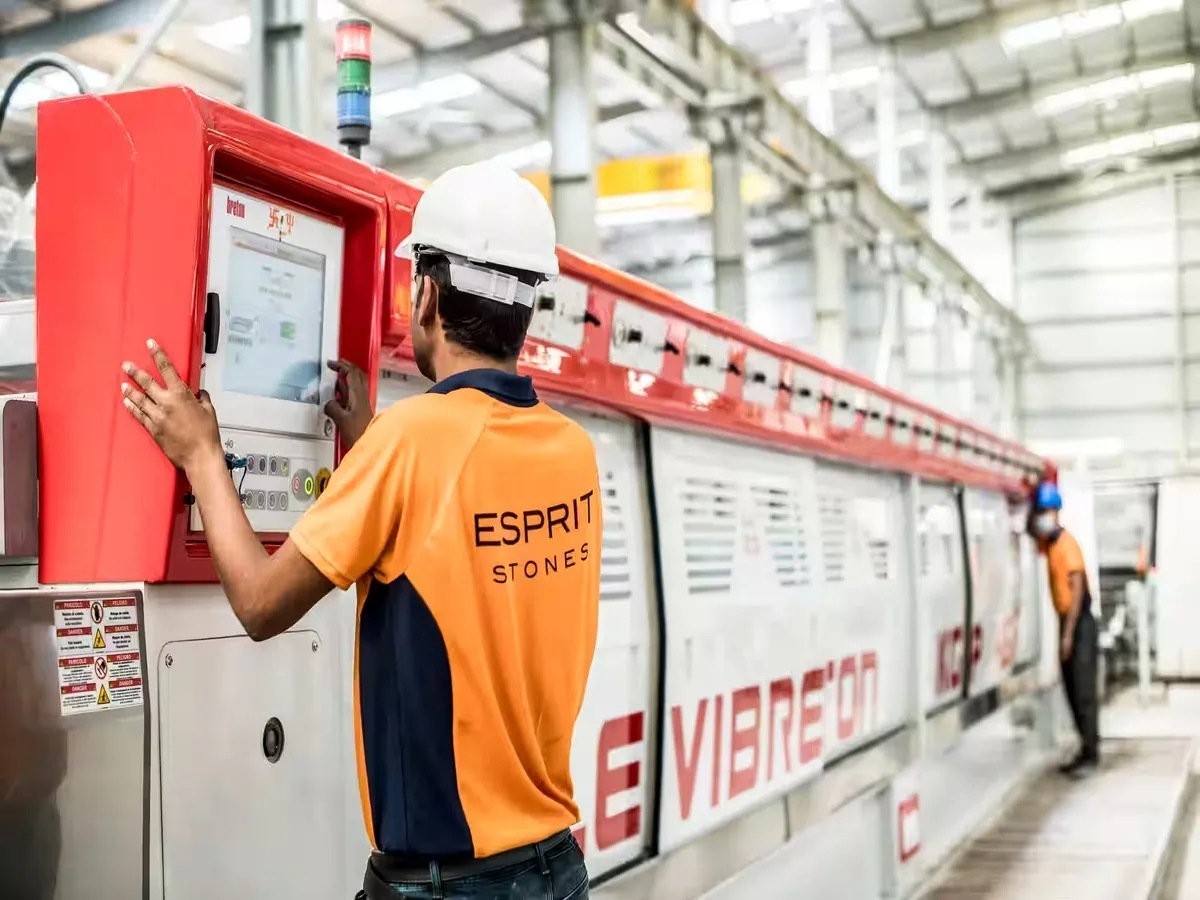
Esprit Stones Ltd H1 FY26 – ₹99 Cr Sales, PAT Turns Negative, Debt ₹59 Cr, Stock at 0.98x Book: Stone Hard Business, Soft Quarter Numbers
1. At a Glance – Granite Se Zyada Solid, Results Se Thoda Phisla
Esprit Stones Ltd is one of those companies that looks solid like the product it sells—engineered quartz and marble—but the recent numbers feel more like polished veneer than Italian Carrara. With a market cap of roughly ₹130 crore and a current price hovering around ₹59, the stock is trading almost exactly at book value (₹60), which usually screams “deep value”… or “market ko bharosa nahi hai”. In the last three months, the stock is down ~30%, six months down ~46%, and one year down ~37%, which means anyone who bought during the IPO excitement phase is now practicing Zen meditation.
Operationally, FY25 sales stand at ₹260 crore, but the latest half-year (H1 FY26) numbers show pressure—latest half-year sales at ₹99 crore and PAT slipping into losses. ROCE sits at ~14%, ROE around 15%, respectable on paper but currently under stress. Debt is still meaningful at ₹58.8 crore, interest coverage is thin at 2.13x, and exports (mainly to the US) continue to dominate revenue.
So the question is simple: is this a temporary stone chip or a structural crack? Let’s dig.
2. Introduction – IPO Ke Baad Reality Check
Esprit Stones listed in August 2024 after raising ₹50.5 crore via IPO. The pitch was classic: engineered quartz demand, export-heavy model, backward integration, premium domestic brand, and “India manufacturing for the world” vibes. The market nodded enthusiastically… and then reality showed up uninvited.
Post listing, margins softened, US demand slowed, costs stayed stubborn, and suddenly the numbers didn’t sparkle as much as the showroom samples. The company is not fake, not shady, not promotional—this is a legit manufacturing business—but it’s also not immune to cyclical demand, working capital stress, and export dependency.
What makes Esprit interesting is not explosive growth but its attempt at vertical integration: from quartz grit to resin to final slabs. That’s expensive, capital-intensive, and takes time to show benefits. Meanwhile, investors are impatient, and quarterly screens don’t forgive laggards.
So is Esprit Stones just going through a digestion phase after aggressive expansion, or is this business inherently volatile? Let’s understand what they actually do before judging the crime scene.
3. Business Model – WTF Do They Even Do?
Esprit Stones manufactures engineered quartz surfaces, and through its subsidiary HSPL, also produces engineered marble. These are composite stones—crushed natural quartz mixed with resin and pigments—used in kitchen countertops, bathroom vanities, flooring, wall cladding, furniture, and interiors where people want luxury without the headache of natural stone maintenance.
The company operates three manufacturing facilities. Facility I produces finished engineered stone slabs with three pressing lines and two polishing lines, totaling ~72 lakh sq. ft. annual capacity. Facility II manufactures quartz grit and powder (raw material), and Facility III makes unsaturated polyester resin. Translation: Esprit wants control over its raw materials so suppliers don’t bully margins.
Revenue-wise, FY23 saw 71% from engineered stones and 29% from resin, compared to 85:15 earlier. That means resin is no longer just captive—it’s becoming a revenue contributor. Export-wise, Esprit is heavily dependent on the US, which contributes ~95% of export revenue, and exports overall form ~73–94% of total revenue depending on the year.
Domestically, the company launched its premium brand “Haique” to tap Indian demand—but let’s be honest, Indian countertop buyers are price-sensitive and loyal to local marble dealers. Branding here is a slow burn.
In short: capital-heavy, export-driven, margin-sensitive, but vertically integrated. Easy business? Nope. Commodity either? Not fully.
4. Financials Overview – Numbers Don’t Lie, They Just Roast You Quietly
Result Type Lock: The latest official result heading clearly states “Half Yearly Results”, so this analysis treats it as HALF-YEARLY RESULTS. Annualised EPS = Latest EPS × 2
H1 FY26 Financial Comparison (₹ Crore)
Source table
Metric
Latest H1
YoY H1
Prev H2
YoY %
QoQ %
Revenue
99
144
161
-31.3%
-38.5%
EBITDA
2
18
19
-88.9%
-89.5%
PAT
-3
6
9
-150%
-133%
EPS (₹)
-0.66
6.35
3.92
NA
NA
Yes, EBITDA collapsed. Yes, PAT went negative. Yes, EPS is in minus. No, this is not a typo.
Annualised EPS based on H1 FY26 is negative, which makes P/E meaningless at the moment. The trailing twelve-month EPS is ₹3.26, which is why screen-based P/E still shows ~18.8x—but that’s backward-looking comfort food.
Witty takeaway: Esprit didn’t just lose shine this half-year—it lost polish, gloss,