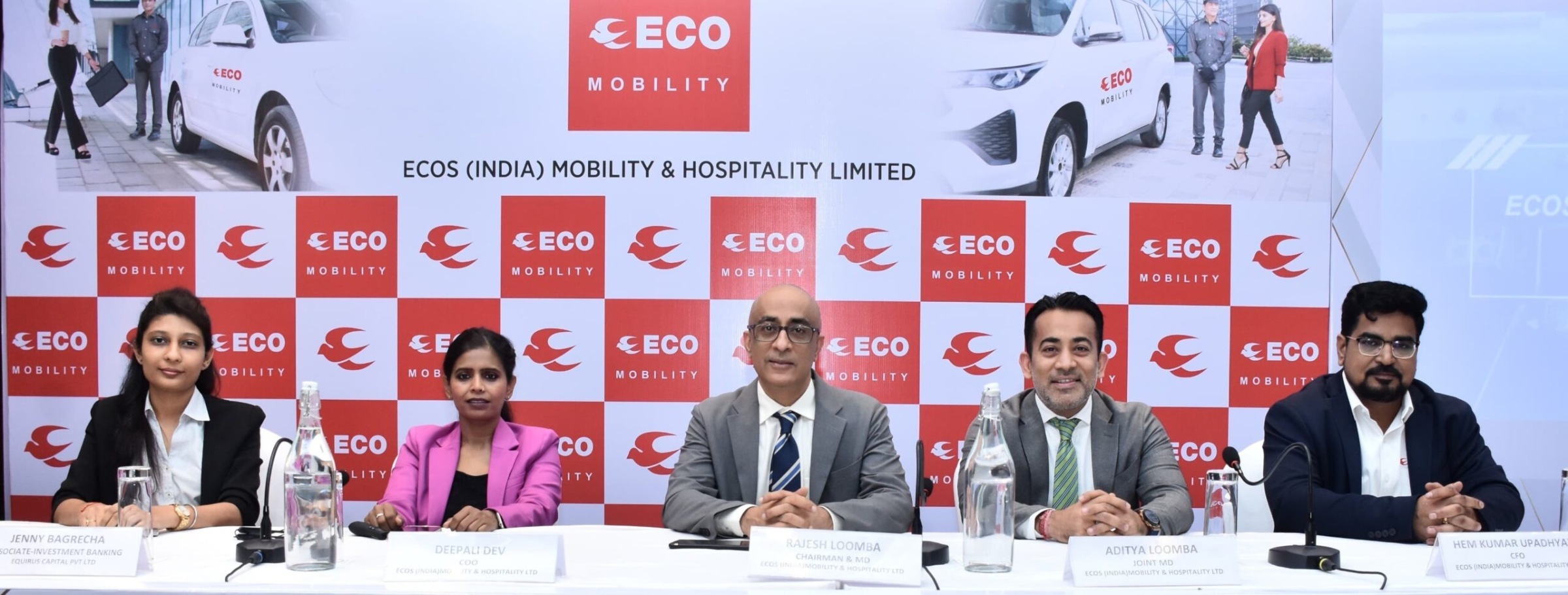
Welcome to Ecos (India) Mobility & Hospitality Ltd — the ₹1,166 crore market-cap company that literally drives corporate India around. Listed on the bourses in September 2024, this Hyderabad-headquartered chauffeur of the service economy just dropped its Q2FY26 numbers, and boy, the ride’s been… bumpy.
Revenue zoomed 33% YoY to ₹2,161 million, thanks to all those airport transfers and employee shuttles. But despite revving up the top line, PAT actually stalled – down 7% YoY to ₹146 million. In short: more miles, same smiles.
At a stock price of ₹194, the scrip is now trading at 20.6× P/E, looking more like a patient Ola driver waiting for a surge fare. Sales are up, profits have tapped the brakes, but with ROCE 34.5%, ROE 28.3%, and negligible debt (₹7.6 crore) — Ecos has the financial horsepower to cruise through traffic.
And yet, the stock’s down a whopping 52% YoY. Maybe the market expected flying cars by now?
2. Introduction
If Uber is your daily chaos and Ola your last resort, Ecos is the chauffeur-driven cousin who arrives early, smells of leather seats, and offers chilled water without asking for five stars.
Born in 1996 — when India was still using Nokia 5110 and prepaid taxis meant “Uncle’s Maruti 800” — Ecos started as a corporate car rental service. Fast forward to FY26, it now operates a 15,000+ vehicle fleet, spread across 110 Indian cities and 30+ international markets, including the US, UK, France, Japan, and Singapore. Not bad for a company whose first GPS device was probably a paper map.
The firm’s sweet spot lies in Employee Transportation Services — yes, those office cabs that appear like clockwork at 9 a.m. and 6 p.m., ferrying armies of techies between Noida Sector 62 and Sarita Vihar. This bread-and-butter segment keeps cash flowing while the chauffeured luxury rentals serve the corporate elite and jet-setters.
Despite being asset-light (over 90% vendor-owned cars), Ecos’s model throws up some seriously heavy numbers — Sales ₹712 crore, PAT ₹56.8 crore, and OPM 12.9% (TTM).
So why the stock-market speed bump? Maybe investors mistook “mobility” for “profitability on autopilot.”
3. Business Model – WTF Do They Even Do?
Ecos’s business can be summed up in one line: “You book, they drive, vendors earn, Ecos smiles.”
Chauffeured Car Rentals: Think of it as Uber Black meets your HR department. Ecos provides luxury rides — Mercedes E-Class, BMW 5-Series, Range Rover, Toyota Innova Hycross — complete with trained drivers. Used for corporate travel, VIP transfers, and events, this segment brings glamour (and slightly higher margins).
Employee Transportation Services: The company’s real workhorse. Serving IT, ITES, GCCs, and manufacturing sectors across 11 major Indian cities, Ecos ensures your software engineer reaches office before the first stand-up meeting.
Over 90% of its fleet is vendor-owned, keeping capex light. Ecos merely added 113 vehicles this quarter with a modest ₹13 crore CAPEX, projecting a yearly run-rate of ₹35 crore.
Add a sprinkle of tech: RentNet, their in-house transport-management platform, integrates everything from customer apps to driver tracking. So when your cab’s “2 minutes away” actually means 12, blame the client’s ERP, not Ecos.
And the clientele? Indigo, HCL Tech, Deloitte, HDFC Life, Dreamfolks, IndusInd Bank – basically anyone who needs to reach meetings on time but never actually does.
Commentary: Ecos clearly hit the gas on revenue but skidded slightly on profit margins. When driver commissions and diesel costs rise faster than your billing rates, EBITDA growth feels like a Delhi auto-rickshaw – noisy but slow.
Disclaimer: This range is purely for educational discussion and not investment advice.
6. What’s Cooking – News, Triggers, Drama
The company dropped its Q2 results with Bollywood-level suspense: “Revenue up 33%, profit down 7%.” A true thriller where the hero wins the race but loses the medal.
In Q1FY26, Ecos had added 113 vehicles; in Q2, it’s eyeing another 60–70 more. CAPEX ₹ 35 crore per year may not sound big, but remember – over 90 % of cars are vendor-owned. The trick is to scale revenue, not the parking lot.
On the governance side, Independent Director Rajeev Vij resigned in August 2025 citing “personal reasons.” That’s corporate-speak for “this board meeting could’ve