1. At a Glance – The Mud, The Money, The Mess
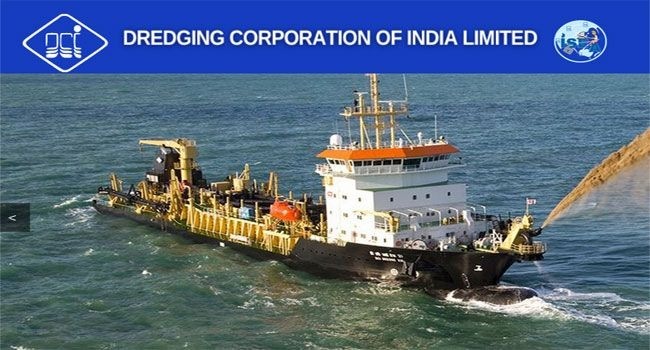
Dredging Corporation of India Ltd (DCI) is that one PSU which literally digs the foundation of India’s ports, yet somehow manages to sink its own profitability like an overworked dredger with a 25-year-old engine. With a market cap of ₹2,757 Cr, the stock trading around ₹984, and a price-to-book of 2.47, the market is clearly betting on a turnaround story rather than current performance.
Latest numbers? Sales at ₹1,193 Cr (TTM), PAT at –₹61 Cr, ROCE at –0.31%, and ROE at –3.67%. Basically, capital is employed, but returns are still on leave. Yet the stock has delivered 41% returns in one year and 58% in six months, proving once again that markets love hope more than homework.
Operationally, DCI controls over 80% of India’s maintenance dredging market, has an order book north of ₹1,089 Cr, plus fresh orders of ₹2,171 Cr, and a Government-announced ₹4,000 Cr dredger modernization plan. Sounds sexy, right? Then you look at interest coverage of 0.30, debt of ₹1,078 Cr, and a fleet old enough to qualify for a pension.
Is DCI a turnaround play or just a very expensive mud mover? Let’s dig. Literally.
2. Introduction – The PSU That Digs India, But Buries Its Own Profits
Dredging Corporation of India is not some fancy SaaS startup selling hope in PowerPoint slides. This company moves actual soil, sand, sludge, and sometimes entire coastlines. Ports don’t function without dredging, and India’s port ambitions collapse faster than a sandcastle without DCI.
Yet despite being strategically critical, DCI behaves financially like a PSU stuck in permanent dry dock. Revenues swing, profits disappear, debt balloons, and depreciation eats earnings for breakfast. Over the last decade, sales CAGR is just 5%, while ROE has stayed negative for most of recent history.
FY24 was particularly painful. Sales fell 19% YoY, capacity utilization dropped, dredgers went for prolonged dry-docking, and losses widened. And just when you think things are improving—bam—another quarter of red ink.
But here’s the twist.
The order book pipeline, government backing, fleet renewal announcements, and promoter (port authorities) holding of 73.47% mean this company is too important to fail quietly. It may bleed, but it probably won’t drown.
Question is: are shareholders funding India’s maritime ambitions… or just subsidizing inefficiency?
3. Business Model – WTF Do They Even Do?
Imagine India’s ports as nostrils. Without dredging, they clog. DCI is basically the country’s official nasal cleaner.
Their business is split into six core services:
1) Maintenance Dredging
This is the bread-and-butter. Ports continuously accumulate silt, and DCI removes it to maintain navigable depth. Over 80% market share here. Monopoly vibes, PSU style.
2) Capital Dredging
This is heavy-duty digging—creating new depths for new ports or expansion projects. High value, but also capex-heavy and execution-risky.
3) Land Reclamation
Turning water into usable land. Sounds like real estate magic, but actually involves tons of sand and paperwork.
4) Beach Nourishment
Saving coastlines from erosion. Environmentally important, financially meh.
5) Inland Waterways
Dredging rivers for transport. Politically popular, financially slow.
6) Project Management Consultancy
Basically “we’ll tell you how to dredge, even if we’re bad at our own margins.”
The problem? All of this is asset-heavy, depreciation-intensive, and dependent on ageing vessels. When dredgers go for repair, revenue goes for a walk.
Would this model shine with a younger fleet and better execution? Yes.
Does it shine today?
