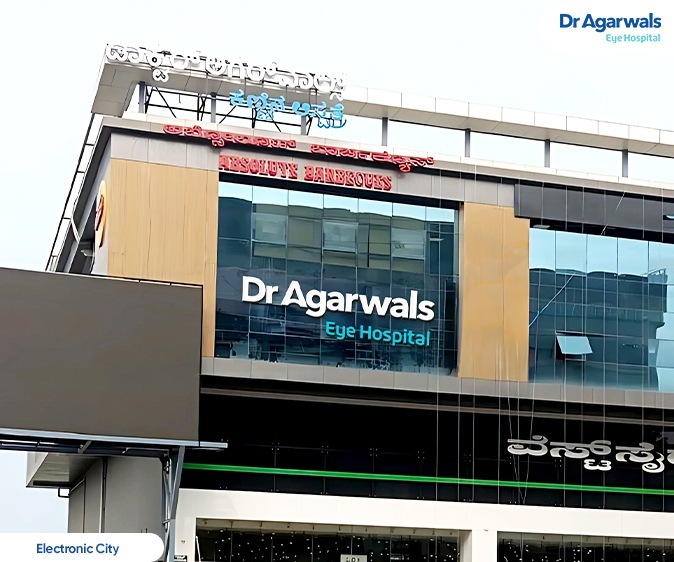
1. At a Glance – Blink and You’ll Miss the Growth
₹2,260 crore market cap. Stock at ₹4,677. P/E of 32.4. ROE flirting with 30%. OPM chilling at ~32% like it owns the place. In Q3 FY26, revenue clocked ₹116 crore (+22% YoY) while PAT jumped 66% YoY to ₹17.3 crore. This is not a sleepy regional eye clinic anymore — this is a cataract cash machine with an MBA.
But wait, there’s drama. Promoters have pledged ~29% of their stake. Debt stands at ₹335 crore. And just when investors were getting comfortable tracking AEHL, management said: “Relax, we’re merging you into the parent.”
So what exactly is Dr Agarwal’s Eye Hospital Ltd? A clean compounding healthcare story? Or a well-lit operating theatre hiding balance-sheet sutures? Let’s scrub in.
2. Introduction – From Eye Camp to Eye Empire
Founded in 1994, Dr Agarwal’s Eye Hospital Ltd (AEHL) started with a simple idea: fix eyesight at scale in Tamil Nadu. Fast forward three decades, and the company operates 63 facilities, employs 200+ doctors, and serves ~5.9 lakh patients annually, performing ~62,000 surgeries in FY25 alone.
Cataract is the hero here — boring, repetitive, and insanely profitable. Like a Bollywood remake franchise, but for eyeballs. Add refractive surgeries, glaucoma, retina, LASIK, optics, diagnostics, and suddenly you have a vertically integrated ophthalmology assembly line.
AEHL is also a subsidiary of Dr Agarwal’s Health Care Ltd (DAHCL), which owns ~72%. And that’s important — because the parent is now planning to merge AEHL into itself, effectively ending AEHL’s solo listed life by FY27.
So before this stock becomes a memory, let’s understand whether it deserved the premium it enjoyed.
3. Business Model – WTF Do They Even Do?
Think of AEHL as a hub-and-spoke eye factory.
Step 1: Vision Centres
Small clinics, low capex, high
footfall. These act as funnels. Patients come in for checkups, diagnostics, specs, consultations.
Step 2: Surgical Centres
Serious stuff happens here. Cataract surgeries, retina work, LASIK. This is where margins explode.
Step 3: Opticals + Pharmacy
Because why stop at surgery margins when you can also sell lenses, specs, and eye drops?
Revenue mix FY25:
- Surgeries: 63.9%
- Opticals & pharma: 23.2%
- Consultation & diagnostics: 12.8%
This model works because:
- Cataract volumes are massive and predictable
- Doctors are semi-fixed costs
- Equipment gets sweated hard
- Working capital cycle is negative (yes, patients pay faster than suppliers)
Simple question: if India is aging and screens are everywhere, does this business ever run out of customers?
4. Financials Overview – The Numbers That Do the Talking
Quarterly Comparison Table (₹ crore, EPS in ₹)
| Metric | Latest Qtr (Q3 FY26) | YoY Qtr (Q3 FY25) | Prev Qtr (Q2 FY26) | YoY % | QoQ % |
|---|---|---|---|---|---|
| Revenue | 116 | 95 | 118 | 22.2% | -1.7% |
| EBITDA | 34 | 26 | 40 | ~30% | -15% |
| PAT | 17.3 | 10.4 | 19 | 66.2% | -9% |
| EPS (₹) | 35.76 | 22.13 | 39.98 | 61.6% | -10.6% |
Yes, QoQ dipped slightly — healthcare is not immune to seasonality and expansion costs. But YoY? Absolute monster.
Annualised EPS (Q3 Rule)
Average of Q1–Q3 FY26 EPS:
- Q1: ₹36.72
- Q2: ₹39.98
- Q3: ₹35.76
Average ≈ ₹37.5
Annualised EPS ≈ ₹150
Which lines up neatly with TTM EPS of ₹146.48. No jugaad here.
5. Valuation
