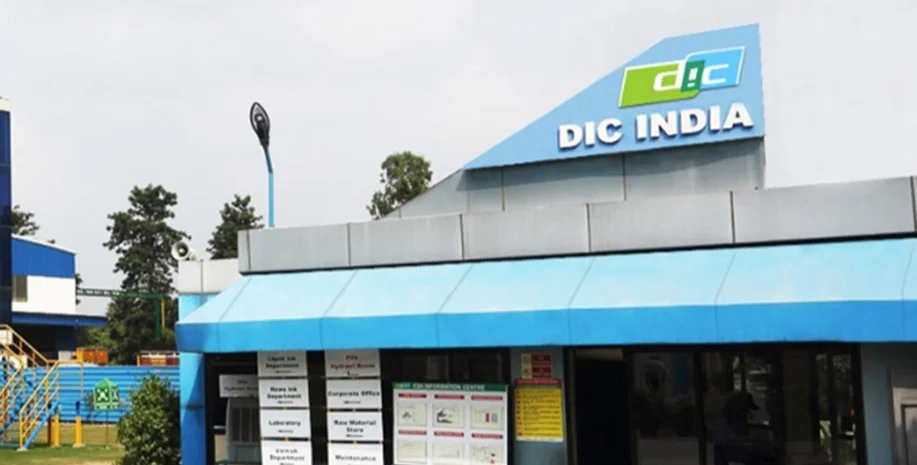
DIC India Ltd: ₹877 Cr Sales, 77 Years Old & Still Smelling Like Ink
1. At a Glance
DIC India, the brand that’s been painting newspapers, magazines, and food packets since before most of us were born, is still in the game—barely. Incorporated in 1947, the company prints money (not literally, RBI uncle won’t allow) by selling printing inks and adhesives. With a market cap of ₹550 Cr and quarterly profits that look like they were printed with low-quality toner, this company is basically your grandpa—wise, resilient, but slightly out of touch with Gen-Z Canva users.
2. Introduction
Welcome to the world of inks, adhesives, and lawsuits. DIC India Ltd, previously Coates of India, has been around since Nehru was busy giving tryst-with-destiny speeches. It makes inks for newspapers, packaging, and printing, while also dealing in lamination adhesives—the stuff that makes your food packets shiny and your textbooks unreadable after one monsoon.
Globally, it’s backed by its Japanese parent DIC Corp, which means if anything goes wrong, Tokyo is just one SOS away. Locally though, sales growth has been slower than Doordarshan’s video buffering speed.
Over the last year, the stock has bled -20%, Kolkata plant has shut shop, tax disputes are piling up, and profit margins are thinner than tissue paper. Still, they manage to survive because India still reads newspapers (mostly for matrimonial ads) and eats chips in laminated packets. Question for you: Would you bet on ink in an iPad era?
3. Business Model (WTF Do They Even Do?)
DIC India makes money by selling:
Printing Ink – Offset, newsprint, flexo, gravure. Basically, if it can stain your fingers, DIC makes it.
Lamination Adhesives – Used in packaging. Think Maggi sachets and chips packets.
Ancillary Services – Chemical solutions, print finishes, and random stuff even they forgot they sell.
Revenue Split (FY23):
Domestic: 90% (the bulk)
Exports: 10% (just enough to boast “global presence”).
Capacity? 60,648 tonnes per annum – the second largest ink producer in India. But here’s the kicker: margins are so low that it feels like they’re running a charity for newspapers.
4. Financials Overview
Quarterly Snapshot (Q1 FY26 vs Q1 FY25 vs Q4 FY25):
Source table
Metric
Q1 FY26 (₹ Cr)
Q1 FY25 (₹ Cr)
Q4 FY25 (₹ Cr)
YoY %
QoQ %
Revenue
226.5
242.7
210.2
-6.7%
+7.7%
EBITDA
9.4
11.6
6.8
-19.0%
+37.7%
PAT
4.36
6.21
2.59
-29.8%
+68.3%
EPS (₹)
4.75
6.77
2.82
-29.8%
+68.4%
Annualised EPS = ₹19.0 → P/E = 599 ÷ 19 = ~31.5x. Expensive for a company with margins thinner than free newspaper inserts.
Commentary: They’re growing quarter-on-quarter, but YoY looks ugly. Basically, they’re running just fast enough to not fall on their face.
5. Valuation (Fair Value RANGE only)
Method 1: P/E EPS (Annualised) ~ ₹19. Industry P/E ~ 35. Fair Value Range = ₹570 – ₹665.
Method 2: EV/EBITDA EBITDA (FY25 TTM) ~ ₹42 Cr. EV/EBITDA industry range ~ 10–13x. EV = ₹420 – ₹550 Cr → Equity Value ~ ₹410 – ₹540 Cr → FV Range = ₹450 – ₹600.