01 — At a Glance
The Underdog That Refuses To Die
- 52-Week High / Low₹292 / ₹198
- FY25 Revenue (Full Year)₹2,339 Cr
- FY25 PAT (Full Year)₹371 Cr
- Full-Year EPS (FY25)₹20.82
- Q3 FY26 EPS₹5.36
- Book Value₹129
- Price to Book1.59x
- Dividend Yield5.77%
- Debt / Equity0.13x
- ROCE21.1%
The News Flash (Get It?): D.B. Corp dropped ₹605 crore in Q3 FY26 revenue, down 5.82% YoY. PAT fell 19.2% to ₹95.5 crore. Culprit? Elections ended in early FY25, government ads evaporated like monsoon clouds in March, and your average Indian advertiser decided Instagram was cheaper than newspapers. Yet EBITDA margins held at 25%, the company returned ₹356 crore in FY25 dividends (58% payout ratio), and 21 million people use their news app monthly. Not exactly dead. Not exactly thriving. But paying dividends in between.
02 — Introduction
The Company That Time Forgot (But India’s Mom Didn’t)
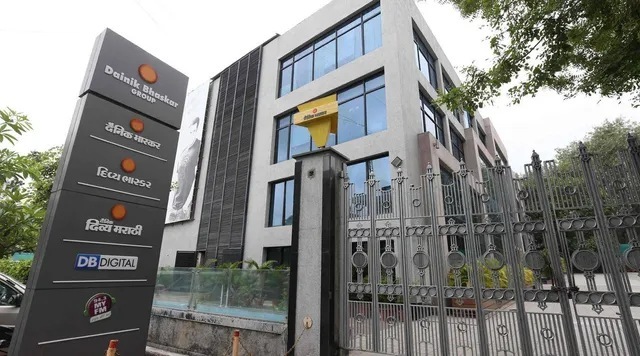
D.B. Corp Limited. Dainik Bhaskar. If your chacha reads newspapers in the morning at precisely 5:47 AM before chai, this company has collected his eyeballs for 67 years. The company was born in 1958 in Bhopal when India still believed in the printed word. Fast forward to 2026: smartphones exist, Twitter exists, even AI exists—and this company still circulates 14 million copies per quarter.
The print media death knell has been ringing since 2007. Yet D.B. Corp is not buried yet. It’s profitable, pays fat dividends, maintains 21.1% ROCE, and bosses around smaller peers. The Q3 FY26 numbers look grim on headline basis—revenue down 5.82%, profit down 19.2%—but peel back the layer and management’s concall reveals a different story: elections created a ₹300 crore “one-time” boost in FY25. Strip that out, and FY26 ad revenue grew 6% like-for-like. The obituary writers got the date wrong. Again.
So what’s happening? Government stopped printing election ads. FMCG softened. Real estate paused. But healthcare is up 20%, banking up 30%, auto is “resilient,” and 14 new radio licenses arrived in August 2025. Meanwhile, the company is aggressively building digital (21 million MAU), adding 7 new radio stations by March 2026, and buying real estate to own instead of leasing printing facilities. This is not a dying company managing decline. This is a legacy company meticulously building its second act. The market treats it like a retirement home. Occasionally, it surprises.
Concall Insight (Jan 2026): “Excluding election-driven revenue, ad revenue grew ~6% on a like-to-like basis, and EBITDA also grew on a comparable basis.” Translation: Management is politely telling you that the base effect is making headlines lie. Trust the 9-month trends, not Q3 alone.
03 — Business Model: WTF Do They Even Do?
Newspapers. Radio. Digital. Rinse. Repeat. (The Rinse Is Harder Now.)
D.B. Corp’s revenue streams are straightforward but beleaguered. Advertising forms ~70% of revenue, newspapers and magazines ~22%, printing job charges ~6%. They operate 51 printing facilities across 12 states. Five newspapers in three languages: Dainik Bhaskar (Hindi, 43 editions), Divya Bhaskar (Gujarati, 8 editions), Divya Marathi (Marathi, 6 editions), Saurashtra Samachar, and DB Star. Radio segment runs 30 MY FM stations today—expanding to 44 cities by mid-2026 (14 new licenses acquired in August 2025). Digital arm operates 4 portals and 4 mobile apps, with Dainik Bhaskar app crossing 18.2 million monthly active users as of November 2025.
The business model is essentially this: Find an advertiser. Convince them that ~66 million readers still exist. Charge them. Print 14 million copies per quarter. Haul them via truck to 2,000 distribution points. Hope they get read before chai is finished. Repeat quarterly. Margin protection happens through cost discipline (Q3 Q-o-Q operating cost fell 2%) and negotiating newsprint prices (70–75% sourced domestically, 25–30% imported). Circulation volumes are in structural decline (down 5% in FY25 to 14,139 lakh copies), but the company has arrested further decline in 9M FY26. Small victories in the print world are huge victories.
Ad Revenue~70%FY25 Mix
Circulation~22%Newspapers/Mags
Digital MAU21MAs of Nov 2025
Radio Stations44By mid-2026
The Margin Defense Play: Management disclosed Print EBITDA margin of 29% in Q3 (up 100 bps Q-o-Q). Total operating cost dropped 2% Q-o-Q. This is disciplined cost control amid revenue headwinds. Not growth. But survival at good margins is the game now.
💬 Does your family still have a newspaper subscription? If yes, which one—and is it Dainik Bhaskar? Drop an honest reply.
04 — Financials Overview
Q3 FY26: The Numbers That Made Headlines
Result type: Quarterly Results | Q3 FY26 EPS: ₹5.36 | Annualised EPS (Q3×4): ₹21.44 | Full-year FY25 EPS: ₹20.82
| Metric (₹ Cr) |
Q3 FY26
Dec 2025 |
Q3 FY25
Dec 2024 |
Q2 FY26
Sep 2025 |
YoY % |
QoQ % |
| Revenue | 605 | 643 | 614 | -5.82% | -1.47% |
| EBITDA | 135 | 177 | 138 | -23.7% | -2.17% |
| EBITDA Margin % | 22% | 28% | 22% | -600 bps | 0 bps |
| PAT | 96 | 119 | 93 | -19.2% | +3.2% |
| EPS (₹) | 5.36 | 6.63 | 5.24 | -19.2% | +2.3% |
Base Effect Caveat: Q3 FY25 benefited from peak election season advertising ($300M+ government spend). Q3 FY26 saw zero government ads. Management’s 9M FY26 comparison is more honest: revenue broadly in line, ad revenue stable, EBITDA growth on comparable basis. The quarter looks worse than it is because Q3 FY25 was Diwali + Elections—a carnival. Q3 FY26 is January discounts + hangover. Not apples-to-apples.
05 — Valuation Discussion
What’s a Dead Tree Supposed to Cost?