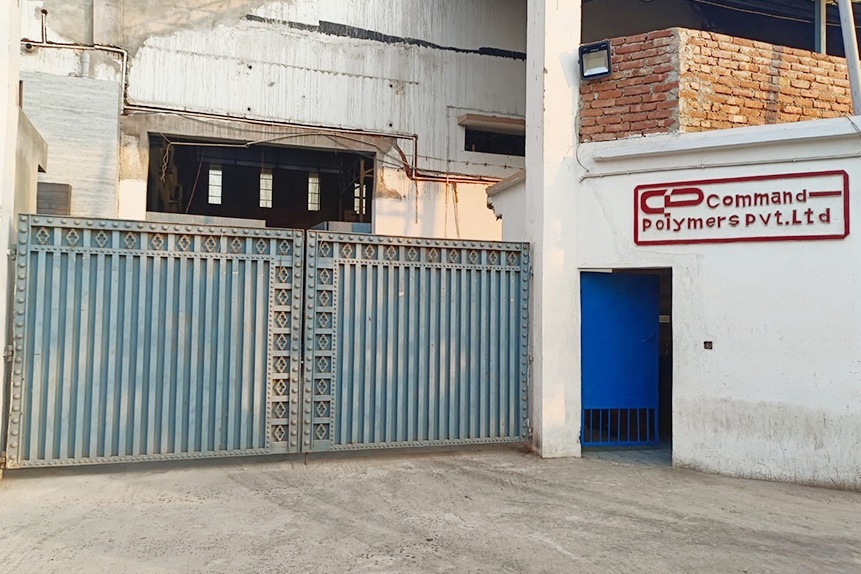
1. At a Glance – Blink and You’ll Miss the Profits
Command Polymers Ltd, a BSE-SME listed plastic products manufacturer, is currently valued at a market capitalisation of roughly ₹24 crore, with its stock trading near ₹25.6—coincidentally the same level as its 52-week low. The company has managed to lose more than 40% of shareholder value in one year, about 22% in just three months, and still trades at a headline P/E of ~43. Yes, you read that right—premium valuation, budget-level performance.
Latest H1 FY26 results (Half-Yearly, lock it here) show sales of just ₹2.12 crore and a net loss of ₹3.32 crore. That’s not a typo, that’s a plastic sheet melting under sunlight. Operating margin plunged to -124%, debt climbed to ₹16.5 crore, ROCE is stuck below 5%, and ROE is hovering around 3.6%—barely beating a savings account after tax.
This is a company that manufactures tarpaulin sheets and polythene tubes but somehow managed to wrap its own financials in shrink-wrap and suffocate them. Curious how it reached here? Good. Because this story gets better—or worse, depending on your tolerance for microcap drama.
2. Introduction – A 1998 Company Stuck in 1998 Profits
Command Polymers Ltd was incorporated in 1998, back when plastic bags were free and environmental guilt hadn’t kicked in. Nearly three decades later, the company is still making plastic goods, but profits appear to be an optional accessory.
The business went public in March 2023 via a SME IPO, raising ₹4.56 crore by issuing 25.32 lakh shares. Since then, the stock has behaved like a poorly stitched tarpaulin in monsoon winds—leaky, unstable, and constantly sagging.
What makes this interesting is not just the weak numbers, but the sheer contrast. India’s plastic and packaging sector has grown with infrastructure, agriculture, FMCG, and logistics demand. Peers are scaling, margins are improving, and exports are booming. Command Polymers? It is busy explaining why its half-year loss is bigger than its half-year revenue.
So the real question is not what they do—but why the numbers look allergic to consistency. And that’s exactly where we begin digging.
3. Business Model – WTF Do They Even Do?
On paper, Command Polymers does everything plastic-related except maybe plastic surgery. The company manufactures and trades a wide range of plastic and polymer-based goods—polythene LF tubes, tarpaulin sheets, polyester fabric, and even claims optional exposure to footwear, accessories, and allied plastic products.
The manufacturing facility is located in 24 Parganas, West Bengal, serving industries such as industrial packaging and food processing. Raw materials include LDPE and HDPE sourced from suppliers like ONGC Petro Additions Ltd and Vishambara Polymers.
Revenue split in FY24 was fairly straightforward:
Manufactured products contributed ~64%
Traded polyester fabric ~35%
Other operating income ~1%
So far, so good. But here’s the roast: despite being in a commodity business with thin margins, the company has somehow achieved negative operating leverage. When sales fall, losses don’t just rise—they sprint.
This isn’t a complex SaaS model or a capex-heavy chemical plant. It’s plastic sheets and tubes. The kind of business where scale matters, costs need discipline, and working capital needs respect. Which brings us neatly to the numbers.
4. Financials Overview – Half-Yearly Horror Show
Result Type Lock: HALF-YEARLY RESULTS (H1 FY26)
EPS annualisation rule: Half-Yearly EPS × 2
Financial Comparison Table (₹ Crore)
Metric
Latest H1 FY26
YoY H1 FY25
Prev H2 FY25
YoY %
QoQ %
Revenue
2.12
9.15
10.54
-76.8%
-79.9%
EBITDA
-2.63
0.75
1.03
NA
NA
PAT
-3.32
-0.01
0.56
-33,100%
NA
EPS (₹)
-3.54
-0.01
0.60
NA
NA
Annualised EPS (H1): -₹7.08
Witty takeaway: when your half-year revenue doesn’t even cover depreciation and interest, valuation metrics become philosophical questions.
5. Valuation Discussion – Maths Without Mercy
Despite losses, let’s mechanically walk through valuation methods for education.