1. At a Glance – IPO That Looks Sweet, But Is It Sugar or Sugarcane?
CKK Retail Mart Limited is walking into the SME market with a confident swagger, waving ₹88.02 crore like a wedding invitation and asking investors to bring ₹2.61 lakh minimum as shagun. The company clocks ₹301.85 crore revenue in FY25, PAT of ₹16.36 crore, and a squeaky-clean near-zero debt balance sheet. Sounds like a distributor’s dream, right? But hold your jeera soda. This IPO is pricing itself at a post-issue P/E of ~18.4×, which is premium territory for a commodity-heavy distribution business. Market cap post listing stands at ~₹315.7 crore, ROE has cooled from a scorching 47% to 18%, and a chunky ₹43 crore of IPO money is going straight into working capital. This is not a hype IPO — it’s a spreadsheet IPO. Curious? Good. Because this one demands reading beyond headlines.
2. Introduction – From Kirana Shelves to NSE SME
Incorporated in 2005, CKK Retail Mart has quietly done what many flashy FMCG startups couldn’t — scale distribution without burning balance sheets. No celebrity ads, no influencer reels, no VC-funded losses. Just sugar, rice, pulses, ghee, milk powder, and fizzy drinks moving from warehouses to kirana shelves. Over two decades, the company built supplier relationships, distribution muscle, and a portfolio that mixes agro commodities with low-cost beverages. Now in FY26, management wants to accelerate growth, lock in warehousing infrastructure, and fund the working capital cycle that comes with higher volumes. The IPO is less about brand dreams and more about inventory math. That’s refreshing — and also risky.
3. Business Model – WTF Do They Even Do?
CKK Retail Mart is not manufacturing at scale. It is a packaged agro-commodity distributor with some private-label branding and beverages on the side.
Core Segments:
- Agro-commodities: Sugar, rice, pulses, lentils
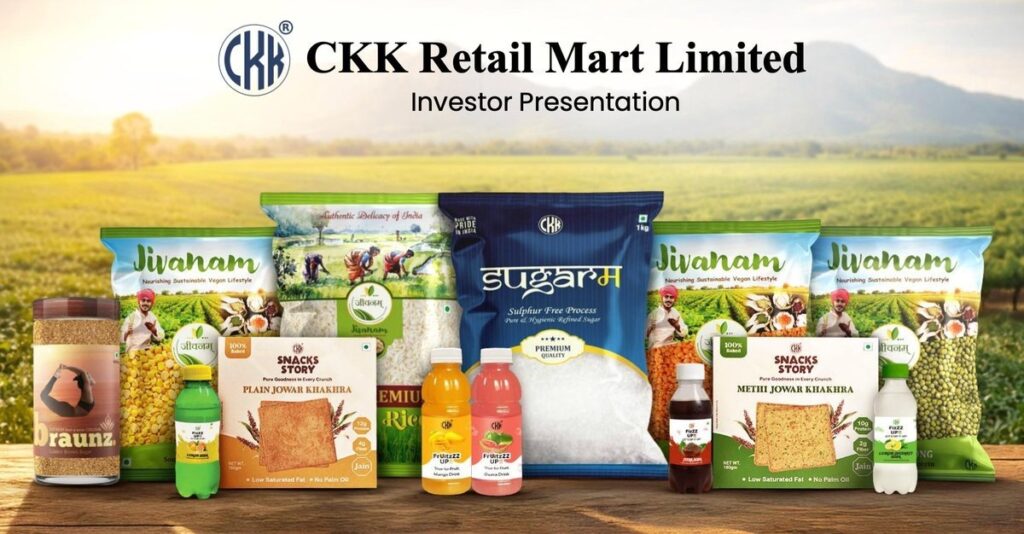
- Brands: Braunz, Jivanam
- Beverages: Jeera soda, lemon soda, carbonated drinks
- New launch (Apr 2025): Fruitzzzup (fruit pulp-based juice)
Distribution Models:
- Three-tier model: Company → Stockist → Distributor
- Direct to distributors
In short: margins are thin, volumes matter, and cash cycles rule. If inventory doesn’t move, money gets stuck. This is not Nestlé. This is logistics with labels.
4. Financials Overview – Growth With a Calculator, Not a Guitar
Key Numbers (₹ crore)
| Metric | FY23 | FY24 | FY25 | Sep 2025 |
|---|---|---|---|---|
| Total Income | 109.93 | 233.35 | 301.85 | 159.93 |
| EBITDA | 6.12 | 17.46 | 22.60 | 11.77 |
| PAT | 4.51 | 12.67 | 16.36 | 8.59 |
Revenue has nearly tripled in two years. PAT growth looks equally impressive. But remember — this is distribution. Growth is often bought with credit and inventory. Which brings us to margins.
5. Margins – Respectable or Raised Eyebrows?
- EBITDA Margin: ~7.4%
- PAT Margin: ~5.4%
For a business dealing in sugar, rice, and pulses, these are healthy margins. Almost suspiciously healthy. Industry averages usually hover lower due to price competition and input volatility. Sustaining this margin profile
