1. At a Glance – Blink and You’ll Miss the Plot Twist
Chemkart India Ltd is that stock which, on paper, looks like it studied finance from the same coaching class as Warren Buffett’s kids — ₹138 Cr market cap, P/E of just 7.22, ROE flirting with an obscene 59%, ROCE at 61.5%, almost debt-free balance sheet, and sales of ₹193 Cr in TTM. Then you look at the price chart and realise the stock has been beaten like a rented car: down ~40% in three months, trading near its 52-week low of ₹113, far away from the IPO honeymoon peak of ₹262. The latest half-year numbers show ₹103 Cr sales and ₹10.2 Cr PAT, but profit fell QoQ and YoY, margins softened, and suddenly headlines shifted from “nutraceutical growth story” to “DRI investigation, chairman arrest, customs duty drama”. This is not your calm FMCG compounding story; this is a Bollywood thriller where the hero sells amino acids by day and attends compliance meetings by night. Curious already? Good. Keep reading.
2. Introduction – From Protein Scoops to Police Notices
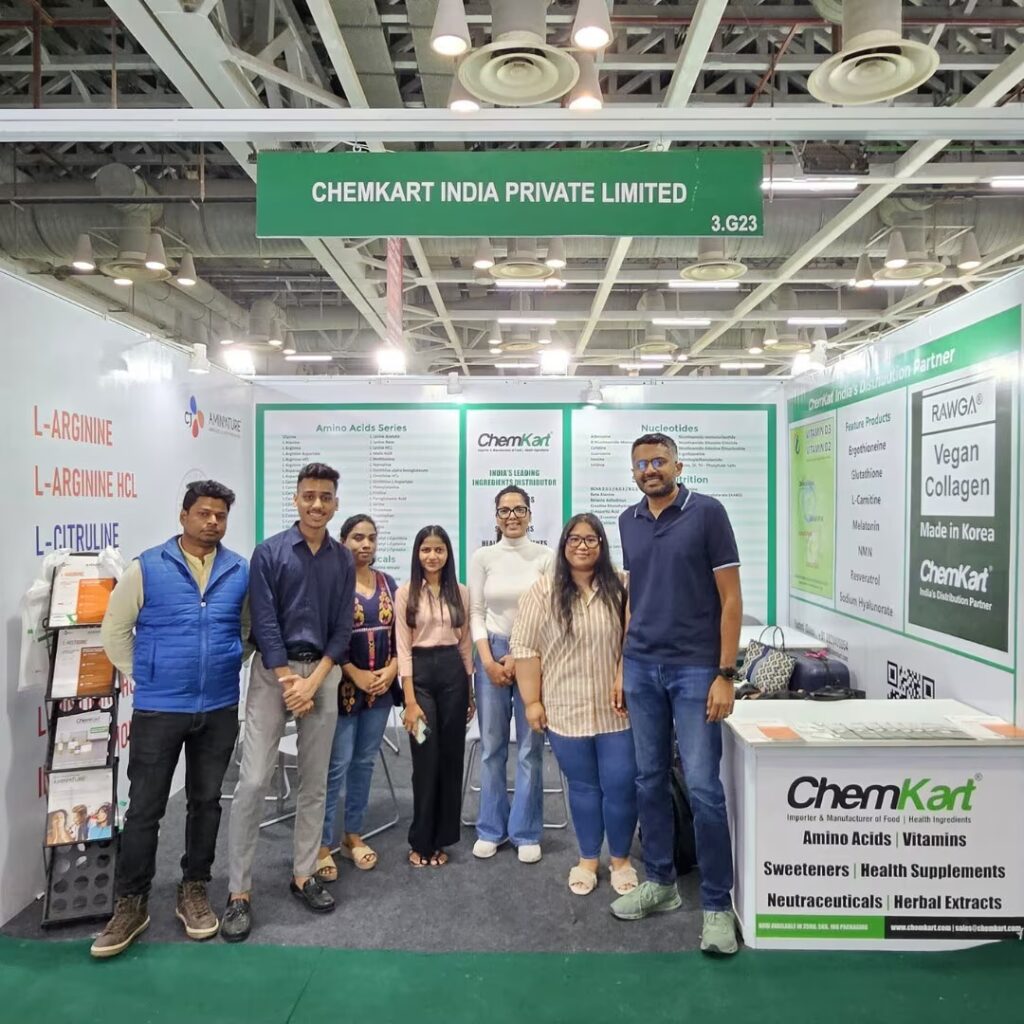
Chemkart India Ltd was incorporated in 2020 — yes, a COVID baby — and grew up very fast in the nutraceutical ingredient distribution space. While the world was busy baking banana bread, Chemkart was importing creatine, amino acids, vitamins, and protein powders and selling them to supplement manufacturers across India.
In just a few years, the company scaled revenues to nearly ₹200 Cr annually, listed on the BSE SME platform in July 2025, raised ₹80 Cr via IPO, and started talking about backward integration, finished dosage forms, and manufacturing facilities inside a SEZ. All textbook stuff for a B2B nutraceutical playbook.
But markets are cruel teachers. Barely months after listing, Chemkart found itself dealing with customs classification issues, a Directorate of Revenue Intelligence (DRI) investigation, and its chairman spending a few nights as the most famous inmate in the WhatsApp University of Stock Market Twitter.
So what do we have here? A genuinely high-return business model? Yes. Aggressive working capital play? Absolutely. Regulatory and governance overhang? Also yes.
The fun (and risk) lies in the mix. Ready to dissect it like a protein label with a suspicious amino acid profile?
3. Business Model – WTF Do They Even Do?
Let’s make this simple. Chemkart is not a D2C brand selling protein tubs with gym bros on Instagram. It is the boring (but profitable) middleman who supplies the raw nutraceutical ingredients that brands use to make those tubs.
Trading Business – The Main Muscle
About 97% of H1 FY25 revenue comes from trading. Chemkart imports nutraceutical ingredients — amino acids, vitamins, herbal extracts, proteins, nucleotides — mostly from overseas suppliers. These are then sold to Indian B2B clients who manufacture finished supplements.
Margins are not insane like luxury brands, but volumes are strong. Think Costco mindset, not Gucci.
Processing Segment – The “Value-Add” Sprinkle
Around 3% of revenue comes from in-house processing. At its Bhiwandi facility (~28,259 sq. ft.), Chemkart does blending and grinding. This allows customised formulations for clients who want specific ratios, particle sizes, or consistency.
This is not rocket science, but it helps lock in customers and improves stickiness. Also, auditors love the word “value-added”.
Backward Integration – Big Dreams, Big Capex
Chemkart is setting up a new facility at JNPA SEZ, spread over 44,347 sq. ft., with a planned capex of ₹36.2 Cr. This plant will manufacture tablets, capsules, jars, and sachets — basically moving closer to finished formulations.
This is where the company wants to evolve from “ingredient supplier” to “solution provider”. Whether execution matches PowerPoint remains to be seen.
Question for you: is Chemkart evolving into a nutraceutical manufacturer… or just stretching itself too fast?
4. Financials Overview – Numbers That Flex, Then Cramp
Result Type Lock
The latest financials are Half-Yearly Results. So for EPS annualisation: Half-Yearly EPS × 2.
Half-Yearly Performance Table (₹ Cr)
Metric
Latest Half (Sep 2025)
Same Half Last Year
Previous Half
YoY %
HoH %
Revenue
103
113
90
-8.8%
+14.4%
EBITDA
14
20
13
-30.0%
+7.7%
PAT
10
16
9
-35.1%
+11.1%
EPS (₹)
8.39
115.25*
9.37
NA
-10.5%
*The EPS distortion is due to equity restructuring pre-IPO; comparing absolute EPS YoY is misleading here.
Commentary: Sales dipped YoY, margins compressed, profits fell — not exactly gym progress pics. However, sequentially, the company recovered from the previous half. This tells you demand didn’t vanish; profitability took a hit, possibly due to costs, compliance, or one-offs.
Annualised EPS (Half-Yearly): ₹8.39 × 2 = ₹16.78 At ₹114 CMP → P/E ≈ 6.8–7.2x, depending on rounding.
Cheap? Yes. Comfortable? That’s where the debate starts.