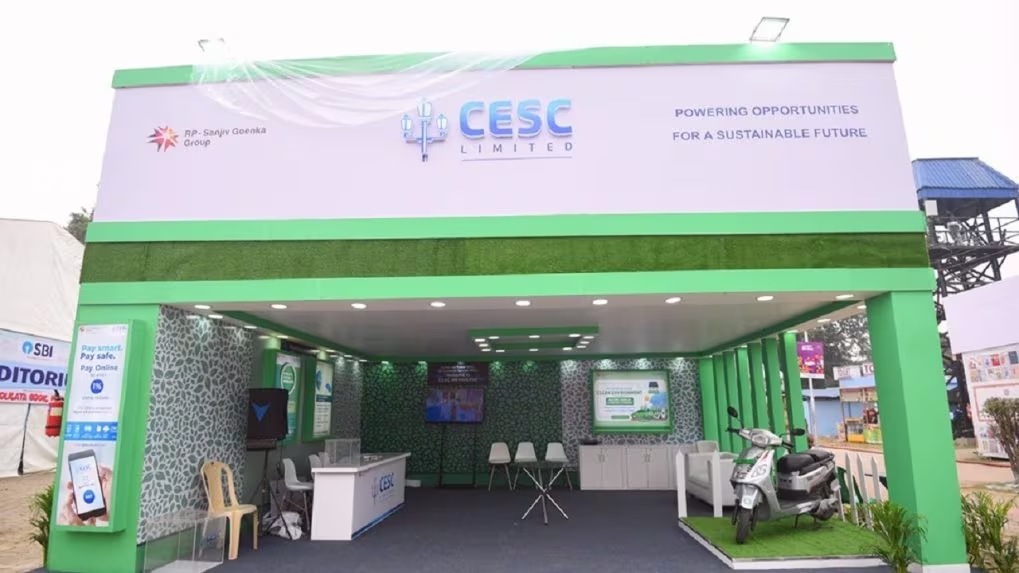
1. At a Glance – Old School Utility, New Age Ambitions
CESC Ltd is that one uncle in the power sector who still wears a crisp white shirt, pays dividends on time, and quietly funds his kid’s startup on the side. Market cap sitting at ₹20,402 Cr, current price hovering around ₹154, and a dividend yield of ~3.9% that makes fixed-deposit lovers feel seen. Over the last 3 months, the stock sulked with -11.9% returns, but zoom out and the 3-year return of ~28% reminds you why boring utilities still survive Indian markets.
Operationally, Q3 FY26 delivered ₹5,267 Cr revenue with PAT of ₹304 Cr. Not fireworks, but not a blackout either. The company runs on a P/E of ~13.8, well below the industry median of ~25, screaming “regulated utility discount” louder than your electricity bill in summer. ROE and ROCE both hover around 11–12%, basically saying: “I’ll give you stability, not adrenaline.”
And yes, this is still the sole electricity distributor in Kolkata & Howrah, serving 4.4 million+ customers who don’t really have a choice. Monopoly vibes, but with regulators breathing down the neck. Curious already? Good. Let’s open the transformer box. ⚡
2. Introduction – A Power Company That Refuses to Retire
Founded in 1978, CESC Ltd is the OG integrated power utility of India. While newer players chase merchant power profits like crypto traders in a bull run, CESC sticks to regulated distribution, predictable cash flows, and steady dividends. It is the flagship of the RP-Sanjiv Goenka Group, a conglomerate that has fingers in everything from carbon black to music labels—basically the Indian version of “diversification is my personality.”
CESC’s DNA is conservative. It doesn’t spike profits suddenly, but it also doesn’t implode overnight. Over decades, it has survived coal shortages, regulatory shocks, tariff wars, and political noise in West Bengal. That alone deserves a slow clap.
But here’s the twist: while the parent utility business plods along, the group has quietly planted a renewable energy monster in the backyard—Purvah Green Power. Solar, wind, battery storage, RTC bids… suddenly this “boring utility” wants to party with SECI and NTPC
auctions.
So the real question is:
Is CESC just a dividend cow slowly chewing cud, or a transition story hiding behind coal dust? Let’s dissect.
3. Business Model – WTF Do They Even Do?
Think of CESC as a three-legged stool:
1) Power Generation
CESC operates 5 thermal power plants with a total capacity of 2,140 MW. About 78% of this capacity is tied up with its own distribution areas—Kolkata and Noida—meaning demand risk is minimal. Plants run at a healthy PLF of ~82% in FY24, up from ~67% in FY22. That’s not luck; that’s disciplined dispatch.
Translation: these plants actually run, unlike half the country’s stranded assets.
2) Power Distribution
This is the crown jewel. CESC is the sole distributor in Kolkata & Howrah, plus Noida Power (NPCL) and four franchisee circles in Rajasthan & Maharashtra. Total licensed area: ~1,340 sq km, serving 4.4 Mn+ customers.
T&D losses at ~16% aren’t world-class, but for Indian conditions, they’re respectable. And distribution revenue breakup shows where the money comes from:
- Kolkata: 64%
- Noida: 18%
- Rest of India: the remaining hustle
Regulated returns, assured demand, but limited upside. Like a government job with performance appraisal.
3) Renewable Energy (The Mid-Life Crisis)
Through Purvah Green Power, CESC plans:
- 3,200 MW RE by FY29 (Phase 1)
- 10,000 MW long term (Phase 2)
As of Q3 FY26, ~1,200 MW projects under development, with PPAs in place and ~₹1,200 Cr annual revenue
