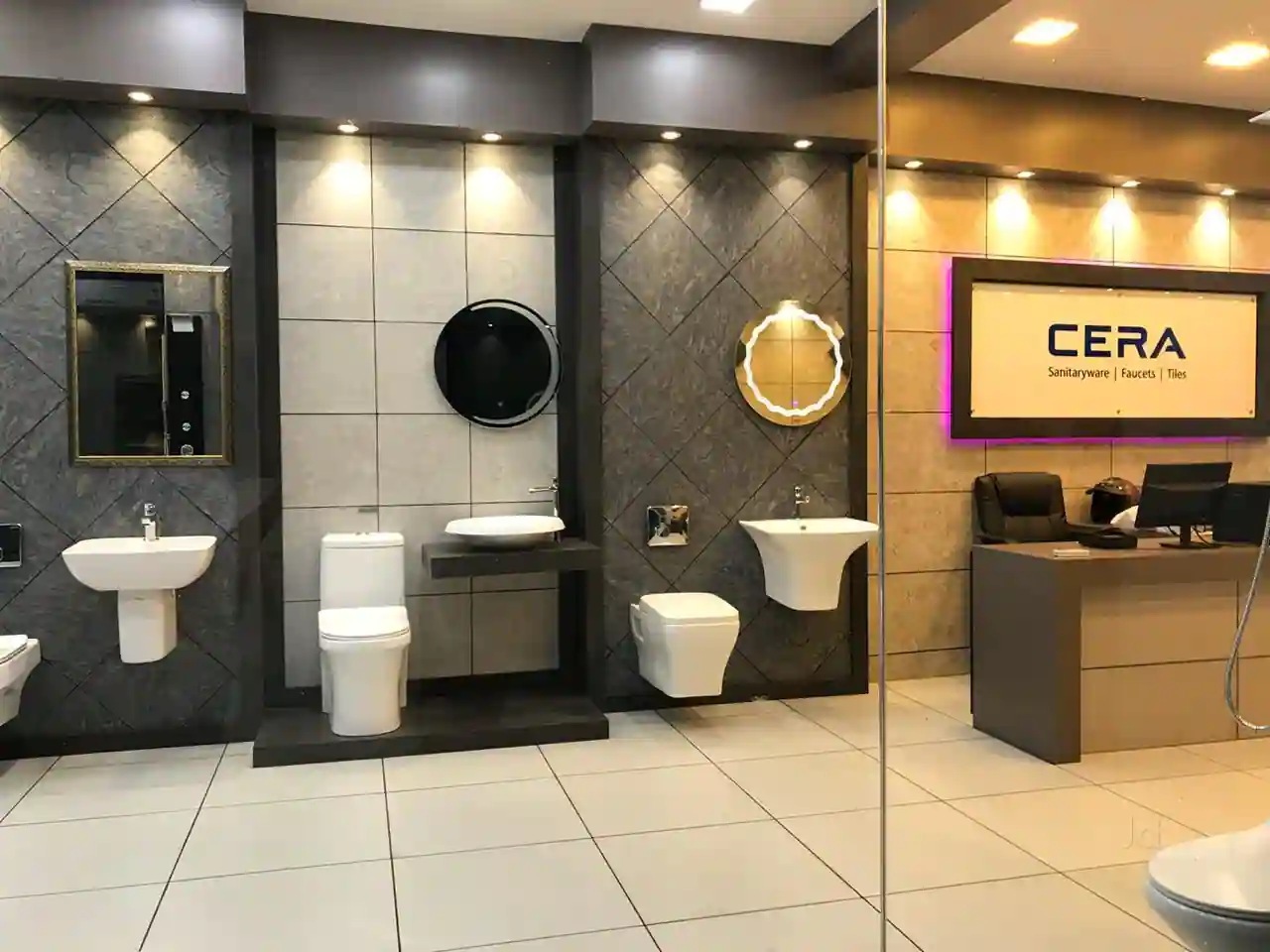
1. At a Glance
Cera Sanitaryware (NSE: CERA, CMP ₹5,686) is what happens when a bathroom brand becomes a cult stock. From tiles to toilets, faucets to fancy PVD gold-finish showers, this Gujarat-based company has built a porcelain empire that makes even real estate developers nod respectfully.
For Q2FY26, the company reported revenue of ₹4,879 million and a PAT of ₹566 million – a margin that would make most consumer durables companies blush. Market cap stands tall at ₹7,394 crore, and it’s almost debt-free with borrowings of just ₹59.6 crore. ROE is a princely 18.3%, ROCE an elegant 22.4%, and the dividend yield a modest but steady 1.14%.
Yet, the market seems to have thrown some soap in its eyes – the stock is down 16% YoY and 11% in the last three months. But when a company makes ₹235 crore in annual PAT selling bathroom fixtures, you know it’s not just washing hands – it’s washing cash.
If your house has a CERA product, congratulations — you’ve contributed to one of India’s cleanest profit stories. If not, keep reading. You might start checking your faucets with respect.
2. Introduction – Flush With Cash and Class
Cera Sanitaryware is that rare Indian midcap that’s simultaneously classy and cash-rich. Founded in 1980 and headquartered in Gujarat, it has grown into a benchmark for premium sanitaryware, faucetware, and tiles. Think of it as the “Havells of Bathrooms” — just less glamorous and a lot more functional.
While real estate cycles come and go like a landlord’s mood, Cera keeps building brand value brick by brick (and basin by basin). The company’s consistent growth comes from one simple formula: Indians are building better bathrooms, and Cera is happy to sell them everything that fits.
CERA’s brand recall is top-notch. Their luxury segment ‘Senator’ and premium line ‘CERA Luxe’ have taken the fight directly to global players like Kohler and Jaquar. In fact, 43% of their revenue now comes from premium products — proving that India’s middle class isn’t afraid of paying for “rose-gold faucets” and “vibe-sense toilets”.
But it hasn’t been all smooth sailing (or flushing). FY25 showed slowing growth — just a 3.38% sales uptick and a slight PAT decline of 2.15%. The culprit? Weak housing demand, construction delays, and maybe too many builders defaulting faster than their faucets could be installed.
Still, Cera’s fundamentals remain strong enough to outshine its glossy showroom tiles. With a 22% ROCE, 4.35 current ratio, and almost no debt, it’s like that disciplined student who still scores A+ even after skipping the last lecture.
3. Business Model – WTF Do They Even Do?
Cera’s business model is as clean as its urinals. It manufactures and sells sanitaryware, faucetware, tiles, wellness products (bathtubs, shower panels), kitchen sinks, and mirrors. Everything you need to make a washroom Instagram-worthy.
Its product strategy is neatly tiered:
- Senator for the “my-toilet-costs-more-than-your-bike” crowd,
- CERA Luxe for the upper-middle segment that reads Architectural Digest,
- CERA for the mass-premium audience who want luxury without remortgaging their house.
The company plays both sides of the manufacturing fence:
- In Sanitaryware, 43% is in-house and 57% outsourced.
- In Faucetware, it’s the opposite — 52% manufactured internally and 48% outsourced.
That’s classic Indian jugaad capitalism: make what’s profitable, outsource what’s painful.
Geographically, its sales are as diversified as an Indian wedding guest list:
- South India leads with 35%,
- North follows at 33%,
- West clocks in at 21%,
- East lags at 9%.
And with over 6,500 dealers, 24,000 retailers, 1,800 brand stores,