01 — At a Glance
The Humble Footwear Brand Pretending to Be LVMH
- 52-Week High / Low₹304 / ₹210
- Q3 FY26 Revenue₹589 Cr
- Q3 FY26 PAT₹63.7 Cr
- Q3 FY26 EPS₹2.08
- Annualised EPS (Q3×4)₹8.32
- Book Value₹26.0
- Price to Book9.13x
- Dividend Yield0.42%
- Debt / Equity0.48x
- FY25 Full Year PAT₹141 Cr
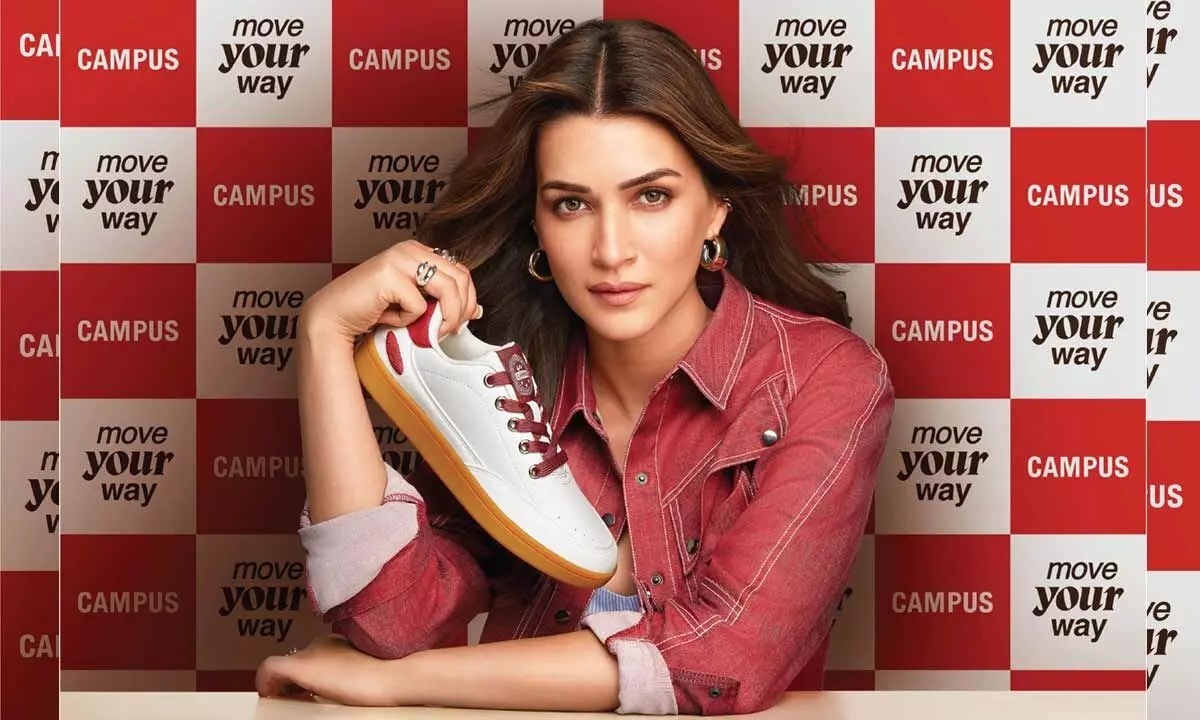
Year-to-Date Auditor’s Note: Campus Q3 FY26 delivered ₹589 Cr revenue (+14.3% YoY), ₹63.7 Cr PAT (+37% YoY), and margins expanded 290 basis points to 19.5%. The stock tanked 10% over 3 months anyway. They hired Kriti Sanon as brand ambassador, launched a “You Go, Girl” campaign, opened apparel stores in EBOs, and tried to convince everyone that a footwear maker is now a lifestyle brand. The market responded by pricing it at 51x earnings—which, in Indian stock valuation terms, roughly translates to: “We have no idea what we’re doing, so we’ll just keep buying.” Welcome to 2026.
02 — Introduction
From Your Gully Mechanic’s Shoe of Choice to a Bollywood Celebrity Endorsement Deal
Here’s the thing about Campus Activewear: it was a perfectly fine footwear brand. Not exciting, but fine. The kind of shoe your father wore while morning-walking. Comfortable. Affordable. The sort of brand nobody got excited about, which made it an excellent brand because nobody was expecting it to fail.
Then something weird happened. The company got listed in May 2022 and started thinking of itself as an aspirational lifestyle brand. They hired Vicky Kaushal, then Sonam Bajwa, then Kriti Sanon—the actress literally known for playing a woman navigating life on her own terms. Meanwhile, Campus makes shoes. Affordable ones. The cognitive dissonance is beautiful.
Q3 FY26 shows the company executing exactly this pivot: revenue up 14.3% YoY to ₹589 Cr, PAT up 37% to ₹63.7 Cr, margins expanding, online growing at 18%, sneaker volumes doubling, women’s mix improving to 22%. They acquired land in September 2025 for ₹74.75 Cr, committed ₹230 Cr capex for 2026–2027, and just launched athleisure apparel in January 2026. This is a company in full expansion mode.
The stock? Trading at 51.4x earnings—nearly 50% premium to the industry median P/E of 34.1x. The only thing Campus is moving faster than quarterly volume is investor excitement, fueled by unsustainable margin expansion and a concall where management explained how Flipkart’s accounting changed cost ₹10 Cr of quarterly revenue but made margins look better.
February 2026 Concall Insight: Management admitted ASP growth (+5.2% YoY) is driven by “higher saliency of premium SKUs, especially Sneakers.” Translation: they’re selling fewer cheap shoes and more expensive ones. Margins expanded 290 bps, but the CFO also mentioned the Flipkart/Myntra accounting shift reduced reported revenue while keeping EBITDA the same. Numbers are real. The narrative is being polished.
03 — Business Model: WTF Do They Even Do?
They Make Shoes. Now They’re Making Apparel. Tomorrow, They’re Probably Making Horoscopes.
Campus manufactures and sells footwear—running shoes, walking shoes, casual shoes, sandals, slippers. Think of the shoe section at your local Big Bazaar or Vishal Mega Mart, except with far better design language and celebrity endorsements.
The core business operates through three channels: Trade Distribution (53% of FY25 revenue), D2C Online (37%), and D2C Offline stores (10%). They own 6 manufacturing facilities with 30.7 million pairs of annual capacity, own 19% of upper manufacturing and 40% of sole manufacturing in-house, and distribute through 23,000+ retail touchpoints across 650+ cities, backed by 290+ exclusive brand outlets (EBOs) and 2,000+ large-format store counters.
Market share? 17% in the scaled sports & athleisure footwear segment, making them the No. 1 brand in this category. Competitors include Bata (stuck selling “comfort”), Relaxo’s Sparx (targeting volume), Metro Brands (premiumization), and about 50,000 unorganized players selling shoes in garage workshops.
The new play: athleisure apparel, launched January 2026. The company installed apparel trial rooms and dedicated shelf space in 60 EBOs, went live on brand.com, Myntra, and Amazon simultaneously, and positioned this as “a natural progression of our brand” toward becoming a “lifestyle brand.” The CFO hasn’t quantified apparel revenue because it’s early, but they’re clearly betting this moves the needle from ₹1,700 Cr revenue (TTM) to ₹3,000+ Cr over 5 years.
Market Share17%Scaled S&A Segment
Revenue Mix53%Trade Distribution
Online Mix37%D2C e-com
In-House Uppers19%Manufacturing
The Real Shift: Campus is no longer selling shoes. They’re selling aspiration. The “You Go, Girl” campaign with Kriti Sanon cost them 10.9% of Q3 revenue as ad spend (up from 10.2% last year). They’re buying the right to be perceived as a lifestyle brand. That’s expensive. Whether it works is the entire investment thesis.
💬 Real talk: Do you think Campus apparel can compete with Decathlon, Nike, Puma, and Adidas? Or will this be another inventory write-off waiting to happen? Drop your take.
04 — Financials Overview
Q3 FY26: The Growth Story (With Caveats)