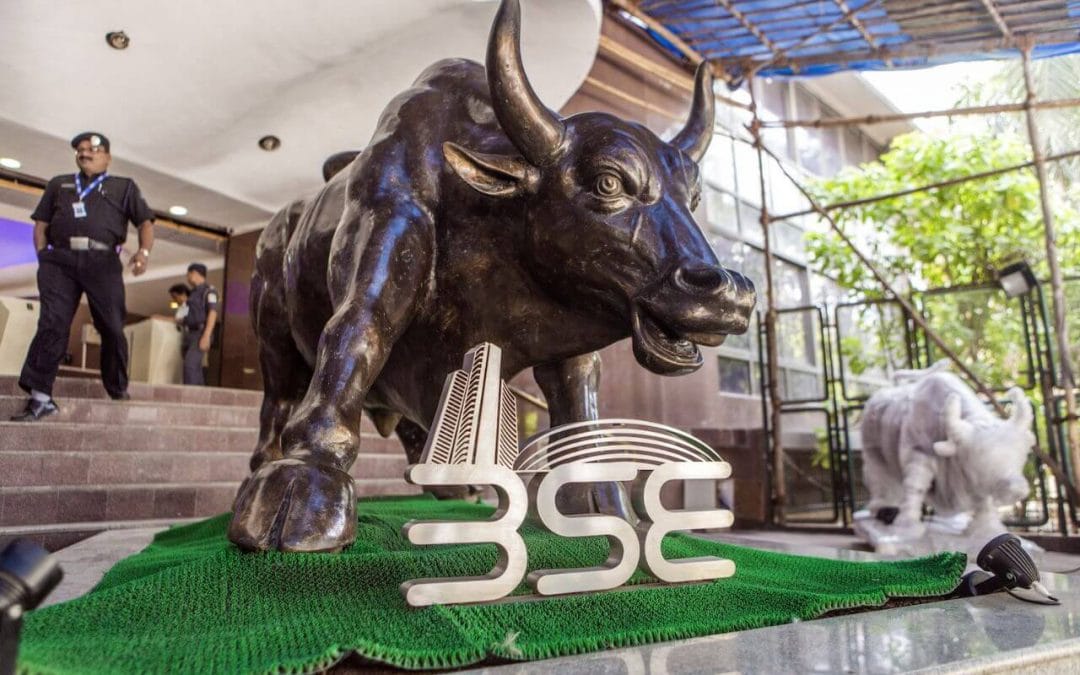
BSE Ltd Q2 FY26 – The Exchange That Exchanged Everyone’s Expectations With a 61% PAT Jump
1. At a Glance
BSE Ltd, Asia’s oldest exchange and Dalal Street’s OG landlord, just dropped a Q2 FY26 performance so loaded that even veteran traders must have wondered whether the 6-microsecond trading engine had accidentally leaked some horsepower into the financials. With a market cap of ₹1,15,002 crore, a current price of ₹2,828, and a 3-month return of 13.9%, the stock is behaving like that calm, cultured kid who secretly tops every exam without shouting. The stock trades at a P/E of 64, an ROE of 36%, and an ROCE of 46.6%, while being almost debt-free (₹0.02 crore — basically rounding error). Quarterly sales clocked ₹1,068 crore and quarterly PAT surged to ₹558 crore, a massive 61% YoY leap. Financial discipline meets trader adrenaline: BSE is literally monetizing volatility like a seasoned saint who read the Bhagavad Gita and learned non-attachment… except to revenue growth.
2. Introduction
Welcome to the great Indian stock exchange that started with brokers sitting under banyan trees and now runs a 6-microsecond trading engine that could probably detect your mood swings before your therapist does. BSE Ltd isn’t just a company; it’s a 150-year-old institution that watched more scams, booms, bans, reforms, and economic plot twists than all seasons of Scam 1992 put together.
The Financial Year 2025–26 era has been wild for BSE. Volumes exploded. Derivatives went from being a sleepy corner to an F&O dhamaka. MF distribution through StAR MF is so huge now that even chaiwalas probably have SIPs triggered through it. And listing activity? 5,452 companies listed as of March 2025 — that’s not even a stock exchange anymore; that’s a population census.
Yet, BSE feels like that middle-aged uncle who suddenly got back into fitness and started giving six-packs competition to Gen-Z. In the last five years, profits grew at 65% CAGR, sales at 39%, and the stock price at 117% CAGR (don’t worry, this is commentary, not advice — calm down SEBI babu).
This article will dissect every part of BSE’s financial anatomy — from its profit engine to its cash flow chakravyuh — all in sarcastic auditor tone. Buckle up, grab chai, and wonder: is this the same BSE that people once thought was overshadowed by NSE? Because now, the comeback looks stronger than a dramatic Bollywood interval twist.
3. Business Model – WTF Do They Even Do?
Let’s break down the business model like explaining to your lazy CA cousin who wants “just the gist.”
At its core, BSE is a marketplace — not for sabzi, but for everything financial: equities, currencies, debt, derivatives, commodities, SME listings, mutual fund orders, insurance distribution, and even agricultural spot markets (yep, they sell dal online too).
BSE’s Money-Making Departments:
Securities Services (80% of FY25 revenue) This is the machine running your daily stock drama. Equity, currency, derivatives — if India trades it, BSE slices a fee off it. Think of it as the Netflix subscription of traders.
Services to Corporates (17%) Listing equity, debt, commercial papers, IPO book-building… basically the shaadi planner of India Inc.
Data Dissemination (2%) Selling live market data to brokers, terminals, fintechs — basically charging rent to everyone who wants to see numbers move.
Index Services (1%) Sensex, Bankex… these guys collect royalties like an old Bollywood singer living off evergreen hits.
Other Income (insurance + training + misc) The side hustles. Because why not?
Their subsidiaries include India INX, the 22-hour international exchange at GIFT City; BEAM, an electronic spot agri market; BSE Ebix, an insurance platform; and the monster BSE StAR MF, which practically owns MF distribution.
This isn’t a stock exchange anymore. It’s a financial supermarket, Amazon marketplace, and fintech powerhouse rolled into one — but with 150 years of legacy and zero influencer drama.
Funny question break: If NSE is the class topper, is BSE the kid who studies one night before the exam and still beats everyone?
4. Financials Overview
Quarterly Financial Snapshot (₹ crore)
Source table
Metric
Latest Qtr (Sep 2025)
YoY Qtr (Sep 2024)
Prev Qtr (Jun 2025)
YoY %
QoQ %
Revenue
1,068
813
958
31.4%
11.5%
EBITDA
680
456
626
49.1%
8.6%
PAT
557
346
538
61.0%
3.5%
EPS (₹)
13.73
8.54
13.28
60.7%
3.4%
Annualised EPS = 13.73 × 4 = 54.92
Recalculated P/E = ₹2,828 ÷ ₹54.92 = 51.5
(Compared to Screener’s TTM PE of 64 — different because annualised Q2 differs from TTM.)
Witty commentary: At this point, BSE is not reporting quarterly results; they’re showing quarterly flex. Revenue rising, margins ballooning, profits jumping like Sensex after Budget Day — this is what happens when a legacy giant finally wakes up and chooses violence (in a regulatory-compliant way).
5. Valuation Discussion – Fair Value Range Only
P/E Method
Annualised EPS = ₹54.92 Industry PE = 64
Applying a conservative 45× multiple → ₹2,471 per share