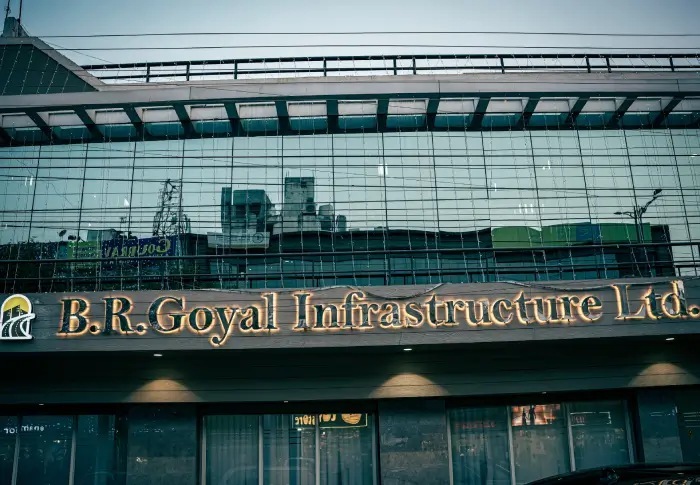
B.R. Goyal Infrastructure Ltd H1 FY26 – ₹342 Cr Revenue, ₹16 Cr PAT, Order Book ₹1,534 Cr: Small-Cap Infra With Big Ego and Bigger Inventory Days
1. At a Glance
B.R. Goyal Infrastructure Ltd is that classic Indian infra story where roads are being built faster than the stock price recovers from listing trauma. Listed on the BSE SME platform in January 2025 after raising ₹85.2 crore, the company today sits at a market cap of around ₹284 crore with a current price of ₹119, down sharply from its euphoric highs of ₹177. The last three months have been brutal, with a return of about -22%, which tells you exactly how patient the market is with newly listed infra companies.
Now here’s the fun part: despite the stock sulking, the business is not. Latest half-yearly results (H1 FY26) show revenue of ₹342 crore and PAT of ₹16.05 crore, implying YoY revenue growth of more than 60% and profit growth of over 160%. ROCE stands near 18%, debt-to-equity is a manageable 0.31, and the P/E multiple is just 8.4 — which in infra-land is basically “why is this so cheap, is something wrong?” territory. Add to this an order book of ₹1,534 crore and suddenly this boring road contractor starts looking like a busy civil engineer who hasn’t slept since 2018.
But does scale automatically mean sanity? Or are we staring at another inventory-heavy, cash-flow-light infra marathon runner? Let’s dig.
2. Introduction
B.R. Goyal Infrastructure Ltd (BRGIL, for those who hate typing) was incorporated in 2005, back when infra companies still believed working capital was optional. Over the years, the company quietly built roads, highways, bridges, buildings, and a reputation for executing government contracts without too much drama — which in this sector is already a competitive advantage.
The company operates across multiple verticals: EPC contracts, toll collection, RMC manufacturing, residential plotting, and even wind energy. Yes, this is one of those Indian companies where the business model reads like a buffet menu. Roads? Yes. Toll booths? Yes. Concrete? Obviously. Windmill in Rajasthan? Why not. Residential plots in Indore? Throw it in.
FY24 revenue stood at ₹694 crore, and trailing twelve-month PAT is ₹34 crore. The IPO money was earmarked for capex, working capital, and inorganic growth — which basically translates to “we want to grow, and we need cash before the government pays us.”
The stock markets, however, are behaving like a disappointed school teacher: unimpressed by growth, obsessed with cash flow, and deeply suspicious of infra companies with expanding balance sheets. So the real question is: is BRGIL a disciplined builder or just another contractor racing ahead of its own cash register?
3. Business Model – WTF Do They Even Do?
Imagine explaining BRGIL to a smart but lazy investor over chai. You’d say: “They build roads, collect tolls, pour concrete, and somehow also sell plots.”
At the core, EPC services contribute about 68% of FY24 revenue. These include road construction, highways, bridges, sewerage systems, and urban infrastructure — mostly government-funded, milestone-based contracts. This is the bread-and-butter business and also the biggest source of working capital headaches.
Toll collection contributes around 26.5% of revenue. This is not BOT ownership; this is user-fee collection contracts awarded by NHAI for fixed periods, usually one year. Think of it as outsourcing the dirty work of collecting cash from angry truck drivers. Margins are decent, execution risk is low, and payments are relatively predictable.
Then comes RMC manufacturing — ready-mix concrete with a capacity of 1.8 lakh cubic meters annually. This vertically integrates the EPC business and also allows some third-party sales. Residential plotting under BRG Hill View Projects is still small but gives optionality. Wind energy contributes negligible revenue but looks nice in ESG presentations.
So overall, this is a diversified infra contractor with EPC dominance, toll annuity-style contracts, and a sprinkle of asset-light side hustles. The model works — as long as cash comes in on time. Does it? We’ll get there.
4. Financials Overview
Result Type Locked: Half-Yearly Results Annualised EPS = Latest EPS × 2
Half-Yearly Performance Comparison (₹ crore)
Source table
Metric
Latest H1 FY26
H1 FY25
H2 FY25
YoY %
QoQ %
Revenue
342
213
352
60.6%
-2.8%
EBITDA
27
12
25
125%
8%
PAT
16.05
6
18
168%
-10.8%
EPS (₹)
6.74
3.47
7.45
94%
-9.5%
Annualised EPS (H1 FY26): ₹13.48
Now pause here. Revenue growth is explosive YoY, but sequentially flat. PAT is strong YoY, but slightly down QoQ due to higher tax and cost normalization. Margins have improved steadily, with OPM touching 8% — respectable for an EPC-heavy infra company.
But notice something interesting? Growth is real, but not smooth. This is a project-based business, and quarter-to-quarter volatility is baked into the DNA. If you’re looking for FMCG-style linear growth, you’re in the wrong movie theatre.
Do you trust infra companies that grow fast but unevenly? Or do you prefer boring consistency?
5. Valuation Discussion – Fair Value Range Only
Let’s value this beast calmly, without getting emotional about cheap P/E multiples.
Method 1: P/E Multiple
Annualised EPS: ₹13.48 Reasonable infra P/E range: 10x – 14x
Fair Value Range: ₹135 – ₹189
Method 2: EV/EBITDA
EV: ₹329 crore TTM EBITDA: ~₹53 crore
Current EV/EBITDA: ~6.2x Infra peers trade between 7x–10x
Implied EV range: ₹370 – ₹530 crore Equity Value Range: ₹325 – ₹485 crore