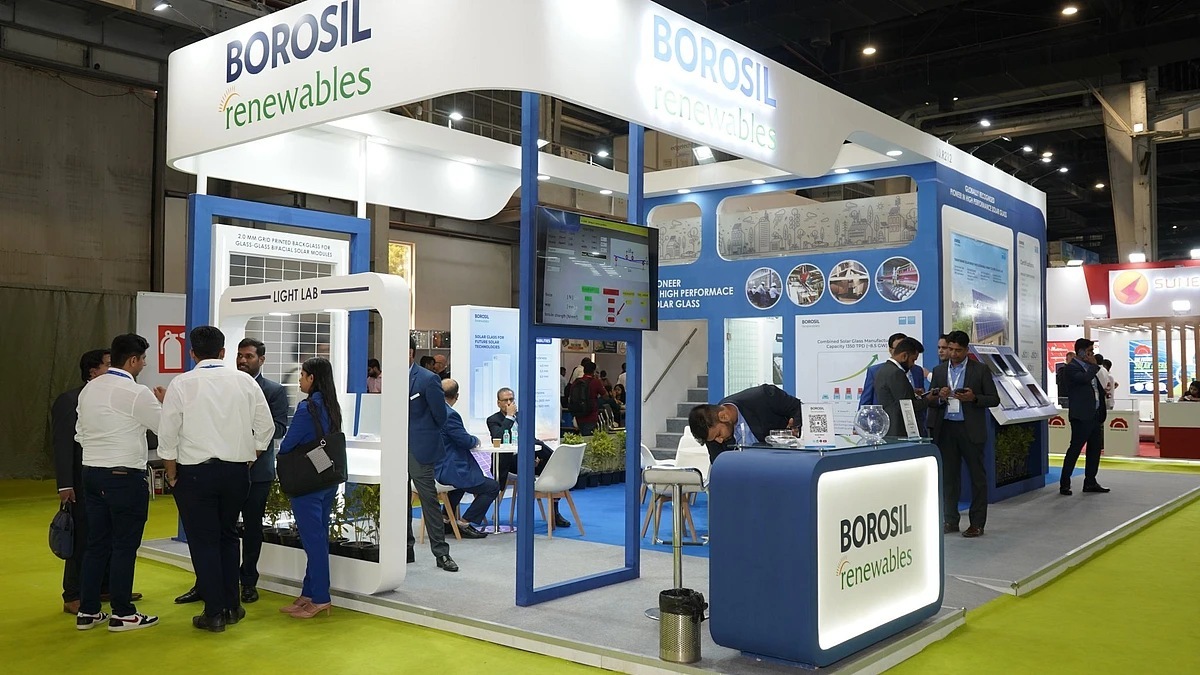
The solar glass landscape in India has witnessed a dramatic shift from survival to structural dominance. Borosil Renewables (BRL) has emerged from a bruising period of “dumped” international supply to report a turnaround that is nothing short of a financial resurrection. With standalone revenues hitting an all-time high of ₹ 1,535 Cr in FY26 and EBITDA margins expanding from a measly 16% to a robust 32%, the company is no longer just competing; it is setting the floor for the domestic industry.
1. At a Glance
The numbers tell a story of aggressive policy intervention meeting operational grit. Borosil Renewables has successfully navigated a “perfect storm” that previously threatened its very existence. The removal of Anti-Dumping Duties (ADD) in 2022 had originally opened the floodgates for cheap imports, dragging BRL’s margins into the single digits and resulting in a net loss in FY24. However, the tide turned in December 2024.
With the re-imposition of Anti-Dumping Duties on solar glass imports from China and Vietnam, followed by a 10% Basic Customs Duty (BCD) effective October 2024, the playing field has been forcefully leveled. The impact is visible: standalone average selling prices (ASP) surged from ₹ 113.4/mm in FY25 to ₹ 146.7/mm in FY26. This price jump, rather than just volume growth, is the primary engine behind the 734% surge in PBT (before exceptional items).
Investors must, however, look closely at the “German scar.” The strategic acquisition of the Interfloat Group, once touted as a gateway to Europe, turned into a financial sinkhole due to high energy costs and lack of local policy support in the EU. BRL has made the bold, albeit painful, decision to deconsolidate its German subsidiaries (GMB and Geosphere) following insolvency filings. While this resulted in a massive one-time impairment of ₹ 325.9 Cr, it effectively “cauterizes” the wound, leaving the consolidated balance sheet to mirror the high-performing standalone Indian operations.
The company is now doubling down on domestic soil, initiating a ₹ 950 Cr expansion to add 600 TPD (Tonnes Per Day) of capacity. With the government mandating local components through ALMM (Approved List of Models and Manufacturers), BRL is positioning itself as the indispensable backbone of India’s 280 GW solar target.
2. Introduction
Borosil Renewables stands as the pioneer and the largest manufacturer of low-iron textured solar glass in India. For years, it was the lone warrior against a global supply chain dominated by Chinese giants. Today, it commands a domestic market share of over 20%, a figure that belies its strategic importance to the Indian solar module manufacturing ecosystem.
The company’s journey over the last 24 months has been a masterclass in risk management and capital allocation. From fighting predatory pricing in the domestic market to dealing with the insolvency of its European arm, the management has had to make tough calls. The current focus is “Import Substitution.” As India targets 40-50 GW of annual solar installations, the demand for high-quality tempered glass is expected to explode.
BRL isn’t just selling glass; it is selling a “Made in India” security blanket to module manufacturers who are increasingly wary of global supply chain disruptions. By focusing on high-value products like 2mm tempered glass for bifacial modules, the company is moving up the value chain, ensuring that it remains relevant even as solar technology evolves toward glass-glass configurations.
3. Business Model – WTF Do They Even Do?
At its core, BRL runs a giant furnace that never sleeps. They take raw materials like silica sand and soda ash, melt them at extreme temperatures, and produce specialized glass that covers solar cells. This isn’t your average window glass; it’s “extra clear” (low iron) to ensure maximum sunlight hits the silicon wafers.
The Value-Add
- ARC & ASC: They apply Anti-Reflective and Anti-Soiling coatings that boost the efficiency of solar panels.
- The 2mm Revolution: They were the first to mass-produce 2mm fully tempered glass, which is essential for bifacial panels (panels that catch light