01 — At a Glance
From Lab Glassware to Kitchen King: A Very Indian Pivot Story
- 52-Week High / Low₹398 / ₹214
- Q3 FY26 Revenue₹339 Cr
- Q3 FY26 PAT₹24 Cr
- TTM EPS₹6.29
- Annualised EPS (Q3 Avg × 4)₹8.0
- Book Value / Share₹71.1
- Price to Book3.12x
- FY25 Revenue Growth+16.8%
- Debt/Equity0.09x
- 1-Year Return-35.4%
Flash Summary: Borosil just printed Q3 FY26 PAT of ₹24 crore on ₹339 crore revenue. Sounds decent until you remember the company’s been the favorite for Indian kitchens for decades. The stock is down 35% in a year. The P/E is 34x. Dividend yield is a big fat zero. And management just announced a ₹65 crore project to make steel water bottles in-house because the imported ones weren’t coming fast enough. This is a company that’s very Indian: great heritage, confusing strategy, perpetually stuck in traffic.
02 — Introduction
The Brand Your Mummy Bought. The Stock Your Papa Regrets.
Borosil has been around since 1957. That’s 68 years of making glassware so reliable that your grandmother’s kitchen still has products from the 1990s. In a country where everything breaks, Borosil made glass that didn’t. That’s not a marketing slogan — that’s literally the only reason anyone bought it for the first 50 years.
But somewhere around 2020, Borosil realized: “You know what? People don’t just want lab glassware. They want lunch boxes. They want vacuum-insulated steel bottles (Hydra range). They want kitchen appliances. They want opalware dining sets that don’t chip.”
So the company demerged its scientific division in June 2024 — spun off Borosil Scientific Limited separately. Now Borosil Limited is 100% consumer-focused. It’s got three brands: Borosil (the OG), Larah (opalware under this fancy name), and Hydra (the steel bottles everyone wants but can’t get because they’re imported and BIS compliance keeps screwing things up).
Q3 FY26 numbers? Revenue ₹339 crore (barely flat QoQ). PAT ₹24 crore (down 24% QoQ). The stock has crashed 35% in a year. The company is now running full-throttle capex: ₹65 crore for a Rajasthan facility to make Hydra bottles in-house, ₹75 crore for a massive solar + battery setup, and another ₹40-50 crore to expand furnaces. The mood is: “We’re going to fix this. Just give us 18 months and ₹180 crore in capital spend.”
Context from Feb 2026 Concall: Management openly said Hydra (imported steel bottles) fell ~30% due to BIS compliance delays. If they had Hydra supply, “we would be closer to 18% EBITDA margin or slightly more” vs reported 16%. The entire upside narrative depends on in-house manufacturing coming online by Q4 FY26/Q1 FY27. When capex depends on a furnace that just got shut down due to LPG supply restrictions, investors get nervous.
03 — Business Model: WTF Do They Even Sell?
Three Brands. One Dream. Zero Dividends. Make Sense?
Borosil operates in three product categories that don’t sound like they should fit together but somehow do:
1) Glassware (Borosil brand): Microwave-safe glass containers, tumblers, bowls, storage boxes. This is the crown jewel. Q3 revenue: ₹232 crore (+21% YoY). Management calls this a “behavior shift” from plastic to glass. Why? Because Indian mums realized plastic leaches chemicals, stains easily, and smells like last month’s dal. Glass doesn’t. The market opportunity is ₹4,000 crore and Borosil is positioning as “glass expert” for “daily Indian usage.” Market share: ~60% in microwaveable glassware.
2) Opalware (Larah brand): Fancy dining sets — plates, bowls, cups. Middle-class aspirational. Q3 revenue: ₹314 crore (+7% YoY). Management’s candid assessment from the concall: “Opalware growth has not been great… the category has been there for years… needs a bit of a refresh.” Translation: it’s boring. But the furnace is running at 95% utilization, so they’re not complaining yet. The category is mature, margins are okay, but no one’s excited about dinner plates unless there’s a wedding.
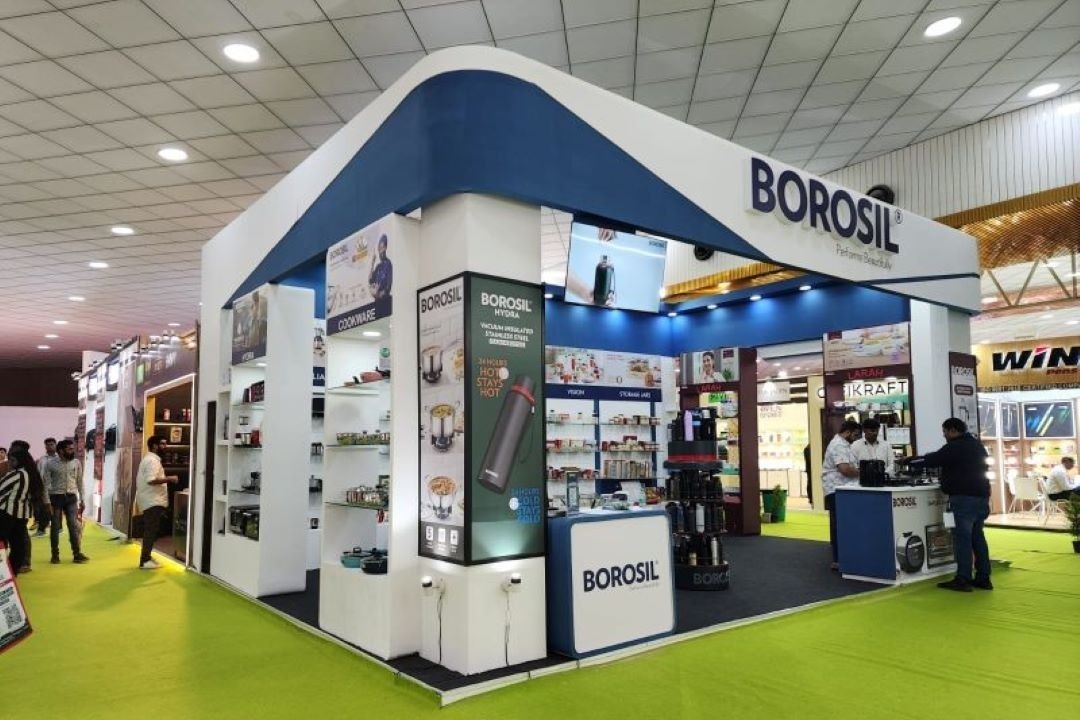
3) Non-glassware (Appliances + Hydra): Kitchen appliances, vacuum-insulated steel bottles, flasks. Q3 revenue: ₹349 crore (+2% YoY). This is the growth driver that’s currently broken. Hydra bottles fell ~30% due to BIS compliance delays on imports. Once the Rajasthan facility starts making them in-house (target: Q4 FY26/Q1 FY27), this segment should explode. But first they have to make sure they can actually manufacture them without tanking margins.
Revenue mix: Glassware 26%, Opalware 35%, Non-Glassware 39%. Distribution: 250+ distributors, 24,000+ retail outlets. Seriously. Twenty-four thousand.
Glassware Growth+21%Q3 YoY
Opalware Utilization95%capacity running hot
Hydra Decline-30%BIS supply issue
Retail Outlets24,000+distribution reach
Fun fact from the concall: There’s a ₹4,000 crore lunch box market that’s shifting from plastic to glass. Borosil is eating this shift alive. Management specifically highlighted this as a structural behavior change — not a fad, not a phase. Indians are realizing plastic lunch boxes from the 1990s stink. Glass doesn’t. This could be a ₹500-₹700 crore annual opportunity just for lunch boxes.
04 — Financials Overview
Q3 FY26: The Numbers Say “Wait, Let Me Explain…”
Result type: Quarterly Results | Q3 FY26 EPS: ₹2.00 | Avg Q1–Q3 EPS: (₹1.46+₹1.90+₹2.00)/3 = ₹1.79 | Annualised EPS: ₹7.16
| Metric (₹ Cr) |
Q3 FY26
Dec 2025 |
Q3 FY25
Dec 2024 |
Q2 FY26
Sep 2025 |
YoY % |
QoQ % |
| Revenue | 339 | 310 | 340 | +9.4% | -0.3% |
| Operating Profit | 53 | 54 | 48 | -1.8% | +10.4% |
| Operating Margin % | 16% | 17% | 14% | -100 bps | +200 bps |
| PAT | 24 | 35 | 23 | -24.0% | +4.3% |
| EPS (₹) | 2.00 | 2.97 | 1.90 | -32.7% | +5.3% |
The Real Story: Borosil posted Q3 revenue of ₹339 crore — basically flat sequentially. PAT crashed 24% YoY to ₹24 crore. This makes you panic until you read the concall and realize: “Oh, Hydra was supposed to do ₹30+ crore extra revenue this quarter but imports got stuck. If Hydra had shipped normally, revenue would be ₹370 crore and margins would be ~18%.” So the Q3 numbers don’t tell the real story. The real story is: the company is temporarily broken due to import delays, but the fix is coming (allegedly).
💬 When a company misses revenue targets because of supply-side issues (not demand), does that make it a better or worse investment opportunity? Drop your theory in the comments.
05 — Valuation: Fair Value Range
Is ₹222 Cheap or a Value Trap?
Method 1: P/E Based
Annualised EPS = ₹7.16. Current P/E = 34.0x. Peer median P/E = 34.6x. For a consumer discretionary company with 16% EBITDA margins and working capital challenges, a 22x–28x P/E is more defensible.
→ 22x × ₹7.16 = ₹157.5 28x × ₹7.16 = ₹200.5
Range: ₹158 – ₹201
Method 2: Price to Book Value
Book Value = ₹71.1. Current P/BV = 3.12x. For a consumer brand with growing capacity but thin margins, a 1.8x–2.3x P/BV is justified. At 3.12x, the market is betting heavily on capex payoff.
→ 1.8x × ₹71.1 = ₹128 2.3x × ₹71.1 = ₹164
Range: ₹128 – ₹164
Method 3: EV/EBITDA (FY25 Basis)
FY25 EBITDA ≈ ₹176 crore. Enterprise Value ≈ ₹2,734 crore. EV/EBITDA ≈ 15.5x. For a consumer company with moderate growth, 12x–16x EV/EBITDA is reasonable if capex delivers returns.
12x EBITDA = ₹2,112 crore EV → Equity Value ~₹2,032 cr → ₹161/share. 16x = ₹2,816 cr EV → ₹215/share.
Range: ₹161 – ₹215
Consolidated View: Across all three methods, fair value converges to roughly ₹150–₹215. Current price of ₹222 sits at the upper edge of this band, assuming capex delivers promised returns. If the Rajasthan Hydra factory hits margin targets and capacity expands as planned, the upside is real. If there are delays or quality issues, downside to ₹150–₹170 is possible.
⚠️ EduInvesting Fair Value Range: ₹150 – ₹215. This fair value range is for educational purposes only and is not investment advice. Please consult a SEBI-registered investment advisor before making any financial decision.
06 — What’s Cooking: News, Triggers & Drama
LPG Goes Missing. Furnaces Go Quiet. Investors Go “Wut?”