1. At a Glance – Masala Tez Hai, Price Aur Tez?
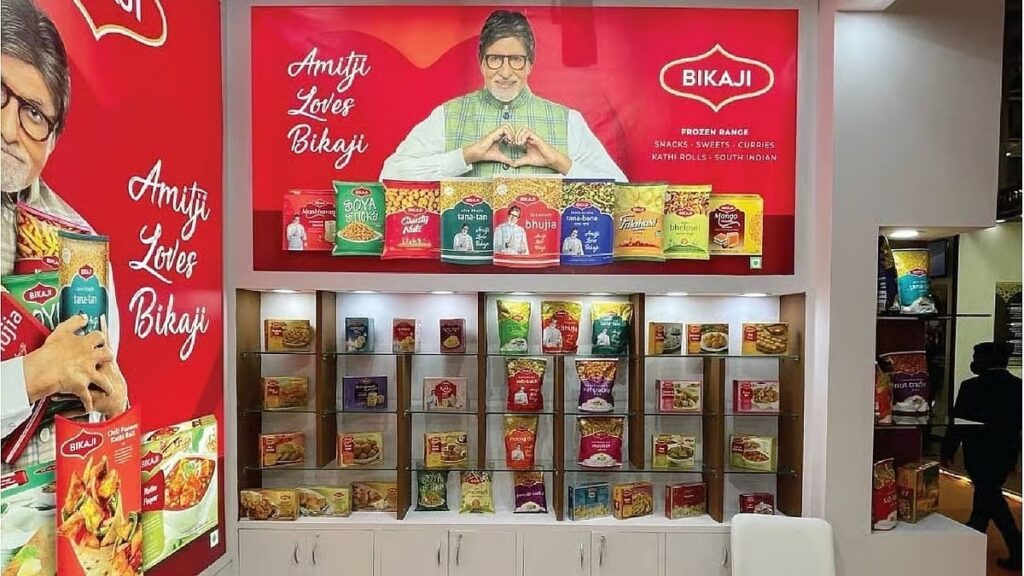
If Indian stock markets had a snacks aisle, Bikaji Foods International Ltd would be that shiny orange packet screaming “Bikaneri Bhujia – Original” at a premium shelf price.
Market cap sits at ₹16,241 crore, stock chilling at ₹648, down ~11.6% in 3 months, while the broader FMCG pack pretends nothing happened.
Q3 FY26 numbers?
- Revenue: ₹7,900 mn
- EBITDA: ₹984 mn
- PAT: ₹622 mn
- Quarterly PAT growth: +118% YoY (yes, triple-digit flex 💪)
Sounds delicious? Wait till you see the valuation label — P/E 65×, EV/EBITDA ~37×, P/B 10.8×. That’s not namkeen pricing; that’s truffle chips pricing.
Promoters hold 73.9%, zero pledge (good boy behavior), ROCE 18.2%, ROE 15.5%. Balance sheet isn’t obese, debt/equity at 0.21.
But here’s the real question: Is Bikaji a long-term FMCG compounder… or a well-packaged calorie bomb for valuations?
Grab chai. This one needs chewing.
2. Introduction – From Bikaner to BSE
Bikaji’s story is classic desi capitalism. Start with bhujia, conquer Rajasthan, move east (Bihar, Assam), then slowly march pan-India with family packs and Amitabh Bachchan yelling from TV screens.
Today, Bikaji is:
- 3rd largest ethnic snacks player in India
- #1 in Bikaneri Bhujia
- #2 in handmade papad
- Market leader in family packs (~59% of sales)
Unlike some FMCG wannabes who do “premiumisation” before distribution, Bikaji did the boring hard work first — factories, depots, distributors, kirana stores, and then branding.
But markets don’t pay for effort. They pay for scalability, margins, and repeatability. And that’s where Bikaji’s report card is… mixed.
So before we blindly clap at revenue growth, let’s
actually open the packet and inspect the contents.
3. Business Model – WTF Do They Even Do?
Bikaji doesn’t sell snacks.
They sell Indian snacking nostalgia in plastic packaging.
Product Buckets (9M FY25 revenue mix)
- Ethnic Snacks (Bhujia + Namkeen): 67.1%
- Packaged Sweets: 15.2%
- Western Snacks: 8.3%
- Papad: 5.4%
- Others: 4.1%
Translation:
If bhujia sneezes, Bikaji catches a cold.
Manufacturing Muscle
- Total installed capacity: 299,820 MT
- 5 owned plants
- 2 subsidiary plants
- 4 contract manufacturers
They added 30,120 MT in FY24 and are targeting ~50% capacity utilisation in FY25.
Here’s the subtle risk:
This is a capex-heavy, margin-sensitive business. Flour prices up? Oil volatile? Freight misbehaves? Margins cry.
Still, the scale is real. Distribution across 10.5 lakh outlets, 30+ countries, and strong presence in low-penetration states.
Question for you:
👉 Can ethnic snacks become as predictable as biscuits and noodles?
4. Financials Overview – Numbers Don’t Lie, But They Do Tease
Quarterly Comparison (Q3 FY26)
| Metric | Latest Quarter | Same Qtr LY | Prev Qtr | YoY % | QoQ % |
|---|---|---|---|---|---|
| Revenue (₹ mn) | 7,900 | 7,150 | 8,300 | +10.5% | -4.8% |
| EBITDA (₹ mn) | 984 | 550 | 1,280 | +78.9% | -23.1% |
| PAT (₹ mn) | 622 | 286 | 780 | +117.6% | -20.3% |
| EPS (₹) | 2.48 | 1.14 | 3.18 | +117.5% | -22.0% |
Annualised EPS (Q3 rule):
Average of Q1, Q2, Q3 EPS ×
