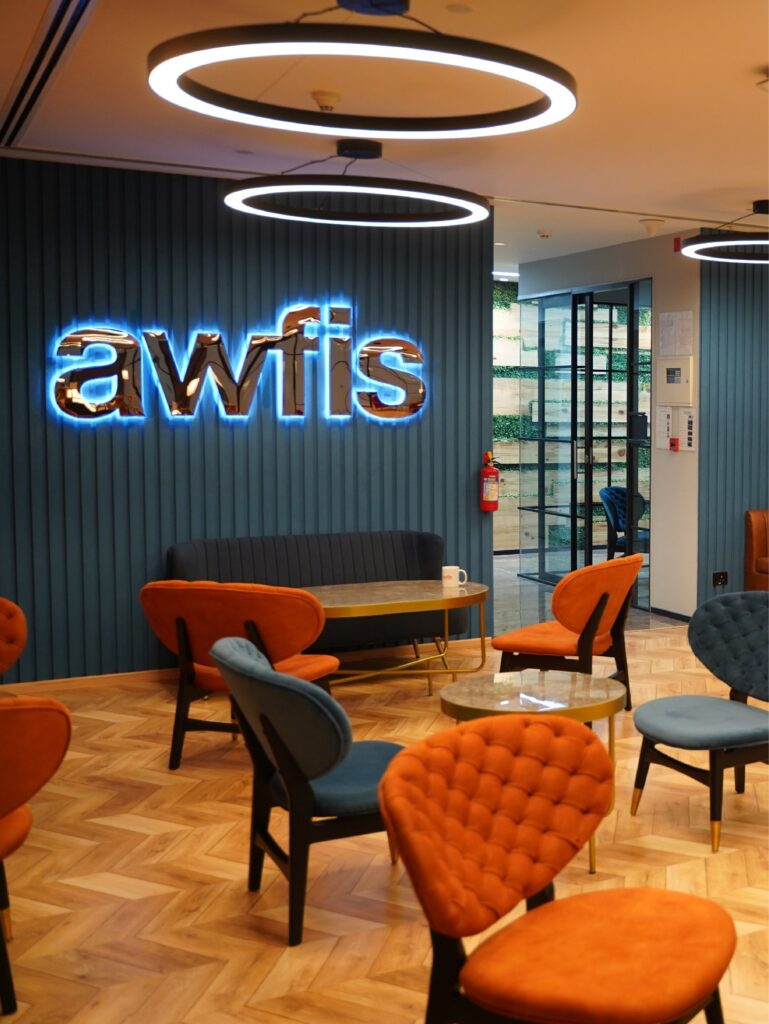
1. At a Glance – Blink and You’ll Miss the Debt
Awfis Space Solutions is what happens when India’s startup ecosystem grows up, puts on formal shoes, and still insists on bean bags. Market cap sits around ₹2,772 Cr, the stock is hovering near ₹388, and in the last three months the price has behaved like a startup pitch deck after VC funding dries up — down ~35%.
But look under the hood and things get interesting. Q3 FY26 revenue came in at ₹382 Cr, up 20% YoY, while PAT jumped 52% YoY to ₹21.7 Cr. Operating margins are flexing at ~36%, which is ironic for a business that literally rents space. ROE is a spicy 26%, while Debt/Equity at ~2.9× reminds you this party is still funded by lenders, not landlords.
Valuation? P/E ~47×, which screams “growth story”, while EV/EBITDA ~6.8× whispers “maybe not totally insane”. With 208 operational centres, 134,000+ seats, and occupancy creeping up, Awfis is no longer just a coworking brand — it’s a leveraged real-estate-adjacent cash flow experiment.
Question before we go deeper: Is this WeWork-lite, or a uniquely Indian jugaad that actually makes money?
2. Introduction – From Startup Cafés to Corporate Lock-ins
Once upon a time, coworking spaces were glorified cafés with Wi-Fi and venture capital fumes. Awfis entered this chaos in 2014, survived demonetisation, COVID, remote-work paranoia, and still decided to list in May 2024, raising ₹599 Cr because why not test public market patience.
Fast forward to FY26, and Awfis looks very different. The client mix has flipped from hoodie-wearing founders to 66% corporates and MNCs, average client tenure is ~33 months, and vintage centres clock 84% occupancy. This is no longer “flexible”; it’s semi-committed relationships with exit clauses.
The company now operates across 18 cities, including Tier-2 names like Lucknow and Guwahati
, proving that coworking is not just a Bengaluru-Mumbai ego contest anymore. Revenue crossed ₹1,423 Cr (TTM), PAT is positive, and analysts have stopped using the phrase “path to profitability”.
Still, the big question remains: Can a company that leases space, borrows heavily, and sub-leases desks really compound without blowing up the balance sheet? Let’s dissect.
3. Business Model – WTF Do They Even Do?
Think of Awfis as a middleman with branding, software, and negotiation skills.
They take large office spaces, break them into smaller, prettier, tech-enabled chunks, add coffee and conference rooms, and rent them out with flexible tenures. Simple? Not quite.
Two Models, Two Headaches:
1. Managed Aggregation (MA) Model
Here, landlords share capex and risk. Awfis brings operations, branding, and clients. Lower capital per seat (~₹50,000 vs industry ₹80k–₹200k). This is Awfis trying to be asset-light and emotionally mature.
2. Straight Lease (SL) Model
Awfis pays fixed rent regardless of occupancy. High risk, high operating leverage. About 65% of assets still sit here — because growth is addictive.
Revenue Mix:
- Coworking: 77%
- Construction & Fit-out (Awfis Transform): 19%
- Others: 4%
The design & build arm was profitable enough that management decided to slump-sell it to a wholly owned subsidiary for ₹265.9 Cr, because apparently internal
