Avax Apparels and Ornaments Ltd H1 FY26 – ₹20.20 Cr Revenue, ₹1.20 Cr PAT, ROCE 43.8%: When Knitted Fabric Meets Silver Kada Economics
1. At a Glance
Avax Apparels and Ornaments Ltd is one of those SME stocks that suddenly wakes up, stretches, checks its ROCE, and realizes it’s doing better than many midcaps that spend crores on investor presentations. With a market capitalization of about ₹24.4 crore and a current price of ₹235, this Ludhiana-rooted trader-turned-manufacturer has delivered eye-popping short-term returns, clocking roughly 95% over three months and about 75% over six months. The latest half-year numbers show sales of ₹20.20 crore and PAT of ₹1.20 crore, translating into a surprisingly healthy operating margin north of 10% for the period. ROCE stands tall at 43.8% and ROE at 33.4%, which, for a company that mostly buys fabric from others and resells it, is borderline flexing. The stock trades at a P/E of around 12.6, below the broader textile industry average, while the balance sheet is still light enough to be carried without a gym membership. This is not a legacy textile giant with spinning mills older than your grandfather’s scooter. This is a nimble SME that discovered that trading knitted cloth and selling silver jewellery online can, in fact, pay the bills and then some. Intrigued yet, or are you still judging it by the jewellery website name?
2. Introduction
Avax Apparels and Ornaments Ltd was incorporated in 2005, back when online jewellery meant your cousin forwarding WhatsApp pictures, not a full-fledged e-commerce portal. For years, the company quietly operated in the background, dealing primarily in fabric trading. Then came the SME listing era, a sudden surge in reported numbers, and the realization that investors love two things: high growth percentages and low absolute bases. Avax decided to give them both.
The business sits at an interesting intersection. On one hand, it trades knitted cloth in Punjab, supplying manufacturers who turn those fabrics into jackets and garments for men and women. On the other, it runs an online silver jewellery business through its portal, offering everything from rings to kada, pajeb, bowls, and chains. If that sounds like two unrelated businesses stitched together with a loose thread, you’re not wrong. But in SME land, diversification often means “whatever sells, we sell.”
What makes Avax worth a deeper look is not the glamour of silver ornaments or the romance of textile looms, but the pace at which the numbers have scaled. From almost negligible revenue a few years ago to nearly ₹40 crore in trailing twelve months sales, the growth curve looks less like a straight line and more like a staircase someone ran up in a hurry. Of course, rapid growth raises questions about sustainability, customer concentration, and working capital discipline. But before putting on the auditor’s monocle, it’s worth understanding what Avax actually does and how it makes money.
3. Business Model – WTF Do They Even Do?
Let’s simplify this without dumbing it down. Avax Apparels has two main business verticals. The first, and overwhelmingly dominant one, is wholesale trading of knitted cloth. The company buys knitted fabric from manufacturers and sells it on a wholesale basis to garment makers in Punjab. These fabrics are primarily used for manufacturing ladies’ and gents’ jackets. No fashion weeks, no brand ambassadors, just fabric rolls moving from one warehouse to another.
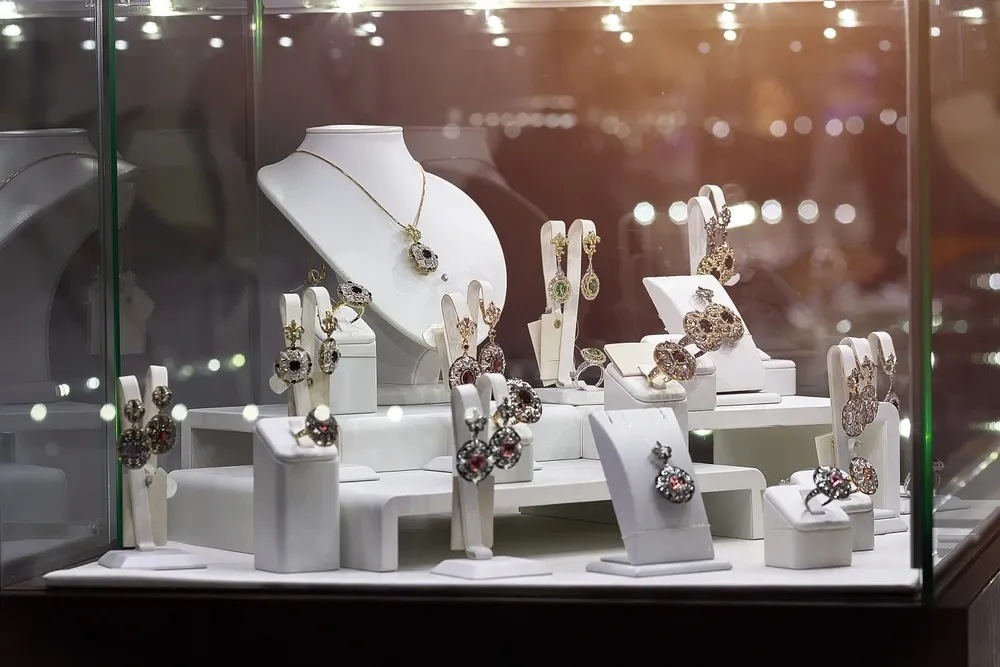
The second vertical is online retail of silver ornaments. Through its website, the company sells silver jewellery products such as rings, bangles, kada, chains, plates, glasses, and bowls. Customers can choose designs and weights, which means the company is effectively operating as a digital silver retailer with inventory risk tied to precious metal prices.
In FY24, about 96% of revenue came from knitted cloth, while silver ornaments contributed roughly 4%. Translation: the jewellery business is still the side dish, not the main course. The real money currently lies in fabric trading.
The interesting twist is backward integration. Avax has recently purchased machinery to start manufacturing knitted cloth. This move aims to reduce dependence on third-party manufacturers, improve margins, and bring more control over quality and supply. For a trading-heavy business, backward integration is like finally deciding to cook at home instead of ordering every meal. It can boost margins, but it also brings capex, depreciation, and operational complexity. Whether Avax handles this transition smoothly will matter a lot in the coming years.
The topline grew at a healthy 34.6% year-on-year, while profitability grew even faster on a half-on-half basis. EBITDA margins expanded to about 10%, suggesting either better pricing, better cost control, or a combination of both. EPS looks slightly lower YoY due to base effects, but sequentially it has jumped sharply. For an