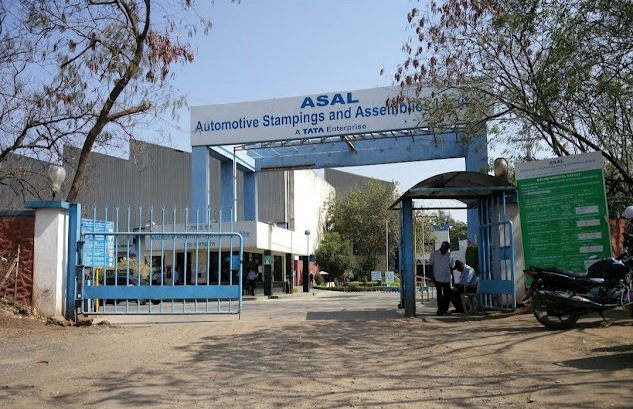
1. At a Glance – Blink and You’ll Miss the Turnaround
Automotive Stampings & Assemblies Ltd (ASAL) is what happens when a boring balance sheet decides to hit the gym and come back ripped. Market cap of ~₹762 Cr, stock price around ₹480, and suddenly everyone is acting shocked because profits have appeared. Q3 FY26 delivered ₹250 Cr in revenue with a spicy ~140% QoQ jump in quarterly profit, while operating margins hover around 6–7%. This is a Tata AutoComp Systems (TACO) group company, meaning pedigree is strong, but dependency is also… very strong. Debt still exists (₹113 Cr), ROCE looks sexy at ~24%, and ROE looks completely drunk at 2,300% because net worth was resurrected from the dead. The stock has corrected ~15% over one year, so momentum bros left, but fundamental nerds just entered the chat. Is this a real turnaround or just a quarterly sugar rush? Let’s open the hood.
2. Introduction – From Loss Machine to Margin Discipline
ASAL has spent more than a decade being that relative who keeps saying “next year pakka turnaround.” Between FY14 and FY21, losses, negative reserves, and high interest costs made this company a case study in how not to run a stamping business. Then came FY22–FY25: debt reduction, operational cleanup, OEM volume recovery, and suddenly ASAL hit breakeven by Q2 FY25.
Being part of Tata AutoComp Systems Ltd gives ASAL access to OEM pipelines, but also makes it heavily dependent on Tata Motors Ltd and its subsidiaries. As of Dec 2024, Tata Motors dominates CVs (~36% share) and Tata Motors Passenger Vehicles Ltd rules EVs (~65% EV share). Translation: if Tata sells, ASAL eats. If Tata sneezes, ASAL catches a cold.
The recent profitability isn’t magic—it’s boring execution: stable volumes, EV-linked products, and capex finally sweating. The question is simple: can margins stay, or will this revert to mean like every other cyclical auto ancillary?
3. Business Model – WTF Do They Even Do?
ASAL bends metal. Literally. The company does sheet-metal stampings,
welded assemblies, battery tray assemblies, aluminum cooling tubes, and heavy fabricated parts. These go into passenger vehicles, commercial vehicles, EVs, 2/3-wheelers, and off-road equipment.
Think of ASAL as the company that makes the skeleton and joints of a vehicle—stuff you never see but everything depends on. Its EV relevance comes from battery trays and aluminum cooling tubes, where lightweighting and thermal efficiency matter. This is not a brand business. No pricing power. OEM contracts decide your fate. Volume is king, margins are thin, and execution is everything.
Facilities are spread across Chakan (Pune) and Pantnagar, with new plants operational in Sanand and Jamshedpur. These new plants are not vanity projects—they are directly linked to EV programs and heavy fabrication demand. Robotic welding, high-strength steel, and aluminum components are the new buzzwords, and ASAL is trying hard not to sound like a 1990s stamping dinosaur.
4. Financials Overview – The Table That Changed the Mood
Figures in ₹ Crore
| Metric | Latest Qtr (Q3 FY26) | YoY Qtr | Prev Qtr | YoY % | QoQ % |
|---|---|---|---|---|---|
| Revenue | 250.13 | 198.16 | 211.78 | 26.2% | 18.1% |
| EBITDA | 16.95 | 11.52 | 12.58 | 47.1% | 34.7% |
| PAT | 7.47 | 3.57 | 4.39 | 109% | 70.2% |
| EPS (₹) | 4.71 | 2.25 | 2.77 | 109% | 70.0% |
Annualised EPS (Q3 rule): Average of Q1–Q3 × 4 ≈ ₹12.2, matching reported TTM.
Commentary: Revenues are growing, but profits are growing faster. This is operating leverage finally showing up after years of humiliation. But remember—6–7% margins are still thin. One bad OEM negotiation and poof.
5. Valuation Discussion – Fair Value,
