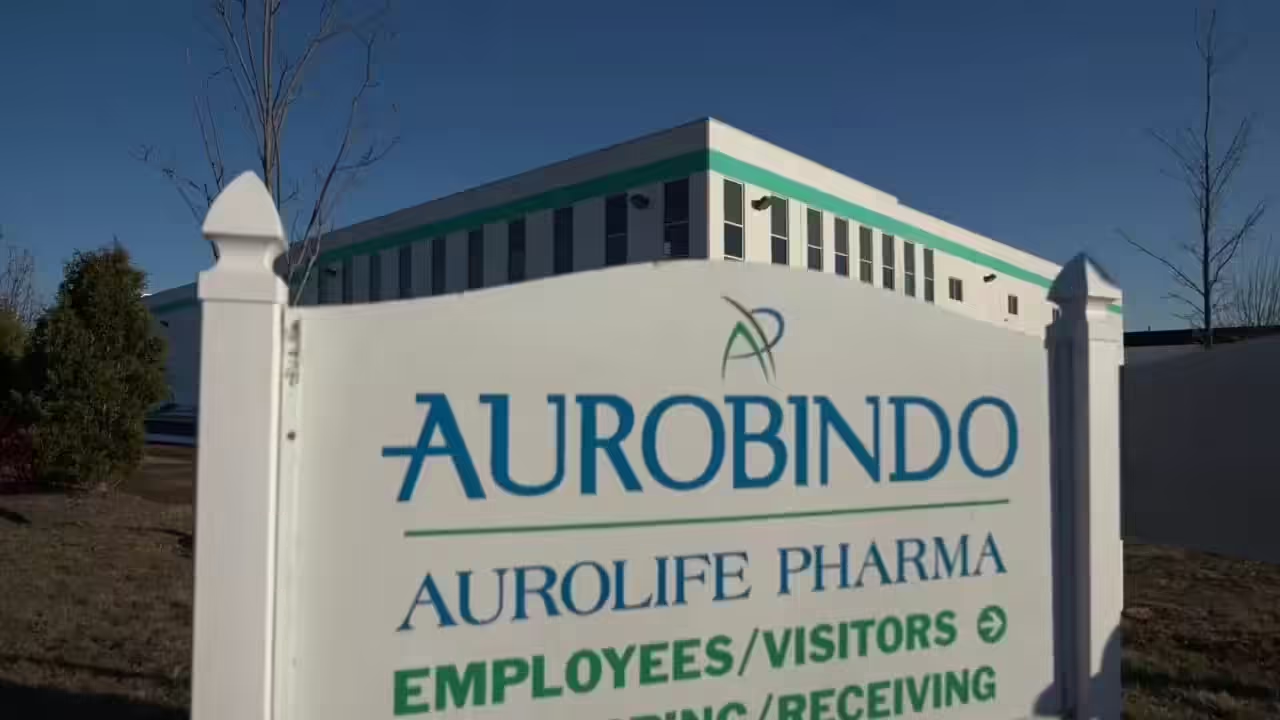
Aurobindo Pharma Ltd – ₹61,000 Cr Giant That Prints Generics Like Dosas at a Darshini
1. At a Glance
Aurobindo Pharma is that Hyderabad-based overachiever who sells pills in 150+ countries but still gets scolded by the USFDA more often than your school principal. India’s second-largest listed pharma company and largest generics player in the US, Aurobindo has 29 factories, 1,500 scientists, and more regulatory filings than some countries have laws. But beneath the glossy “global pharma powerhouse” tag lies a company juggling FDA warnings, acquisitions, biosimilar dreams, and 17% promoter pledges.
2. Introduction
Let’s set the scene: Aurobindo started as an API maker in 1986 and now sits in the big league with ₹32,000 Cr annual revenue. If Indian pharma were a Bollywood family, Sun Pharma is the Big B, Dr. Reddy’s is SRK, and Aurobindo is that slightly reckless Ranveer Singh character – hyperactive, flashy, and sometimes in trouble with the law (read: FDA).
The company’s strength is its US business (53% of sales), where it ranks as the top generic supplier. Europe chips in ~30%, while India is just 10% – proving yet again that Indians prefer watching IPL ads for medicines rather than buying them.
Strategically, Aurobindo is no longer just a generics peddler. It is pushing into biosimilars, specialty injectables, peptides, and has gone on an acquisition spree (recently announced $250M buy of Lannett in the US). On the biotech side, its CuraTeQ subsidiary is cranking out approvals in the EU and UK for biosimilars like trastuzumab (Dazublys) and Dyrupeg.
Sounds glamorous? Yes. Stable? Not quite. Regulatory inspections in 2025 alone saw multiple Form 483s – basically FDA’s way of saying, “Clean up your mess, or else.”
3. Business Model – WTF Do They Even Do?
Think of Aurobindo as a thali:
Formulations (87% revenue) – The main course. Tablets, capsules, injectables, across CNS, anti-HIV, cardio, diabetes, etc. US is the largest customer. Within US formulations:
Generics orals = 68%
Specialty injectables = 18%
Branded oncology = 8%
OTC = 6%
APIs (13% revenue) – The sambar on the side. Covers both beta-lactams (penicillin, cephalosporins) and non-beta-lactams. Still relevant, but getting commoditized.
R&D (~5.6% of sales) – The chutney. 1,500 scientists filing ANDAs like they’re writing JEE exams. As of Q3 FY25:
853 US ANDAs filed
297 DMFs
4,535 dossiers in EU, Africa, Canada
3,944 API filings
Geography Split:
US = 53%
Europe = 30%
Growth Markets = 13%
ARV = 4%
India = 10%
So, what’s the takeaway? Aurobindo is basically the Costco of Pharma – cheap, bulk, everywhere. But it’s now trying to be the Louis Vuitton of Biosimilars too.
4. Financials Overview
Source table
Metric
Latest Qtr (Jun’25)
YoY Qtr (Jun’24)
Prev Qtr (Mar’25)
YoY %
QoQ %
Revenue
₹7,868 Cr
₹7,567 Cr
₹8,382 Cr
+3.98%
-6.14%
EBITDA
₹1,603 Cr
₹1,618 Cr
₹1,760 Cr
-0.9%
-8.9%
PAT
₹824 Cr
₹918 Cr
₹903 Cr
-10.3%
-8.8%
EPS (₹)
14.08
15.69
15.42
-10.3%
-8.7%
Commentary: Revenue is flat like hostel roti, margins steady at ~20%, but PAT is shrinking. Blame higher depreciation and finance costs. EPS of ₹58 TTM → P/E ~18x. Cheaper than peers, but FDA risks deserve a discount.
5. Valuation – Fair Value Range Only
P/E method: EPS = ₹58, industry P/E ~33. At 15–22x, fair range = ₹870 – ₹1,275.
EV/EBITDA: EV = ₹61,200 Cr, EBITDA = ₹7,040 Cr (TTM). EV/EBITDA = 8.7. Industry avg 12x. Fair EV = ₹84,000 Cr → per share ~₹1,430. Conservative range = ₹1,000 – ₹1,350.