1. At a Glance – Auto Rickshaw, Big Drama
Atul Auto Ltd is that classic Indian mid-cap story which looks exciting from far but starts coughing a bit when you open the bonnet. Market cap around ₹1,237 crore, stock chilling at ~₹446, and suddenly—boom—Q3 FY26 profit jumps 111% YoY. Social media wakes up, volumes spike, exchanges send “bhai sab theek hai?” emails, and Atul Auto calmly replies: “Relax, nothing price-sensitive here.”
Latest quarter sales came in at ₹231 crore, the highest ever, with EPS of ₹5.53—a massive comeback compared to some ugly quarters in the past. But before you throw confetti, remember: ROE is still below 5%, debt has climbed to ₹145 crore, and promoters have been quietly reducing stake over the years.
So what is Atul Auto really? A turnaround in motion? A cyclical bounce? Or just a rickshaw running downhill with the engine off?
Let’s open the meter and start counting.
2. Introduction – From “Chalta Hai” to “Chal Raha Hai”
Atul Auto Ltd was incorporated in 1986 and has spent most of its life living in the shadows of bigger three-wheeler kings. While Bajaj Auto grabbed the headlines and TVS flexed its distribution muscle, Atul Auto quietly built a full-spectrum three-wheeler portfolio—cargo, passenger, ICE, CNG, LPG, and now EVs.
The company holds roughly 4% domestic market share and ~3% including exports. That’s not dominance, but it’s not irrelevance either. Think of it as the guy who always qualifies for prelims, sometimes reaches mains, but interview… depends on the year.
FY24 was decent operationally, FY25 looked better on paper, and Q3 FY26 suddenly looks like a glow-up episode. The real question is: is this sustainable performance or just pent-up demand + low base magic?
Before judging, let’s understand what they actually do.
3. Business Model – WTF
Do They Even Do?
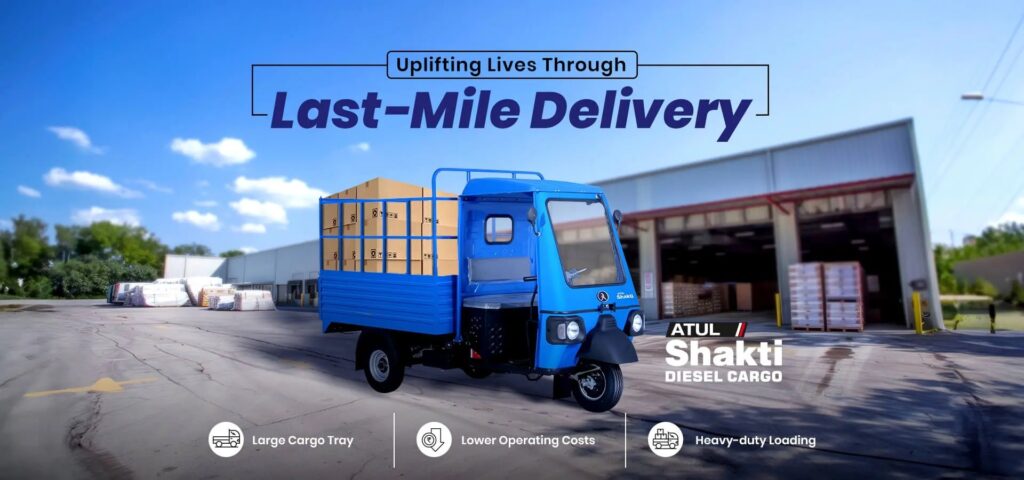
Atul Auto manufactures three-wheelers. Period. No software, no AI buzzwords, no “platform strategy” LinkedIn posts.
But within that boring honesty lies a surprisingly wide portfolio:
- Passenger autos (CNG / petrol / diesel)
- Cargo autos (diesel & CNG)
- Electric three-wheelers (L5 category)
- Spare parts
- And a financing arm to help customers who don’t have full cash
Revenue is still heavily tilted towards vehicle sales (~83%), with spares (~8%) and financing (~7%) acting as side hustles.
Production-wise, Atul Auto has two plants (Rajkot & Ahmedabad) with combined capacity of ~1.2 lakh vehicles annually. Ahmedabad was expanded via greenfield—so capex already done, balance sheet already felt the pain.
Exports contribute only ~8% of revenue, mostly to Africa and Latin America—markets where Indian autos are loved for their ruggedness and cheap maintenance. Domestic market still brings home the real roti-sabzi.
So far, simple business. The complications begin in the numbers.
4. Financials Overview – Q3 FY26 Scorecard
Quarterly Comparison Table (₹ Crore)
| Metric | Latest Qtr (Dec FY26) | YoY Qtr (Dec FY25) | Prev Qtr (Sep FY26) | YoY % | QoQ % |
|---|---|---|---|---|---|
| Revenue | 231 | 195 | 200 | 18.4% | 15.5% |
| EBITDA | 28 | 17 | 19 | 64.7% | 47.4% |
| PAT | 15 | 7 | 8 | 111.0% | 87.5% |
| EPS (₹) | 5.53 | 2.79 | 3.30 | 98.2% | 67.6% |
Commentary:
This is not just margin expansion—it’s a full-blown margin flex. OPM touched ~12%, which is rare territory for
