1. At a Glance
Atul Auto Ltd (AAL) – the rickshaw royalty of Rajkot – just dropped its Q2 FY26 results, and the numbers are shouting “hum bhi growth karte hain!” Revenue came in at ₹200 cr, up 10.2% QoQ, while PAT zoomed to ₹9.17 cr, marking a 69.5% jump over the last quarter. The stock trades around ₹470, giving it a market cap of ₹1,305 cr.
With a P/E of 48.3, a ROE of 4.99%, and ROCE of 6.48%, the valuation seems to say “premium rickshaw, basic engine.” Despite profits, the company maintains a dividend yield of 0.00% – clearly, they’re reinvesting… or maybe just stingy.
Debt stands at ₹145 cr, giving a debt-to-equity ratio of 0.32, which is not alarming for an auto manufacturer. But the punchline? After years of slog, Atul Auto’s EPS finally hit ₹9.74, giving it a lofty valuation compared to peers like Ashok Leyland (P/E 26.3) or SML Mahindra (P/E 29.6).
You can’t call it a rocket stock yet – but with domestic sales up 10% and profits up nearly 70%, the company’s definitely honking its horn louder this quarter.
2. Introduction
Once upon a dusty Gujarat morning in 1986, a few engineers decided the humble Indian three-wheeler deserved better – and Atul Auto was born. Fast-forward nearly four decades, and this company is still running on the same three wheels, only now they’re available in diesel, CNG, LPG, and even “electric” (which in India often means “with battery confusion included”).
The company’s market share of around 4% in domestic three-wheelers doesn’t sound huge – but given how cut-throat this space is, it’s like holding your seat in a Mumbai local at peak hours. They’ve carved out a loyal following in semi-urban India and emerging export markets.
Atul Auto’s journey is the story of a small-cap survivor: surviving demonetisation, GST, EV disruption, and Delhi’s pollution bans – all while keeping its Rajkot sense of humour intact. The recent quarter proves that this rickshaw manufacturer isn’t just idling in neutral. Sales are climbing, profits have improved, and electric spin-offs are starting to hum in the background.
But hold your applause. The company’s ROE of 5% means shareholders are barely earning what a decent fixed deposit offers. Still, Atul Auto’s management insists the engine is revving for an EV future. Let’s see if this is the real acceleration or just a loud exhaust.
3. Business Model – WTF Do They Even Do?
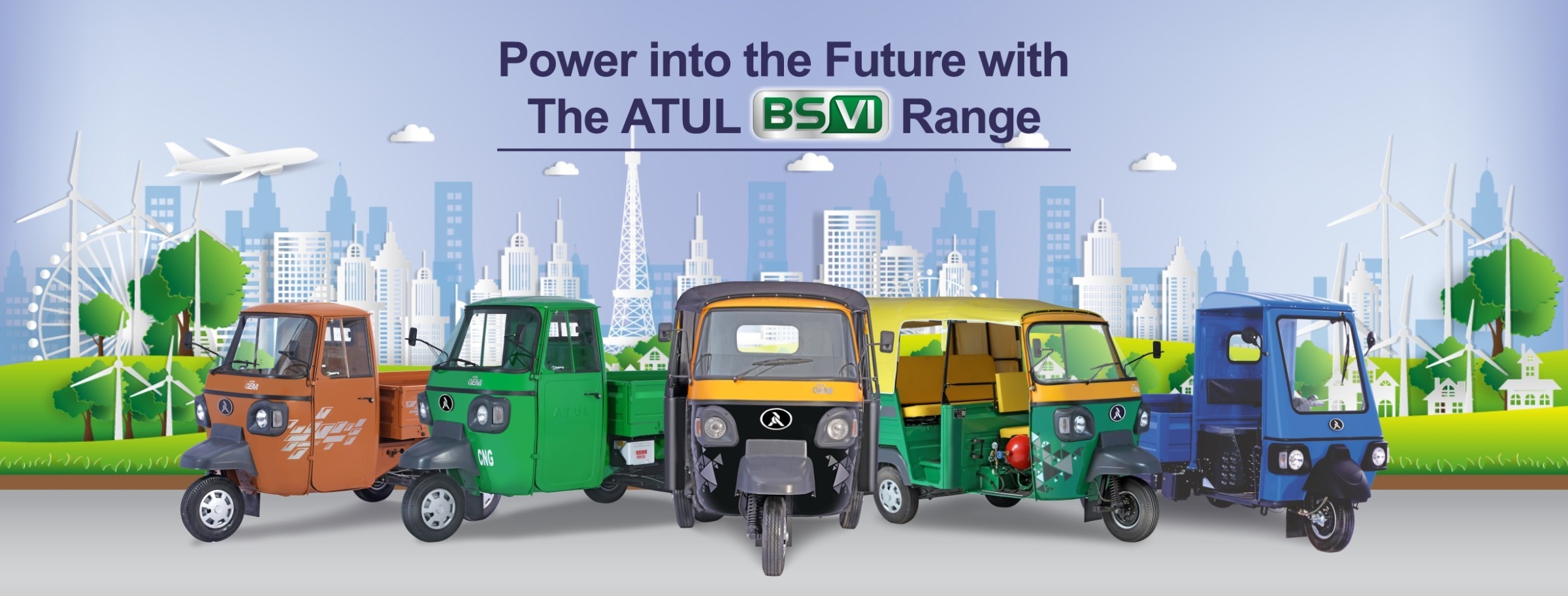
Atul Auto makes and exports three-wheelers – or as every Indian calls them, “auto-rickshaws.” The product range spans goods carriers and passenger vehicles, powered by diesel, petrol, LPG, CNG, and now electric variants. Their lineup includes Atul Gem, Rik, Shakti, Elite, Energie, and GEMi – clearly, someone at the branding team watched too many Marvel movies.
The company also sells spares (8%) and runs a financing business (7%) through its NBFC subsidiary Khushboo Auto Finance Ltd (KAFL). The rest of the revenue comes from actual vehicles.
Two manufacturing units – Rajkot and Ahmedabad – churn out up to 1.2 lakh vehicles annually, with a strong dealer network of 400+ touchpoints across India. Globally, the company exports to 30+ countries including Latin America, Africa, and even the UK and Italy.
So, in short:
- 92% of revenue comes from automobiles,
- 8% from financing,
- exports form 8% of total sales.
They even launched a new electric division, Atul Greentech Pvt Ltd, which began commercial production in FY24. Another arm, Atul Green Automotive, is exploring e-mobility services – although it currently looks more like a WhatsApp group than an