1. At a Glance – Blink and You’ll Miss the Cash Burn
Ather Energy currently sits at a market cap of ₹23,177 crore with a stock price of ₹607, down 3.1% on the day, up 57% over six months, and still very much allergic to profits. Q3 FY26 numbers came in hot on the top line and cold on the bottom line: ₹954 crore quarterly revenue (+50% QoQ), PAT loss of ₹85 crore, and an operating margin that is still negative but visibly crawling toward adulthood at −8%.
Sales are sprinting, losses are jogging, and valuation is already doing Olympic long jumps. Price-to-sales of 7.3×, price-to-book of 8.5×, ROE at −156%, and ROCE at −65.7% — this is not a mature auto company, this is venture capital wearing a listed-company costume.
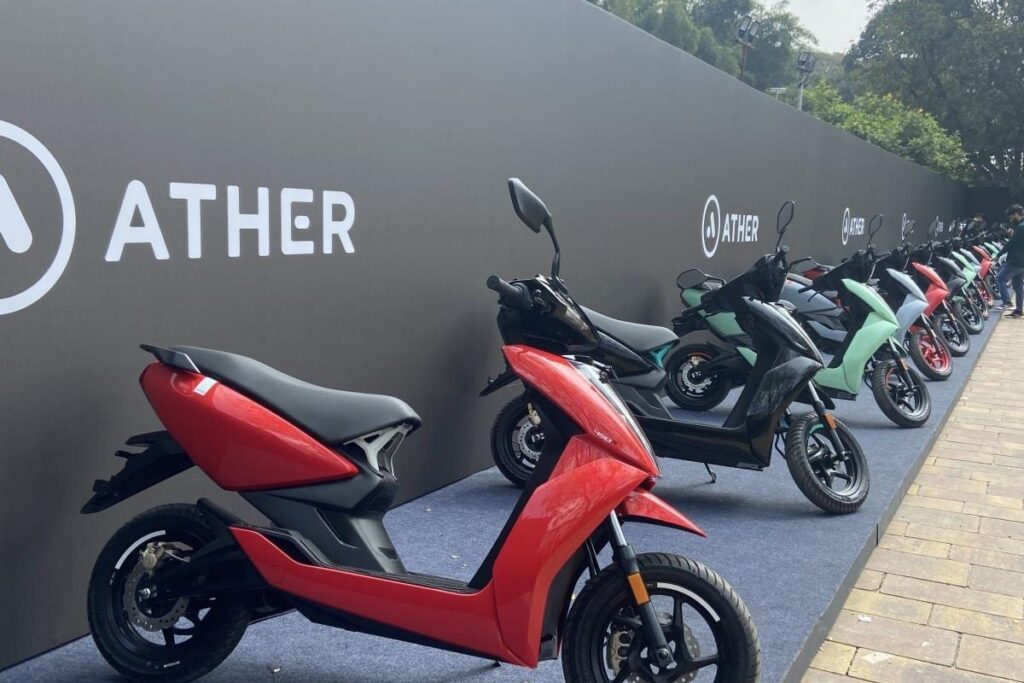
Ather sold ~1.1 lakh scooters in FY24, commands ~11.5% E2W market share, and runs one of the most vertically integrated EV stacks in India — hardware, battery packs, charging grid, and software, all in-house. The question isn’t whether Ather can sell scooters. It clearly can. The real question is: how long will the market fund this growth before asking for profits like a strict Indian parent asking for marksheets?
Curious already? Good. Because it gets spicier.
2. Introduction – From Poster Child to Public Company Reality Check
Ather Energy has always been the “engineering-first” EV darling. Founded in 2013, backed by marquee investors, and now partially owned by Hero MotoCorp, Ather built a reputation for premium scooters, smooth software, and a charging network that actually works (rare achievement in India, like functional public toilets).
Then came the IPO in May 2025, raising ₹2,980 crore, and suddenly Ather had to answer to public shareholders — not just VCs who enjoy PowerPoint decks with hockey-stick charts.
Post-listing, reality arrived faster than a fast charger at 1%. Losses are still
deep, depreciation and interest are heavy, and scale hasn’t yet translated into operating leverage. But — and this is important — the trajectory is improving. Q3 FY26 shows clear signs of margin recovery, better cost control, and strong demand momentum, especially driven by the Rizta family scooter.
So is Ather burning cash recklessly? Or is this just the painful teenage phase before adulthood? Let’s open the hood.
3. Business Model – WTF Do They Even Do?
Ather doesn’t just sell scooters. It sells an ecosystem, and charges you for entering it politely.
Here’s the simplified version for lazy but smart investors:
• Designs electric scooters (450 series = performance junkies, Rizta = family WhatsApp uncles)
• Manufactures battery packs and assembles scooters in-house
• Runs 2,600+ fast chargers under Ather Grid
• Controls software via OTA updates, app ecosystem, navigation, ride analytics
• Sells accessories, services, and extended warranties
This is not a “buy motor, assemble, sell” operation. This is Apple-ification of scooters, minus the profits (for now).
Revenue is still ~96% vehicle-led, with services and accessories forming a small but growing tail. Rizta has broadened the addressable market beyond tech bros to families who just want a silent scooter and peace of mind.
But vertical integration cuts both ways. When
