01 — At a Glance
The Ambitious Hospital Chain That’s Spending Like It’s Already Huge
- 52-Week High / Low₹306 / ₹210
- Q3 FY26 Revenue₹272 Cr
- Q3 FY26 PAT₹22 Cr
- 9M FY26 EPS (₹)₹6.07
- Annualised EPS (9M×4/3)₹8.09
- Book Value₹56.0
- Price to Book4.07x
- Dividend Yield0.20%
- Debt / Equity0.31x
- IFC Stake (Post Conversion)12.47%
Auditor’s Opening Note: Artemis closed Q3 FY26 with ₹272 crore revenue (+17.2% YoY) and ₹22 crore PAT (+7.9% YoY). Nine months revenue at ₹802 crore (+15.1% YoY). The stock has shed 16.6% in three months despite record absolute earnings because the market is asking a simple question: “Who’s paying for all this expansion?” Answer: We are. Investors, via a ₹700 crore dilution. Full-year guidance remains “we’re confident” — which in hospital-speak means “we have no idea, but the doctors are optimistic.”
02 — Introduction
The Apollo Tyres Owner’s Healthcare Bet: “What Could Go Wrong?”
Artemis Medicare is Onkar Kanwar’s mid-life crisis. Kanwar, the man who made rubber tyres profitable (Apollo Tyres), decided around 2004 that India needed another supermarket hospital. Now here we are, 21 years later, and he’s decided one fancy hospital in Gurugram is not enough. He wants 2,300 beds by 2029. That’s roughly the population of a small North Indian town, but in hospital beds.
The stock is trading at 36.5x P/E — which is either a screaming bargain for a healthcare chain with 17% revenue growth and expanding international patient inflows, or a ticking time bomb of dilution. Possibly both. Your job is to figure out which. Or read this article. Much easier.
Q3 delivered highest-ever quarterly revenue (₹272 crore). International patients now represent 34% of revenues and grew 34.9% YoY. Management just flagged ₹700 crore equity raise. Two major greenfield/brownfield projects (Raipur hospital, VIMHANS South Delhi) are live. And somehow, the stock is down because Mr. Market noticed that dilution + capex + execution risk = a formula that requires actual competence to pull off.
Let’s dive into whether Artemis is genuinely building a healthcare empire or just burning investor cash at a very professional, hospital-accredited pace.
Concall Reality Check (Feb 2026): Management flagged they are “de-emphasizing very low-ticket government business” and “ready to let go” of unprofitable payer mixes. Translation: Your ARPOB (Average Revenue Per Occupied Bed) looks great in slides until you drill down and realize 20% of patients are government scheme cases bringing in peanuts. Smart move, or leaving money on the table?
03 — Business Model: WTF Do They Even Do?
They Treat People. Expensively. And Now International Ones Too.
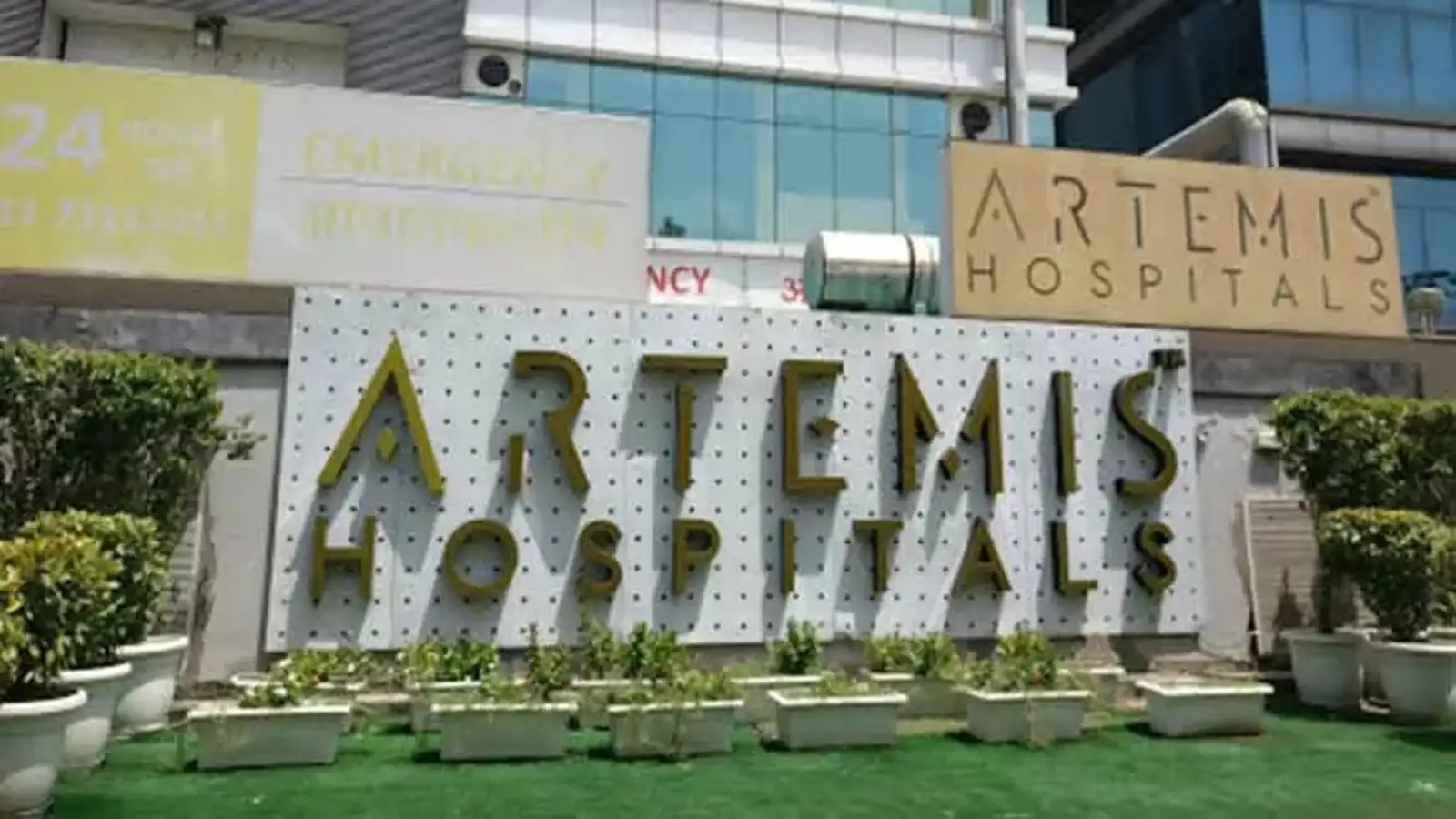
Artemis operates a 700-bed multi-specialty hospital in Gurugram. That’s it. Currently, 90%+ of revenue is from this single location. They’re not a network — they’re a flagship. This is both their biggest strength and their biggest risk. A 700-bed superspecialty hospital in Gurugram can run very well. A 2,300-bed empire is a different animal.
The hospital operates across oncology (18% of revenue), neurology (19%), orthopedics (15%), cardiology (16%), and a long tail of other specialties. The revenue split by payer is instructive: insured patients (33%), international patients (29%), government schemes (20%), domestic cash (18%). They’re deliberately de-emphasizing government schemes (unprofitable) and chasing international patients (high-margin).
Net beds expanded from 489 (Mar FY25) to 543 operational (Jun 2025 onwards), driven by Tower 3 commissioning in late FY25. Occupancy is currently 62% — which is respectable but far below their potential. This is the quiet killer in the narrative: they’re building more beds while occupancy isn’t stabilized. Management guidance is 68-70% by end FY27. That’s a big gap to fill.
Oncology Mix18%Highest-margin specialty
Neuro Mix19%Neurosurgery revenue driver
Intl Patient %34%Growing 35% YoY
ARPOB₹84.1K+10% YoY in Q3
The Expansion Play: Raipur (300 beds, greenfield, opens May 2026), South Delhi / VIMHANS (650+ beds, brownfield trust land, targets FY29), plus FAR unlock at Gurugram flagship (125 more beds, minimal capex). By 2029, bed count goes from ~700 to ~2,300. On paper, it’s beautiful. In practice, it requires: (1) occupied beds, (2) not burning money during ramp, (3) no major regulatory curveballs. Betting on all three is bold.
💬 Would you rather own a 700-bed hospital running at 70% occupancy, or a 2,300-bed empire running at 50%? Thoughts in the comments!
04 — Financials Overview
Q3 FY26: The Numbers Everyone’s Arguing About
Result type: Quarterly Results (9M FY26) | Q3 FY26 EPS: ₹1.42 | 9M Cumulative EPS: ₹6.07 | Annualised EPS (9M×4/3): ₹8.09
| Metric (₹ Cr) |
Q3 FY26
Dec 2025 |
Q3 FY25
Dec 2024 |
Q2 FY26
Sep 2025 |
YoY % |
QoQ % |
| Revenue | 272 | 232 | 270 | +17.2% | +0.7% |
| Operating Profit | 44 | 37 | 50 | +18.9% | -12.0% |
| OPM % | 16% | 16% | 19% | 0 bps | -300 bps |
| PAT | 22 | 20 | 30 | +7.9% | -27.7% |
| EPS (₹) | 1.42 | 1.51 | 2.16 | -5.9% | -34.3% |
The Margin Squeeze: Revenue +17%, but PAT +8%. OPM stayed flat at 16% (vs 16% YoY), but fell 300 bps QoQ. Why? Management flagged three drivers: (1) Tower 3 occupancy still ramping (62% vs 70% target), costs spread over fewer beds; (2) Pre-operative costs for Raipur (team already hired, sitting corporate overhead); (3) New high-acuity departments (heart-lung transplants, robotic surgery = expensive manpower). This is textbook “investing for growth” — and it’s working, but near-term EPS accretion is muted. Management promised “100%” confidence on margin improvement as occupancy rises. That’s consultant-speak for “trust us.”
05 — Valuation: The Runway Isn’t Cheap
36.5x P/E: Is That Growth Or Greed?
Method 1: P/E Based
9M FY26 annualised EPS = ₹8.09. Hospital sector median P/E = 43.5x (yes, healthcare is expensive). Artemis at 36.5x trades below sector median but at a premium to underlying asset base.
Range: ₹180 – ₹280
Method 2: EV/EBITDA Based
9M FY26 EBITDA (run rate) = ₹159 × 4/3 = ₹212 Cr. Current EV = ₹3,555 Cr (adjusted for IFC conversion). EV/EBITDA = 16.8x. Hospital comps trade 12x-20x. Given expansion phase risk, apply 13x-16x range.
EV range: ₹2,756 Cr – ₹3,391 Cr → Per share:
Range: ₹191 – ₹235
Method 3: DCF Based (Pre-Dilution)
9M EBITDA = ₹159 cr. FCF headroom modest given capex of ₹100+ cr on Raipur + VIMHANS infrastructure. Conservative 8-10% growth over 5 years, WACC 12%, terminal growth 3%.
→ PV of 5-year FCFs at 12%: ~₹1,800 Cr (heavily discounted for capex burn)
→ Terminal Value (3% growth / 9% cap rate): ~₹2,100 Cr
→ Total EV: ~₹3,900 Cr (near-term dilution pending)
Range: ₹165 – ₹245
Fair Min: ₹165
CMP: ₹229 | 9M Annualised EPS: ₹8.09
Fair Max: ₹280
⚠️ EduInvesting Fair Value Range: ₹165 – ₹280. CMP ₹229 sits in the middle, but this assumes flawless execution of Raipur + VIMHANS + no major occupancy misses. The ₹700 crore fundraise will dilute EPS meaningfully in years 2-3 before expansion projects stabilize. This fair value range is for educational purposes only and is not investment advice.
06 — What’s Cooking: The Expansion Drama
Three Hospital Projects, One P/E Meltdown, Two Years of Dilution