1. At a Glance – The Masala Snapshot
Let’s get straight to it. This is a ₹112 Cr market-cap edible oil company doing ₹482 Cr in trailing twelve-month sales. Yes, you read that right. Revenue is nearly 4.3× the market cap, which in Dalal Street terms means: “bhai volume hai, but margin diet pe hai.”
The stock is trading at ₹195, down sharply from its ₹433 high, with –37% returns in the last 3 months, making it look like it slipped on oil… which is ironic, given what it sells.
On paper, Ambar Protein flexes a 32.3% ROE, 27.5% ROCE, and a seemingly reasonable P/E of ~16 versus an industry median of ~22. Sounds tasty? Hold the tasting spoon. Operating margins are a razor-thin 2.4%, quarterly profit just declined –35.8% YoY, and dividends are as absent as diet food at a Gujarati wedding.
So what is this company?
A high-volume, low-margin edible oil refiner, deeply regional, promoter-heavy, and dependent on commodity cycles. Not a brand powerhouse. Not a margin monster. But also not a fly-by-night dabba company.
Curious already? Good. Because this one looks simple… until it doesn’t.
2. Introduction – The Oil Business: Where Profits Slip Faster Than Prices
If you think edible oil is a boring business, congratulations — you’re half right. The other half is that it’s one of the most brutally competitive, commodity-driven, sleep-depriving businesses in India.
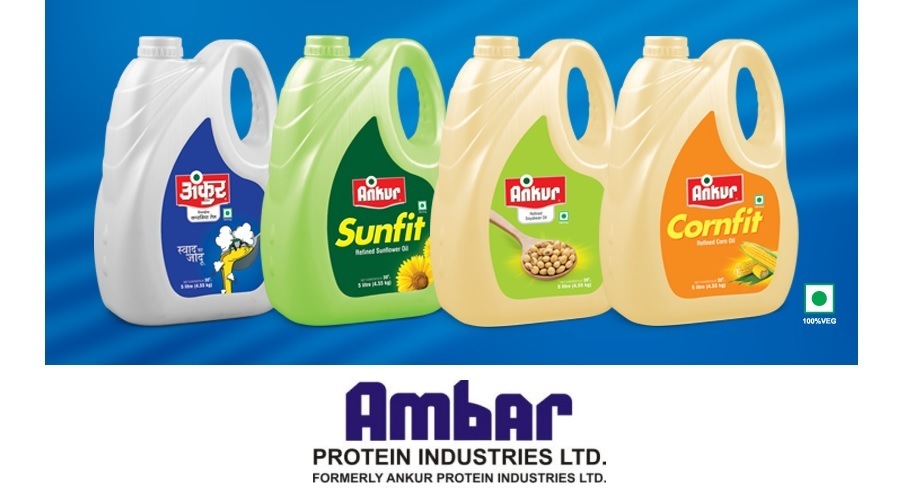
Ambar Protein Industries Ltd has been around since 1992, which already puts it ahead of 70% of microcaps that disappear faster than a budget airline’s on-time performance. For over three decades, the company has been refining and trading edible oils, primarily catering to Gujarat’s regional market under the “Ankur” brand.
This is not a Marico.
This is not a Patanjali.
This is not a branding story.
This is a working-capital-intensive, price-sensitive, refinery-first business, where survival itself is an achievement.
Over the years, Ambar
has scaled revenues steadily, from ₹340 Cr in FY22 to ₹482 Cr TTM, while keeping debt under control and promoters firmly in charge. But profits? Those move like oil prices — volatile, moody, and allergic to consistency.
So the big question is not “Is this cheap?”
The real question is: Can a thin-margin edible oil player sustain high ROE without blowing up its balance sheet?
Let’s find out.
3. Business Model – WTF Do They Even Do?
Imagine this business as a large stainless-steel kitchen, not a Michelin-star restaurant.
What Ambar Actually Does
Ambar Protein primarily:
- Refines edible oils
- Trades and packs edible oils
- Sells oil cakes and by-products
Its core products include:
- Refined Cottonseed Oil
- Refined Sunflower Oil
- Refined Soybean Oil
- Refined Corn (Maize) Oil
These are sold under the “Ankur” brand, mostly in Gujarat, in pack sizes ranging from 1L pouches to 15 kg tins.
Manufacturing Capacity
- Refinery located at Chandgodar, Ahmedabad
- Capacity: 110 tons per day
- FY22 refined ~21,240 MT of cottonseed oil
- Additionally, ~2,135 MT of various refined oils were purchased and packed for resale
Translation for lazy investors:
👉 Some oil is refined in-house, some is traded.
👉 Margins depend more on oil prices than marketing genius.
There is no deep moat here. The business relies on:
