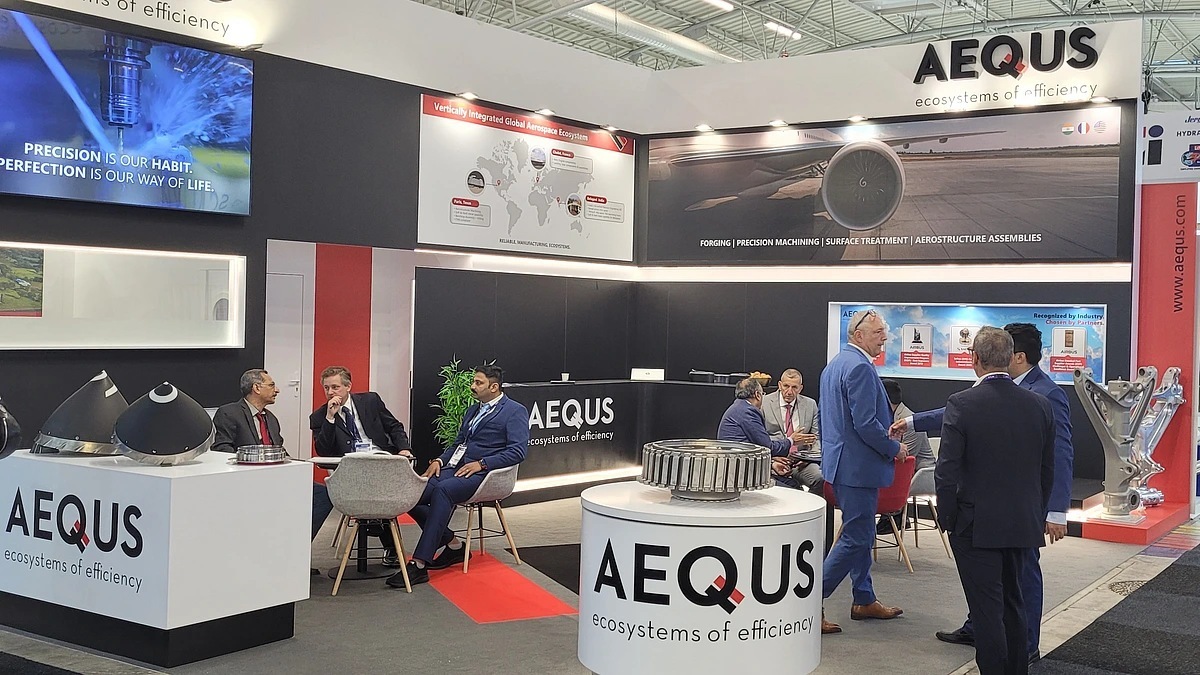
1. At a Glance – Strap In, This Turbulence Is Intentional
₹10,122 crore market cap. ₹151 stock price. EV/EBITDA north of 90. ROE sitting at a cool -11.2%, like it’s meditating in negative territory. Welcome to Aequs Ltd, a freshly listed aerospace darling that went public in December 2025, collected ₹922 crore from investors, and immediately reminded everyone that gravity still exists.
Latest half-year numbers show ₹537 crore revenue (up 17% YoY) and a ₹-17 crore loss (less bad than last year, but still bad). The company builds extremely complex aerospace components for Boeing, Airbus, Safran, and friends, inside a sexy vertically integrated SEZ in Belagavi. Sounds premium. Feels premium. Valued premium. Profits? Still boarding.
This is a company with real factories, real OEM clients, and real machines — but also real debt, real depreciation, and very real losses. Think of Aequs as that IIT topper who cracked ISRO but hasn’t figured out personal finance yet. Curious already? Good. Buckle up.
2. Introduction – IPO Ke Baad Reality Check
Aequs is not your usual IPO story of “loss-making SaaS with adjusted EBITDA imagination.” This one actually bends metal. Hard metal. Aerospace-grade metal that flies at 35,000 feet and costs more per kilogram than gold jewellery at a Punjabi wedding.
Founded in 2000, Aequs spent two decades quietly building one of India’s most sophisticated aerospace manufacturing ecosystems. Forging, machining, surface treatment, assembly — all under one SEZ roof. No jugaad. No outsourcing drama. Proper, boring, hard manufacturing.
Then December 2025 happened. IPO happened. Valuation happened. And suddenly, a company with ₹925 crore annual revenue and ₹-102 crore FY25 loss was staring at a five-digit market cap.
Now every retail investor wants to know: Is this a long-cycle aerospace compounding story… or just a very expensive factory tour ticket?
Let’s open the hood. Slowly. With sarcasm.
3. Business Model – WTF Do They Even Do?
Aequs makes parts that go into aircraft, not excuses.
Brackets, landing gear components, actuators, interior assemblies — basically the stuff that no airline passenger ever sees, but without which the plane doesn’t leave the ground.
Their secret sauce is vertical integration. Instead of sending forgings to one vendor, machining to another, and surface treatment to a third (hello delays, hello blame game), Aequs does everything inside its own ecosystem. That’s rare. That’s powerful. That’s also capital-intensive and depreciation-heavy.
Aerospace contributes 89% of FY25 revenue. Consumer electronics is the new side quest at 11%, where they’ve started mass manufacturing portable computer components from July 2025 and want to woo one of the world’s largest electronics brands. Translation: diversification with hope and PowerPoint.
Capacity utilisation tells a story too:
Aerospace humming at 65–70%
Consumer segment chilling at ~20%, like a college kid after semester exams
This business is built for scale. The problem? Scale doesn’t come cheap, and depreciation doesn’t care about your dreams.