1. At a Glance
ADF Foods is that quiet kid in the FMCG class who doesn’t shout “brand recall” every five minutes like Nestlé or Britannia, but somehow keeps topping the export charts. As of today, the company sits at a market cap of ₹2,459 Cr, trading around ₹224, down ~24% over one year, even as the business quietly delivered Q3 FY26 revenue of ₹191 Cr (+29.5% YoY) and PAT of ~₹27 Cr (+44.9% YoY).
Operating margins hover around a tasty 19%, debt is almost non-existent (₹12 Cr, D/E ~0.02), ROCE is a respectable ~17%, and interest coverage is so high (44x) that banks probably send them “miss you” emails.
Exports contribute 99%+ of revenues, meaning ADF doesn’t care whether Indian consumers are on a diet or not. The stock P/E of ~28.8x is well below sector heavyweights but above pure commodity food players.
So the question is obvious: Is the market sleeping on this global Indian food exporter, or is this just a boring but stable chutney business? Let’s open the jar.
2. Introduction
ADF Foods is not your Instagram-famous FMCG darling. It doesn’t run Super Bowl ads. It doesn’t sponsor cricket teams. Instead, it does something far more desi and dangerous: it supplies Indian food to homes abroad where people crave ghar ka khana at 2 a.m.
From frozen kulchas in New Jersey to pickles in the Middle East, ADF is riding the global Indian diaspora wave. The business is boring on the surface but fascinating underneath—steady exports, strong margins, low debt, and decades of execution.
But here’s the twist. Despite consistent growth, improving margins, and expansion plans, the stock has been punished over the last year. Is the market worried about growth saturation? Capacity constraints? Or just bored?
Let’s break it down calmly, sarcastically, and with numbers.
3. Business Model – WTF Do They Even Do?
ADF Foods does one simple thing: manufacture Indian food and sell it to foreigners who miss home.
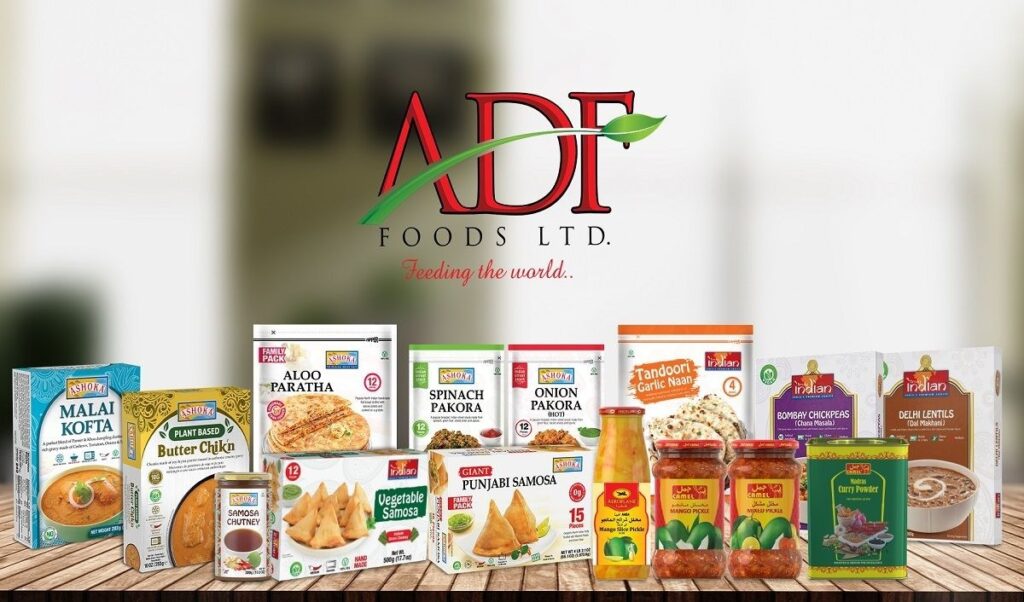
The company has 400+ SKUs across 8 brands, including ready-to-eat meals, frozen snacks, Indian breads, pickles, chutneys, sauces, spices, and even milk-based beverages. If it can survive a freezer, a jar, or a can, ADF probably sells it.
Revenue Mix (FY22)
- Processed & Preserved Foods – ~80%
- Agency Distribution – ~20%
- Exports – 99%+ of total revenue
This is not a “hope India consumes more ketchup” story. This is a global ethnic food export model, driven by:
- Indian diaspora
- Western consumers discovering butter chicken
- Retail chains abroad wanting private-label Indian food
ADF also runs distribution arms in USA and UK, including warehouses in New Jersey and Georgia (combined ~1 lakh sq. ft.), allowing direct retailer reach and margin optimization.
Simple question for you: Would you rather sell food in a price-sensitive Indian kirana, or to a US retailer paying in dollars?
4. Financials Overview
Quarterly Performance Table (₹ Cr)
| Metric | Latest Qtr (Dec’25) | YoY Qtr (Dec’24) | Prev Qtr (Sep’25) | YoY % | QoQ % |
|---|---|---|---|---|---|
| Revenue | 191 | 147 | 163 | 29.5% | 17.2% |
| EBITDA | 37 | 26 | 36 | ~42% | ~3% |
| PAT | 22 | 15 | 26 | 44.9% | -15% |
| EPS (₹) | 2.04 | 1.71 | 2.40 | 19.3% | -15% |
