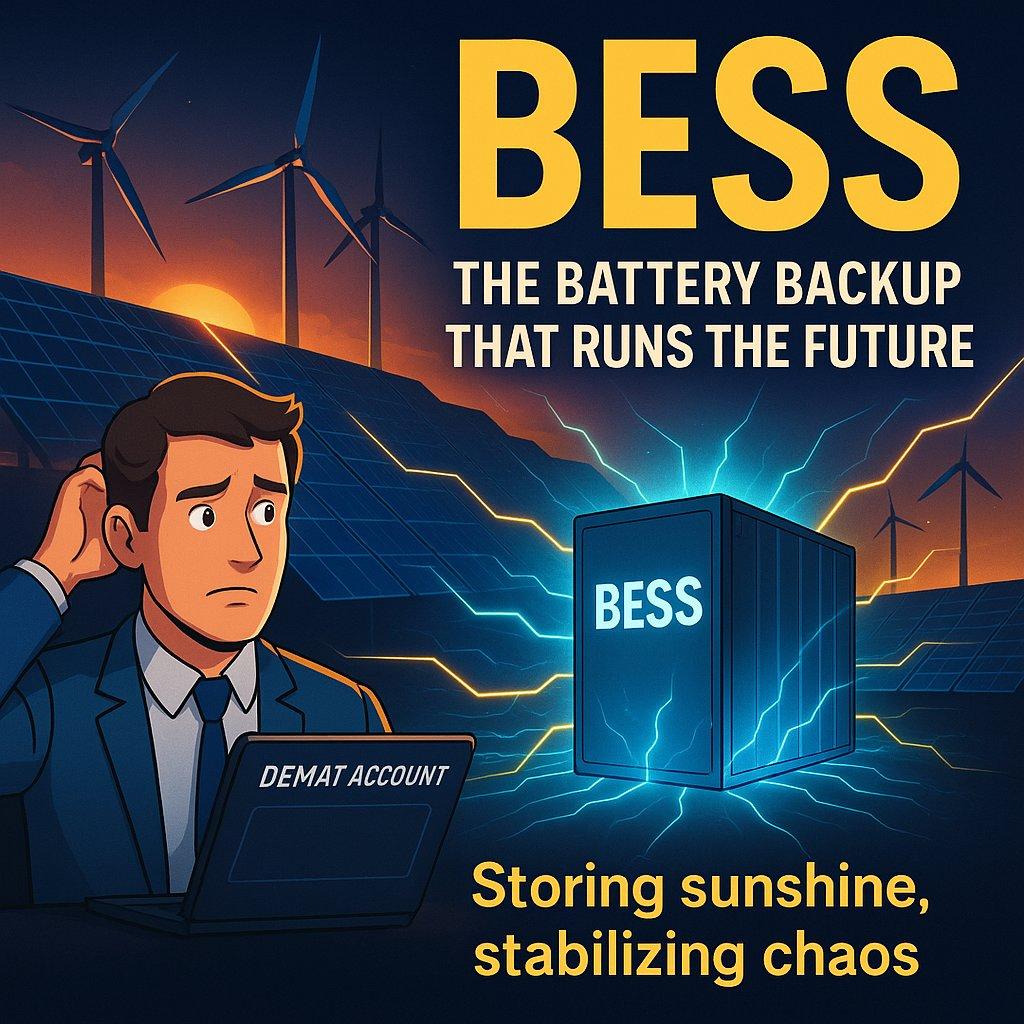
1. 🧠 At a Glance
Battery Energy Storage Systems (BESS) are the silent workhorses powering the renewable energy revolution. They charge when power is cheap, discharge when it matters, and stabilize the grid when it’s about to have a nervous breakdown. From solving the “sun only shines during the day” problem to replacing diesel guzzlers in villages, BESS is a clean energy essential. But hey, they’re not magic. They’re expensive, need minerals controlled by China, and can catch fire if not babysat.
2. 🎯 Introduction with Hook
Imagine installing ₹500 crore worth of solar panels—and watching them produce zero when you need power most. Welcome to the renewable energy problem. Now imagine a giant box quietly charging when the sun’s blazing and heroically stepping in when the sun dips. That box is a BESS. This is not just a tech gimmick—it’s the bridge between green ambition and grid reality. But before you romanticize batteries too much, let’s open the lid.
3. 🏭 Business Model (WTF Do They Even Do?)
BESS is essentially the UPS of the grid—but bigger, smarter, and ten times more expensive.
They:
- Store surplus electricity (usually from solar/wind).
- Discharge during peak hours, grid failures, or blackouts.
- Provide grid services (frequency regulation, voltage support).
- Replace fossil fuel peaker plants.
- Enable rural microgrids in power-starved areas.
Revenue comes from:
- Arbitrage (buy low, sell high).
- Capacity payments.
- Ancillary grid services.
- Avoided capex on diesel or coal backup.
Operators? Think Tata Power, Fluence, Tesla, ReNew Power, and even Adani (because of course).
4. 📊 Financials Overview – Profit, Margins, ROE, Growth
Let’s not kid ourselves: BESS isn’t a margin machine yet. Most projects are:
- Capex-heavy (₹4–6 crore per MWh).
- Low on recurring opex (after setup).
- Long payback (6–10 years).
But the market is exploding:
- India: Expected 38 GW / 152 GWh by 2030.
- Global TAM: >$400 billion by 2040.
- Lithium-ion battery costs: Down 85% since 2010.
- Major players like Tesla report >25% gross margins on Megapacks.
For now, profits are project-specific. The ROI gets juicy only if:
- Battery prices drop further,
- Solar and wind curtailment becomes more common,
- Regulations allow monetizing services like “frequency response”.
5. 💸 Valuation –