Goldstar Power FY26: A ₹48 Cr Company Became an ₹838 Cr One, and a Shipping Subsidiary Did the Heavy Lifting
Spotted a factual error — a wrong number, date, or fact? Tell us and we will check the source.
General information and entertainment, not investment advice. The author is not a SEBI-registered adviser or research analyst. No recommendation, no promised returns. Markets carry risk including loss of capital. Figures may not be current. Consult a registered adviser before acting.
1 — At a Glance
Revenue went from ₹48 Cr to ₹838 Cr in a single year — a 17-fold jump. Consolidated PAT climbed from ₹2.28 Cr to ₹29.4 Cr. On paper, this is one of the fastest one-year revenue expansions a small battery maker has ever posted. Then you read the fine print in the consolidated results and find that most of it didn’t come from batteries at all.
The company added a subsidiary — Red Fire Shipping and Logistics LLC — and the auditor’s own note records that this single entity contributed ₹801 Cr of the ₹838 Cr consolidated revenue and ₹28.4 Cr of net profit. The core Goldstar battery business, standalone, did ₹37 Cr in revenue and ₹1 Cr in profit for the full year.
So the headline “1,632% sales growth” is real arithmetic sitting on top of a business that changed shape entirely. Operating margin at the consolidated level is 3.8% — thin for a manufacturer, ordinary for a logistics reseller. Meanwhile the credit rating agency has flagged the company as non-cooperative, working off dated information.
A year where the number grew 17x and the story underneath it got harder to read. Does a battery brand become a shipping company, or does a shipping company find a listed battery brand?
2 — Introduction
Goldstar Power Limited, incorporated in 1999 and based in Hapa, Jamnagar (Gujarat), manufactures lead-acid batteries — the automotive, industrial, UPS, solar and inverter varieties. For most of its listed life it was a modest SME battery maker: FY25 standalone revenue was under ₹50 Cr.
Two things reshaped FY26. First, the capital structure changed. Share count rose from 24.07 Cr to 28.62 Cr shares after a preferential allotment — 4.55 crore shares issued at ₹11 each, listed September 2025, with a lock-in running to March 31, 2026. That issue raised roughly ₹50 Cr, visible as ₹50.04 Cr of share-capital proceeds in the financing cash flow.
Second, the consolidation. The FY26 audited consolidated results include a subsidiary, Red Fire Shipping and Logistics LLC, whose numbers dwarf the parent’s. The board approved the audited results on May 28, 2026. Shortly after, on June 27, 2026, the exchange sought clarification from the company regarding its March-2026 results under LODR Regulation 33 — a filing that sits in the record as of this period.
The promoter family — the Pansaras — remains at the centre. Managing Director Navneet Pansara signs the filings; his father Muljibhai and uncle Amrutlal are the anchor promoters. Their combined holding fell from 72.91% to 61.32% during the year, timed with the preferential issue that brought in new public shareholders.
3 — Business Model: WTF Do They Even Do?
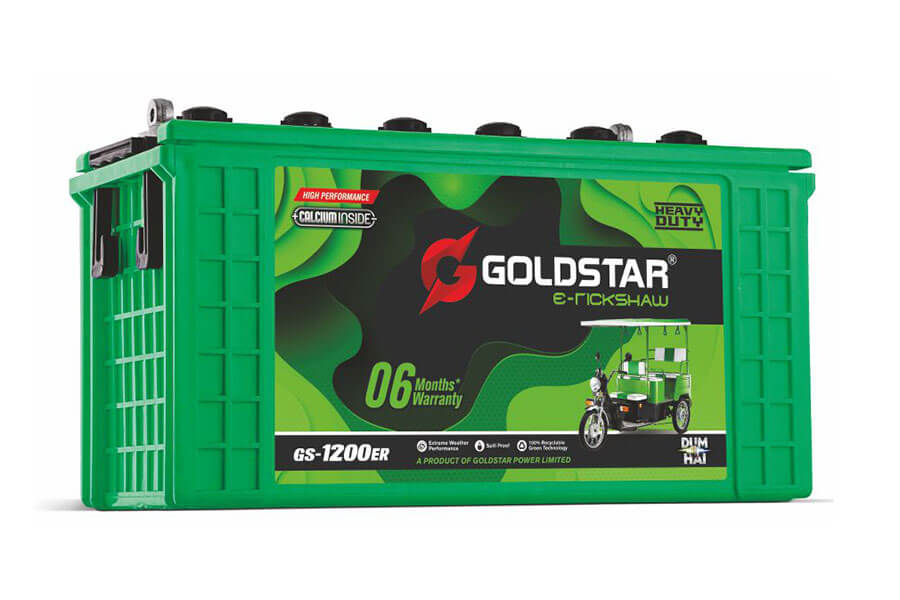
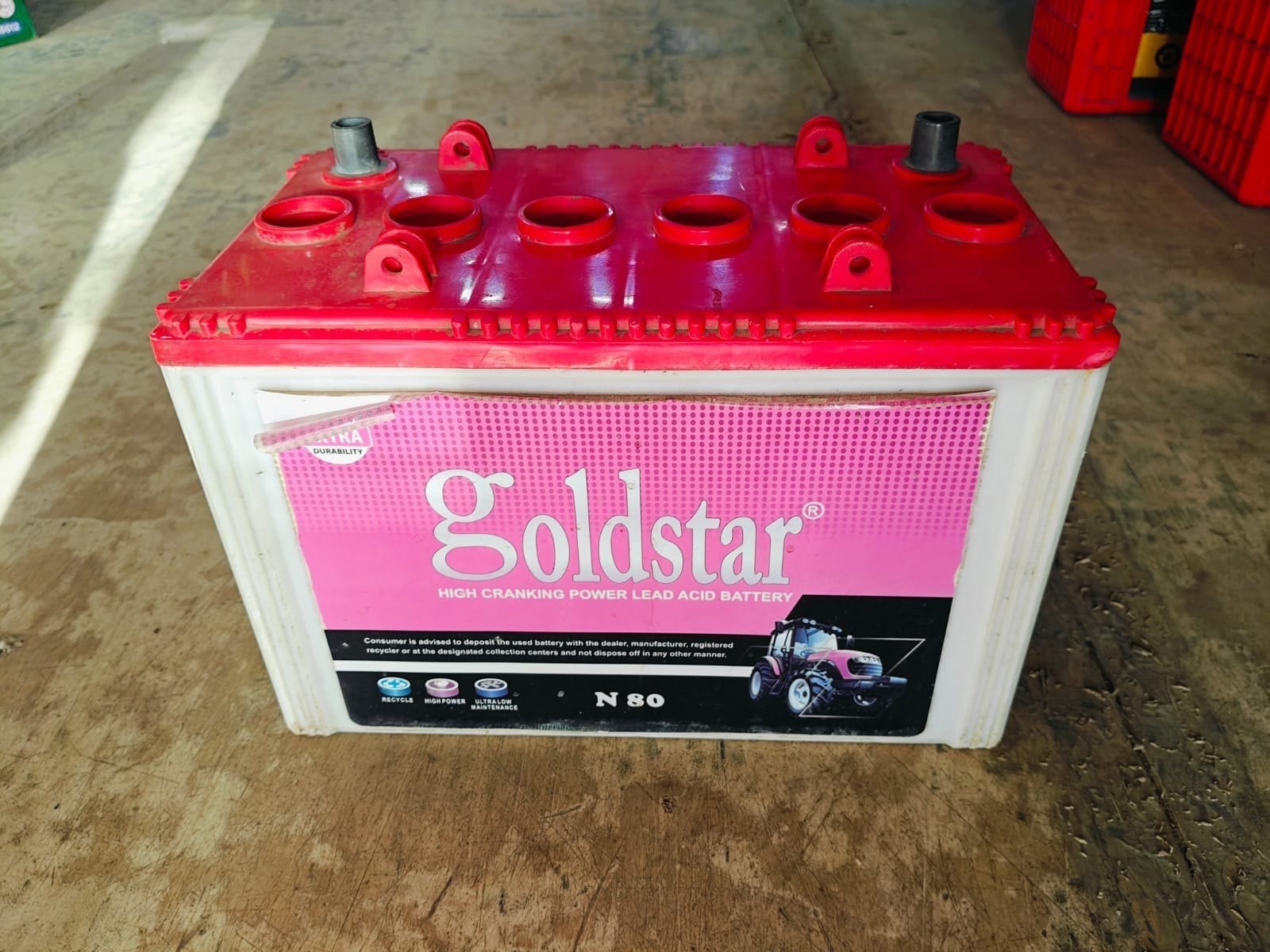
The stated business is batteries. Goldstar assembles all types — storage, dry, solar — and trades inverters, chemicals and battery equipment. Its cleverest supply-chain trick is buying battery scrap and discarded batteries from dealers, then converting them back into finished product sold under the Goldstar brand. Lead is one of the few metals where the scrap heap is also the raw-material warehouse, and the company has built its sourcing around exactly that.
The batteries span 35 ampere-hour units for small cars up to 200 AH for trucks and inverters, plus tubular, VRLA, and e-rickshaw variants. It sells across three channels — exports, domestic after-sales, and OEM — from a Jamnagar unit. Historically exports carried the model, and geographies like Dubai, Uganda, Nepal and Oman appear in the company’s own history.
That’s the manufacturing story. It is also, in FY26, the minority story.
The consolidated accounts now carry Red Fire Shipping and Logistics LLC, whose ₹801 Cr of revenue makes the shipping-and-logistics arm roughly 22 times larger than the standalone battery operation. A company whose About page discusses ampere-hours and lead-acid chemistry now derives the overwhelming majority of its consolidated turnover from moving goods around, not storing electrons in them. The brand still says battery; the income statement now says freight.
The two segments the company itself reports — Manufacturing and Trading Goods — are the standalone battery halves. The subsidiary’s logistics revenue arrives through consolidation, which is why the group P&L and the segment table tell such different-sized stories.
Does a manufacturer that quietly becomes a logistics group owe its shareholders a new elevator pitch, or does the consolidated line already deliver it?
4 — Financials Overview
Figures are consolidated, in ₹ crore.
Metric
Mar 2026 (FY)
YoY (vs FY25)
Revenue
838.12
+1,632%
Operating Profit
32
+540%
PAT
29.41
+1,190%
EPS (₹)
1.03
+1,044%
The FY26 result is a full-year annual figure — the four locks read as Yearly, Consolidated, ₹ crore, latest period March 2026. The growth rates are the arithmetic of a business that added a ₹800 Cr subsidiary, not the organic expansion of a battery plant. Revenue rose